
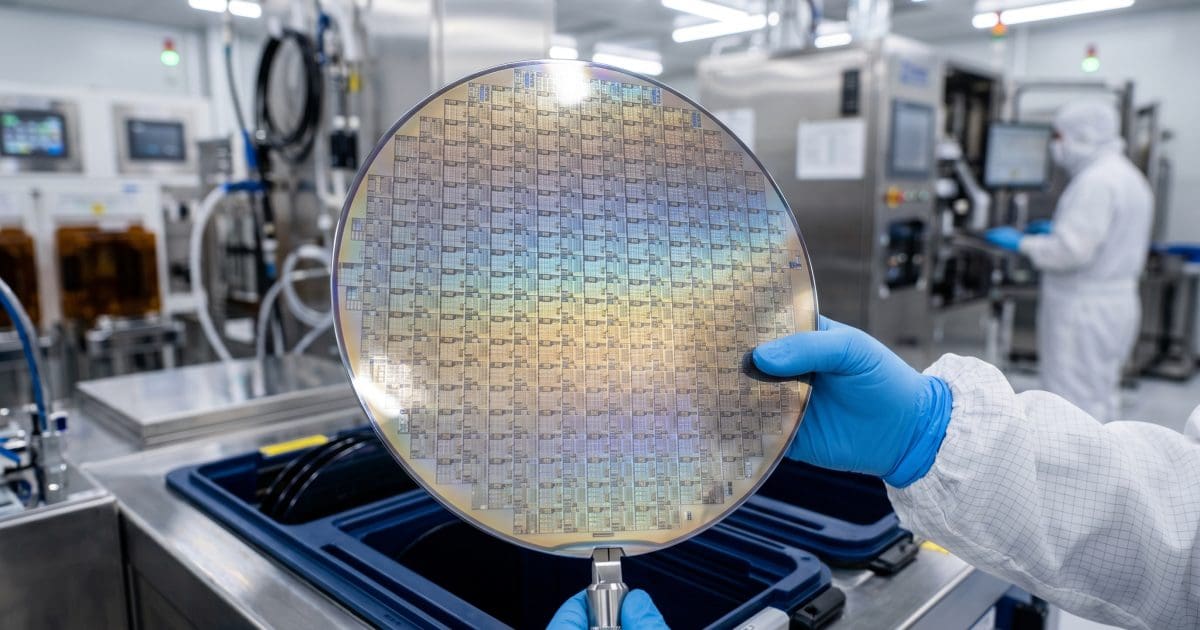
SandboxAQ focuses its materials exploration efforts on four specific categories: PFAS-free process chemicals, catalysts, rare earth-free magnets, and battery systems to directly strengthen the U.S. semiconductor manufacturing base. The company is developing a new approach using large-scale quantitative models (LQM). LQM combines physically-based simulation and machine learning in a unique architecture designed to overcome the traditional slow pace of materials discovery. This focus on speed is critical because the ability to quickly discover, validate, and commercialize new materials determines leadership in the semiconductor industry. “The next era of semiconductor leadership will be shaped not only by device architecture, but also by who can invent and extend the materials that enable that architecture,” said Shalini Sharma, head of semiconductor materials innovation and cross-vertical strategy at SandboxAQ. “From new catalysts and PFAS-free process chemistries to advanced battery chemistries and high-performance magnets, we are entering an era where materials innovation will become a strategic lever for industrial resilience and technological superiority.”
Large-scale quantitative models accelerate semiconductor material discovery
SandboxAQ is transforming its approach to semiconductor materials discovery, leveraging new methods that prioritize accelerating innovation to address vulnerabilities in the U.S. supply chain. This is very different from traditional methods, which are often hampered by extended schedules. LQM works by first generating physics-based data and then training specialized AI and physics models on that data, ultimately enabling automated workflows that streamline the entire design, manufacture, test, learn (DMTL) cycle. This integrated system promises to deliver more reliable results at a faster pace. For example, SandboxAQ’s AQCat workflow leverages 13.5 million high-fidelity chemical calculations developed in collaboration with NVIDIA to screen catalyst candidates faster, reducing development timelines from months to weeks and delivering 20,000x acceleration over traditional methods. Similarly, the company’s AQVolt workflow is focused on accelerating the development of next-generation battery materials. This emphasis on speed is strategically essential.
The next era of semiconductor leadership will be shaped not only by device architectures but also by who can invent and extend the materials that enable those architectures. From new catalysts and PFAS-free process chemicals to advanced battery chemistries and high-performance magnets, we are entering an era where materials innovation will become a strategic lever for industrial resilience and technological superiority.
Shalini Sharma, Head of Semiconductor Materials Innovation and Cross-Cross Strategy, SandboxAQ
AQCat workflow enables rapid Catalyst screening
SandboxAQ is committed to sourcing specialized catalysts used to produce the ultra-high purity gases and precursors essential to depositing each layer of advanced chips, a critical bottleneck in semiconductor manufacturing. Currently, knowledge of these catalyst formulations and related processes is overwhelmingly controlled by foreign suppliers, creating significant vulnerabilities in the U.S. supply chain. Traditional catalyst discovery methods are proving inadequate to meet the demands of increasingly complex chip designs and the needs of rapid innovation. To overcome these limitations, SandboxAQ developed the AQCat workflow, which leverages a novel approach centered around large-scale quantitative models (LQM). These models combine physically-based simulation and machine learning through a unique three-layer architecture, allowing you to dramatically accelerate the screening process. The system is built on 13.5 million calculations, and its impact goes beyond just shortening development cycles.
By enabling sustainable, cost-effective, and ultra-pure manufacturing, the AQCat workflow aims to address both economic and strategic concerns, strengthen the resiliency of the U.S. semiconductor industry, and reduce dependence on foreign-controlled supply chains. The company is focused on delivering a platform built to deliver trusted answers faster and at scale than traditional methods alone.
Built on 13.5 million high-fidelity chemical calculations developed in collaboration with NVIDIA, the AQCat workflow can screen catalyst candidates 20,000 times faster than traditional methods and with near-quantum chemistry accuracy, reducing development timelines from months to weeks.
Sandbox AQ
AQVolt and LQM advance battery and magnet replacements
SandboxAQ is proactively addressing vulnerabilities in semiconductor manufacturing by focusing on domestically sourced materials, including advances in energy storage solutions. Semiconductor manufacturing relies heavily on consistent and precisely controlled power. Even brief failures can halt production and significantly increase costs, highlighting the strategic importance of resilient backup systems. Currently, most of these systems rely on internationally sourced battery materials, lithium, cobalt, and related chemical precursors, creating potential points of failure for U.S. manufacturers. SandboxAQ’s approach differs from traditional materials discovery through the application of large-scale quantitative models (LQM). Beyond batteries, the company is also leveraging LQM to identify magnet formulations that reduce or eliminate dependence on rare earth elements, which are currently sourced primarily from foreign-controlled supply chains. Difficulties in obtaining rare earth magnets can delay equipment certification and reduce factory capacity, highlighting the need for domestic alternatives. By compressing discovery timelines from years to weeks, SandboxAQ aims to build a more self-sufficient and globally competitive American semiconductor industry, starting with the foundational materials that power it.


