
Success in introductory or prerequisite courses plays a major role in shaping a student’s academic career. If early courses prove difficult, it can slow the pace at which a student progresses through their degree program.
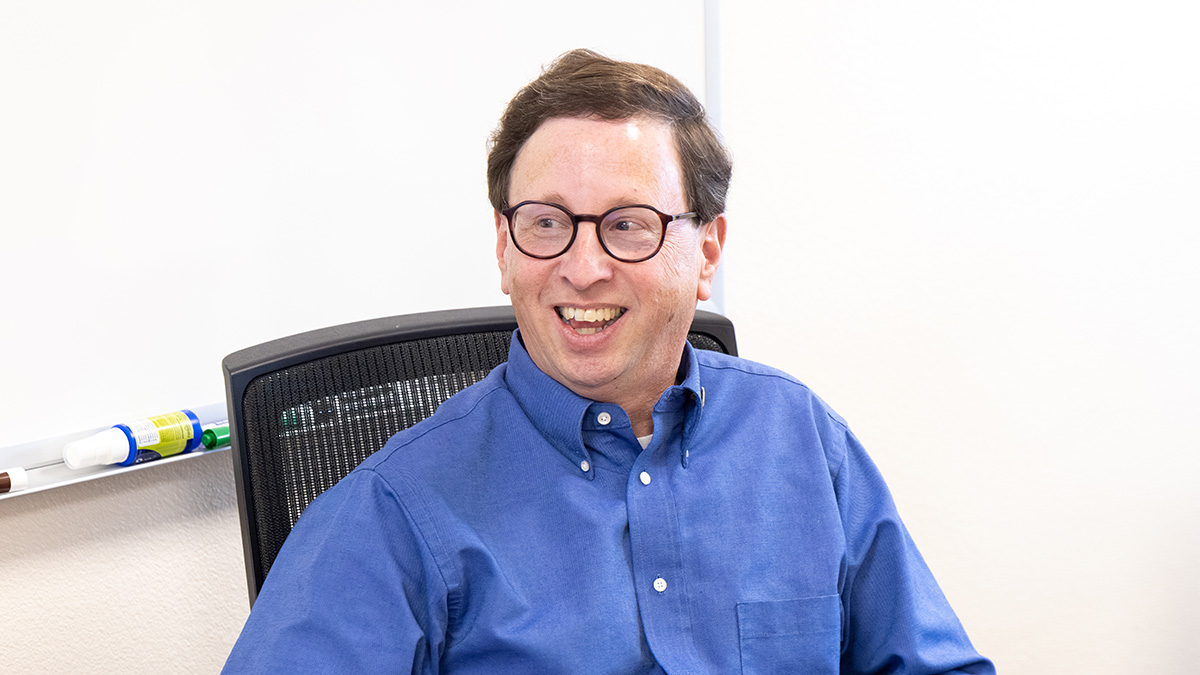
Students can face a variety of hurdles in the classroom, and those challenges vary from person to person. that’s the motivation Richard Levina professor of statistics at San Diego State University’s College of Science, is developing machine learning techniques that are proven to keep students on track to graduation.
Mr. Levine was nominated by his colleagues and selected by the University Committee to be the speaker for the 35th annual Albert W. Johnson Research Lecture, to be held at the Parma Payne Goodall Alumni Center on March 24th at 3:00 p.m. The lecture is free and open to the public. RSVPs are requested and can be submitted online.
To determine a student’s likelihood of success in a particular course, Levine collects data on past performance in similar subjects, along with placement exam results that assess current skills. It also helps you track student performance throughout the semester and assess how assignment and exam scores predict overall course success.
Levine uses machine learning tools to evaluate this data and build a roadmap tailored to each student. The results suggest which forms and frequencies of instructional support, such as individualized instruction, supplemental instruction, and instructor office hours, are most helpful in improving student achievement.
“We are educating advisors and instructors about the combination of programs available to students to ensure they remain at SDSU and stay on track with their programs of study toward graduation,” Levine said.
The results were exemplary.
“The pass rate was very low. There were semesters where the fail rate was 30 to 40 percent,” Levine said. “Now it’s down to about 15 percent. Just by improving their grades in the core prerequisite courses, the time to graduation has definitely improved.”
adjust
Faculty can also use this data to identify pain points in their course curriculum and adjust accordingly for a better teaching experience.
“In the medical world, we say you should always get tested and always know what’s going on,” Levine says. “Because we have this much data, we can proactively check that students are on track and tell them how to be successful in their courses.”
In 2023, Levine co-founded the Southern California Data Science Consortium, which aggregates student success data from schools in the California State University, University of California, and community college systems. This provides a comprehensive view of California student performance in data science courses to foster more effective higher education practices.
“We share success stories and also discuss challenges,” Levine said. “This shared learning environment allows us to design curricula, lesson plans, and programs that help students enter the workforce and succeed.”
To prepare for jobs that require solving real-world problems, whether in the classroom or in a research group, Levine believes students need to “get their hands dirty with messy data.”
“I think it’s really important that data science students are integrated into research teams to learn about the data available to us, the questions we can ask, and the anomalies we have to deal with,” Levine says. “My research students will learn how to develop machine learning tools interactively with experts and how to communicate their results to key stakeholders to effect real change.”
Throughout his career, Levine has received approximately $7.3 million in external research funding as principal investigator on projects and worked closely with other SDSU researchers in a variety of fields and world-class experts in fields such as education, medicine, the environment, finance, and sports. He plans to publish a new statistical computing textbook in 2027.


