
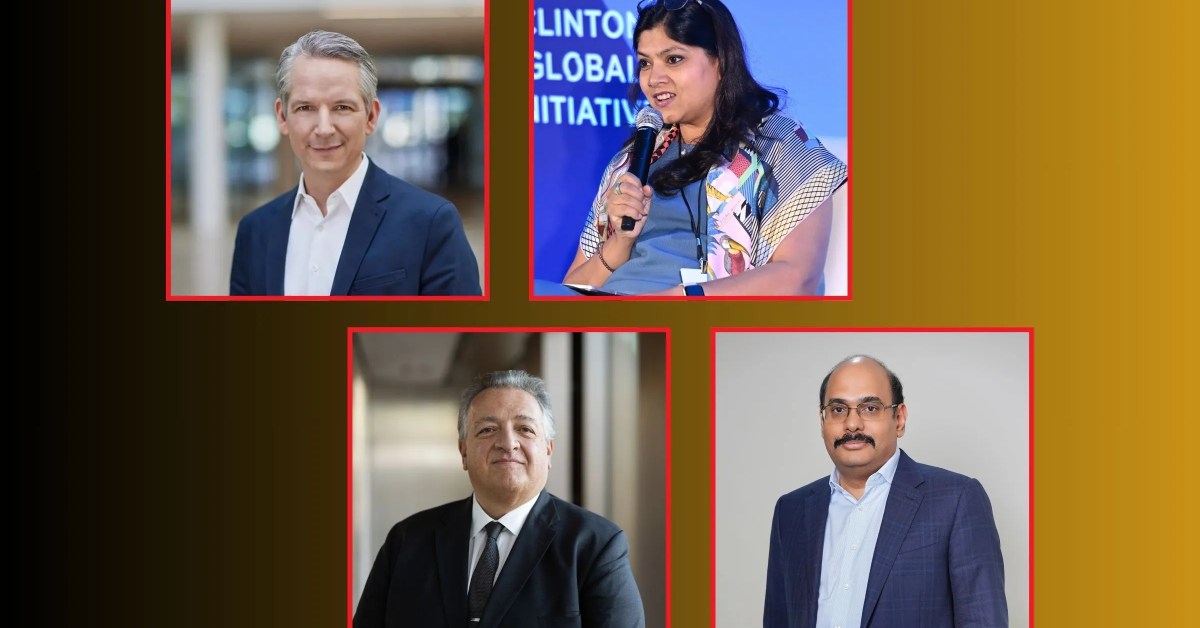
On Tuesday night, business leaders weighed in on the future of AI at the annual World Economic Forum’s TIME100 Impact Dinner in Davos, Switzerland.
The panel, “From Vision to Velocity – Deploying Innovation at Scale,” delved into how AI has been integrated into industries from healthcare to energy, and some of the biggest challenges it may pose in the future.
Nubar Afeyan, co-founder and chairman of Moderna and CEO of Flagship Pioneering, said: Moderna said it has been using machine learning technology to advance medical care for quite some time, citing its development of an mRNA coronavirus vaccine as an example.
“In the technology industry, we have always envied the ability to move quickly because medicines have never been programmable,” Afeyan says. “In 2020, the world witnessed programmable medicine for the first time. But we’re not stopping there.”
He also argued that AI will be crucial in understanding the nature around us, but warned that people may not yet be ready for the impact that insights will have on “our humanity and self-image.”
“Based on the application of artificial intelligence to nature, I would argue that what we are about to discover is that nature is a different form of intelligence that we never recognized. Every tree, every virus, every immune cell, these are forms of intelligence.” “I think the security challenge, or, put another way, the anxiety challenge for humans, is going to require us to adjust the image we have of ourselves and make it happen with machines.” Harnessing intelligence and the intelligence of nature can improve the way we manage nature, extract value from food, create new medicines, and prevent disease. ”
Executives from two of India’s leading renewable energy companies, Vaishali Nigam Sinha, co-founder of Renew Energy, and Mahesh Kohli, president of GreenCo Group, spoke about the changing energy industry as AI-driven power demand increases.
Kohli discussed the evolving role of what he called “electric nations,” countries that have moved away from traditional methods such as oil and towards electrical energy and clean resources such as solar and wind.
“What we are witnessing in India is such an electric nation revolution,” he said, noting that the country’s use of clean energy has gone from being “a source of electricity for homes” to “now becoming a source for making materials, molecules and AI.” He said this change is making India more competitive in the global market and other advanced electric nations such as China.
Mr. Sinha spoke about the potential impact of the rise of AI on efforts to combat climate change and urged cooperation among countries.
“When we talk about climate change issues, we are talking about the entire world, and to do that, countries must work together because climate truly knows no boundaries,” she said, adding that public-private partnerships are “necessary” to move forward across sectors “especially in clean energy.”
Peter Korte, chief technology strategy officer at Siemens, concluded the panel by warning about the threats that AI could pose to the labor market. He noted that technology has already taken jobs away from people throughout history, and noted that this is not the first time that rapidly advancing technology has instilled fear in countries’ workforces.
“What AI is doing for brain workers, white-collar workers, is what robots are doing for blue-collar workers,” he said.
TIME100 Impact Dinner: From Vision to Velocity — A major innovation rollout announced by Andhra Pradesh.


