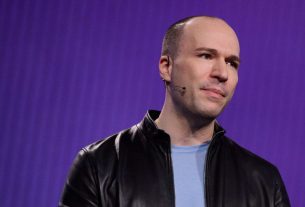

BENGALURU: As organizations struggle to move generative AI from pilot projects to reliable production-ready systems, Salesforce is sharpening its AI strategy by rethinking how large-scale language models (LLMs) are deployed within enterprise software.Srini Tallapragada, president, chief engineering and customer success officer at Salesforce, told TOI that over the past two years, it has become clear that the gap between LLM’s performance on benchmarks and its behavior in real-world business environments has widened.“LLM is a foundational technology and will be relevant for years to come,” said Tallapragada. “But companies are beginning to realize that strong benchmark performance does not automatically translate to consistent business outcomes.”Most large companies conducted AI pilots and demonstrations in 2024 and early 2025, Tallapragada said, but found that few systems were able to move into full production. The challenge, he said, is in the “last mile,” where AI systems need to behave predictably across edge cases, over time, and under regulatory oversight.LLM is a probabilistic system by design. They are good at understanding intent, language, and context, but they don’t always follow fixed instructions with absolute certainty. “Companies may be compliant 97% of the time, but they need workflows that work 100% of the time,” he said, especially in areas such as financial services, customer refunds, and policy enforcement.To address this, Salesforce combines generative AI with deterministic systems that enforce non-negotiable rules and standard operating procedures. In practice, this means using LLM where flexibility, reasoning, and empathy are required, while relying on rules-based logic for compliance-sensitive or audit-sensitive procedures.“At first, people tried to use the same tool for everything,” Tarapragada says. “But sometimes a simple ‘if-then’ rule is the right answer. The challenge is to make these different approaches work together seamlessly.”Tallapragada also cautioned against relying too heavily on industry benchmarks, noting that many tests are theoretical and open to cheating. “A perfect score does not mean the system will work reliably in the real world,” he said.Despite this more disciplined approach, Salesforce has not reduced its use of LLM. The company uses multiple models, large and small, and continues to increase overall usage and optimize performance, cost, and sustainability.Looking to the future, Tallapragada said 2026 is likely to be a turning point for AI adoption in enterprises. “The focus is shifting from excitement to results,” he said. “Our job is to turn powerful models into systems that consistently deliver real value to the business at scale.”Salesforce CEO Marc Benioff has previously said that the company’s AI strategy is aimed at augmenting human decision-making, rather than replacing it, with AI agents handling day-to-day tasks while humans maintain a decision-driven role.