
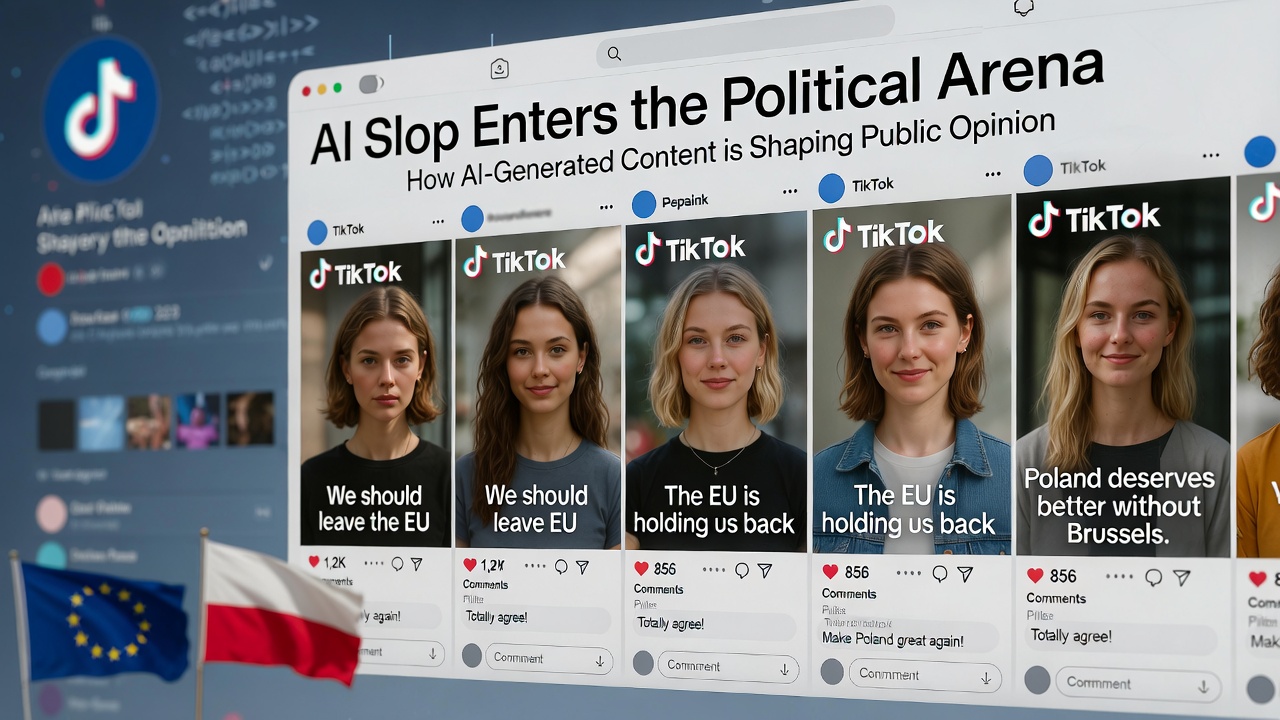
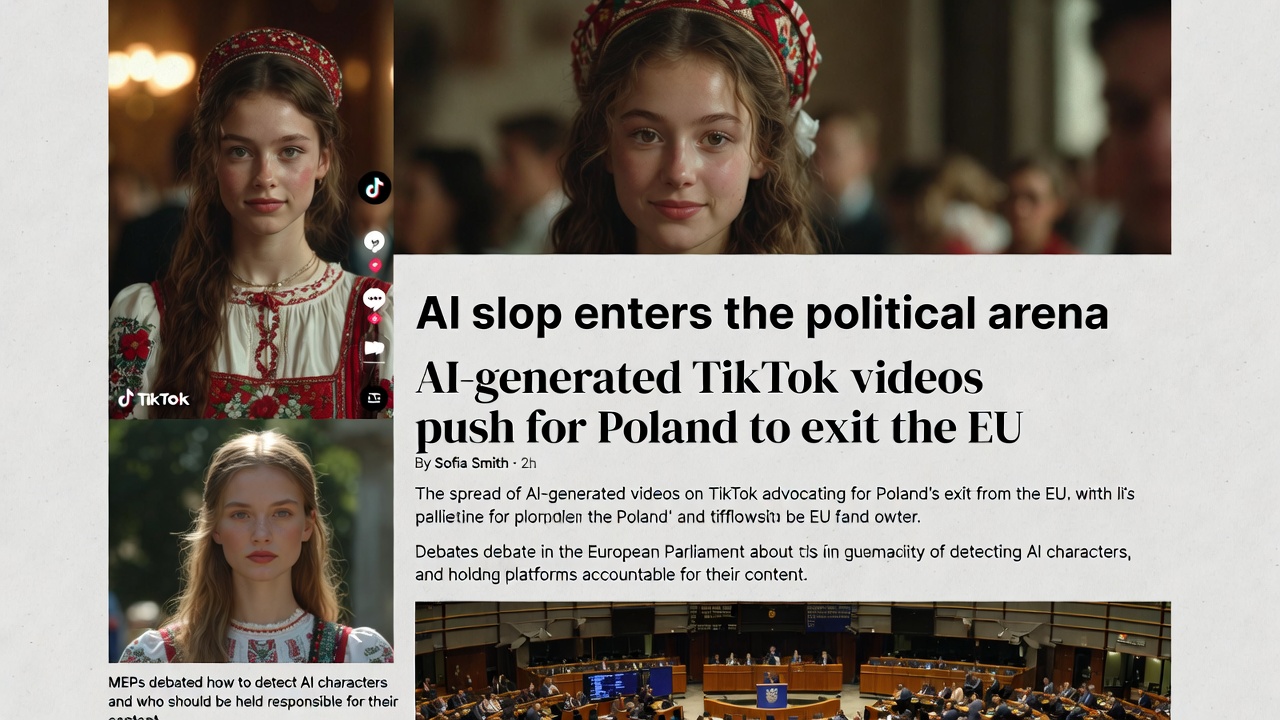
In late 2025, a wave of seemingly authentic TikTok videos began circulating featuring young, attractive Polish women wearing national symbols, passionately advocating for Polexit, Poland's exit from the European Union. The clips were aimed at viewers between the ages of 15 and 25 and included messages such as “I want Polexit because I want freedom of choice, even if it costs more. I don't remember Poland before the European Union, but I feel like it was more Polish back then.”
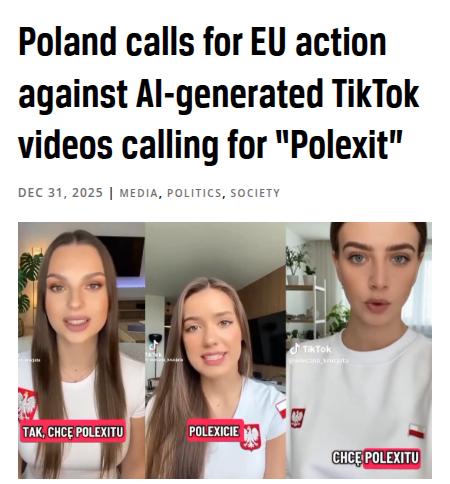 But these women don't exist. They are all generated by AI and have realistic faces, voices, and gestures. The account behind them, “Prawilne Polki,” had been dormant since 2023 or posted unrelated English content, but suddenly rebranded in mid-December 2025, flooding the platform with pro-Polexit propaganda.
Polish authorities quickly determined that this was a coordinated disinformation campaign, almost certainly orchestrated by Russia. Dariusz Standerski, Deputy Minister for Digital Affairs, has formally asked the European Commission to launch an investigation into TikTok under the Digital Services Act (DSA), citing the platform's failure to properly manage synthetic content and reduce systemic risks to democratic processes.
This incident marks a pivotal moment. Low-quality, mass-produced content generated by AI (“AI slop”) is no longer just clogging your feed with nonsense. It is now being weaponized to influence real-world political decisions, amplifying divisive narratives at scale.
Mechanisms of modern disinformation
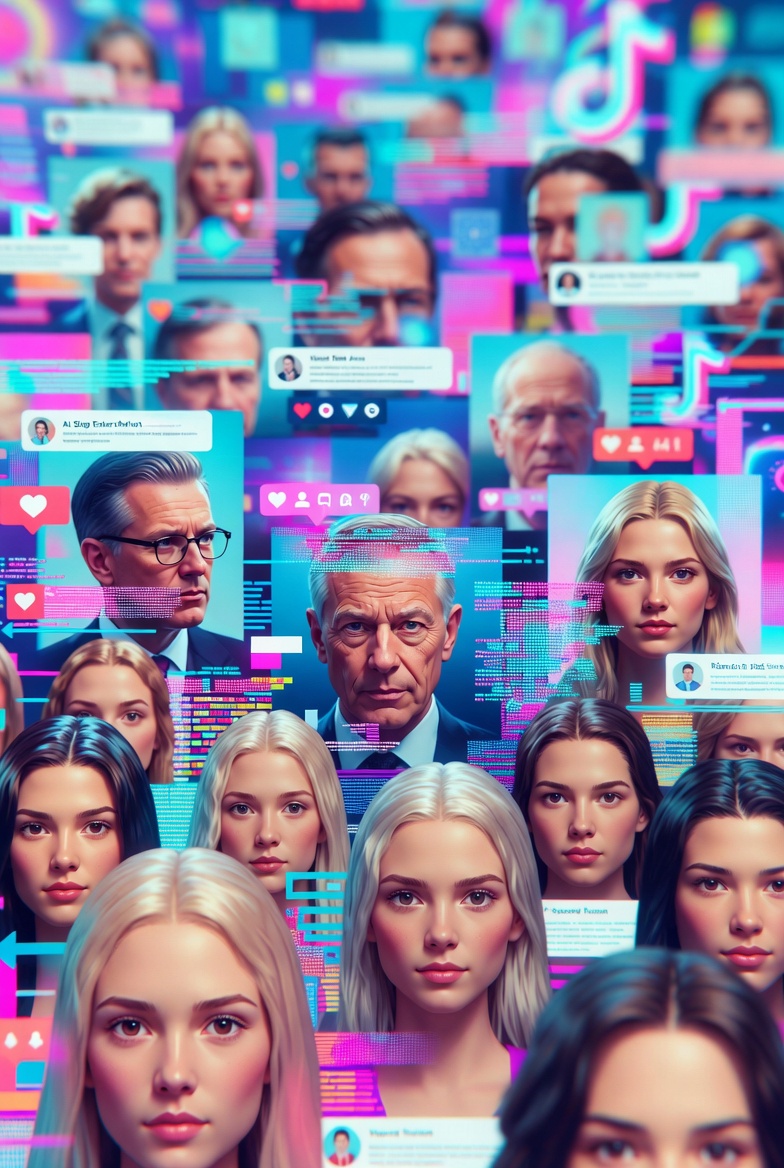 What makes this campaign particularly insidious is how easily generative AI makes it possible.
- realistic avatar: The tool allows you to create convincing “talking heads” that look human-like and instantly build trust, especially among younger viewers who voraciously watch short-form videos.
- rapid iteration: Adjust scripts and create new videos in minutes, allowing operators to test messages and adapt to algorithms.
- precise targeting: Platforms like TikTok are great at distributing content to a specific demographic, in this case tech-savvy young Polish people who get much of their news from the app (in a recent survey, 43.7% of 18-25 year olds cited the app as their main source of information).
- automatic scaling: One person (or a small team) can generate hundreds of variations, creating the illusion of grassroots opinion. When combined with bots and paid promotions, it creates snowballing viral “organic” trends.
result? A fabricated consensus that Poland should abandon the EU, echoing the slogans of far-right figures like Grzegorz Brown. Linguistic clues, such as a Russian-influenced written syntax, further pointed to foreign interference.
TikTok responded by deleting accounts and attacking videos after users reported that they had violated its rules by saying they were “in contact with Polish authorities.” But critics argue that this reactive approach is inadequate against the flood of AI-powered proactive approaches.
Broad questions for Europe and beyond
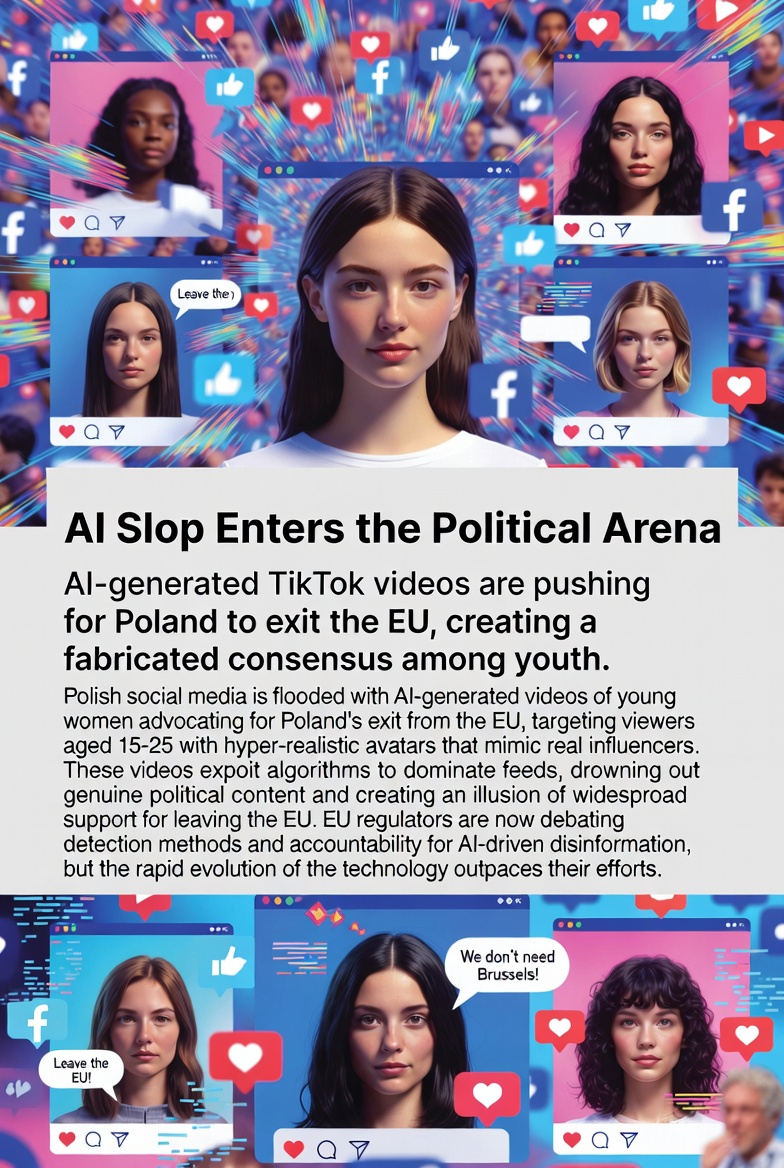 Polexit's video sparked an urgent debate across the EU.
- Detection challenges: How can we reliably distinguish between real humans and AI creations?Current tools are lagging behind the rapid advances in generative models.
- accountability: Who is responsible: the provider of the AI tool, the content creator, the platform hosting it, or all of the above? Under the DSA, very large platforms like TikTok must assess and mitigate risks from AI, including disinformation.
- Platform obligations: Should social media pre-scan synthetic media? Should it be watermarked? Or will it impose stricter transparency on political ads and viral content?
The EU's DSA will be fully enforced from 2024, allowing the European Commission to impose fines of up to 6% of global revenue on non-compliant platforms. Supplementary Regulations to the AI Act (effective in 2026) will require labeling of deepfakes and certain synthetic content. But as this case shows, threats are evolving faster than regulations.
This is not isolated. Similar AI-driven tactics are appearing in elections around the world, from deepfake audio in Slovakia to fake news in the United States. In Europe, the European Commission is already investigating TikTok over election risks in Romania.
As AI democratizes content creation, it also democratizes operations. Bad guys no longer need an army of trolls. All you need is a laptop and access to a model that powers video generation. The Polish incident highlights the harsh reality that AI is reshaping public debate, undermining trust and testing the resilience of democracies.
If unchecked, such campaigns can sway referendums, elections, or policy debates not through good arguments, but through a plethora of convincing fabrications. Regulators, platforms and society will need to adapt quickly or risk drowning politics in AI slop.
 Also read:
thank you!


