SAN FRANCISCO, Calif., May 18, 2026 (Globe Newswire) — Most companies are implementing AI, but they are not becoming meaningfully intelligent as an organization. When one person prompts the assistant and gets a response, the context disappears into a private chat window. As a result, there is little impact on the team as a whole, and actual productivity increases on an individual level. Dust, a multiplayer agent AI system, was built to change this by enabling AI to be collaborative, shared, and operational across the enterprise.
The company today announced a $40 million Series B with Abstract and Sequoia, with participation from Snowflake Ventures and Datadog. With this round, Dust has raised a total of over $60 million.
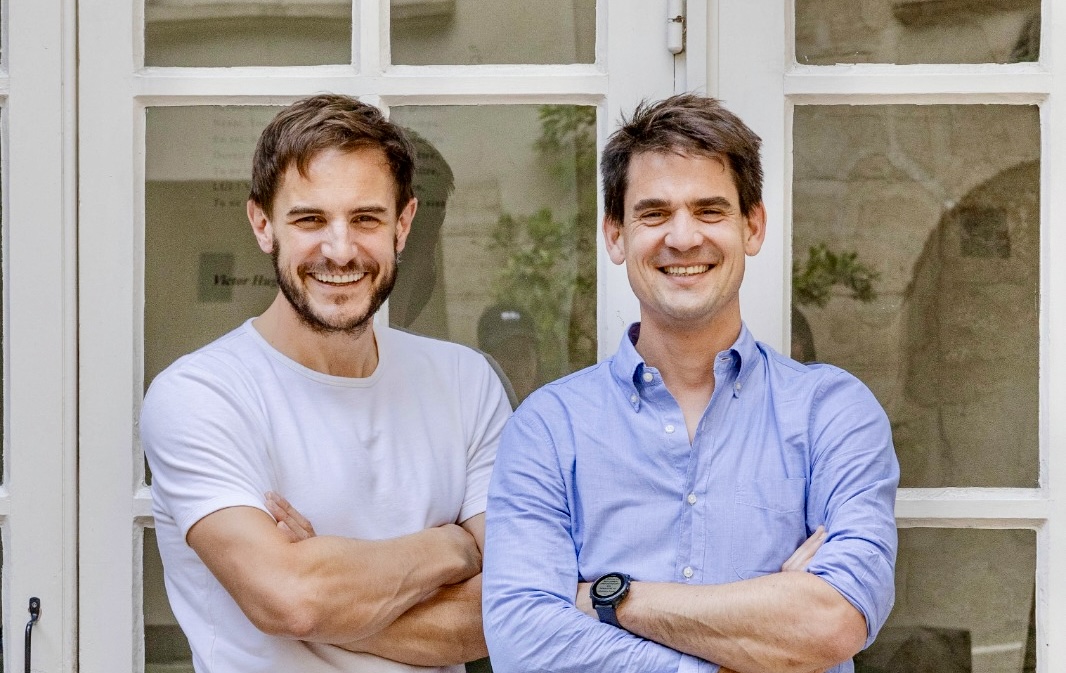
Dust founders Gabriel Hubert and Stanislas Polu.
Why is this important now?
Most organizations are stuck with what Dust calls single-player AI. Every employee has their own assistant, with their own context and their own output. A sales representative investigates the account and a solution engineer starts from scratch the next day. Marketing drafts the one-sheet and Enablement recreates the battlecard using various inputs. Efforts are repeated, knowledge is fragmented, and gains do not increase.
Dust argues that most AI tools used by companies reinforce this pattern. The foundational models Workspace and CoPilot are powerful, but they are primarily designed around one individual’s workflow and context. Enterprise search tools retrieve information but do not take any action. The result is increased activity and AI usage at the individual user level, but not in a system intentionally designed to combine and share AI.
“This is a century-defining transformation, and we’re only in its third year,” he said. Gabriel Hubert, Dust Co-Founder and CEO. “What will change the way we work will not be second-best models or assistants; it will be an entirely new type of system where humans and agents have shared, controlled access to the same information and capabilities, become true collaborators, work with the same context, notifications, artifacts, and goals, and increase their impact on organizations. This is what we call multiplayer AI, and this is what we are building at Dust.”
What the dust is building
Dust is a multiplayer AI system for human-agent collaboration. It provides business teams with a platform to build, deploy, and manage AI agents that work together across the organization, are connected to enterprise knowledge, integrate with the tools teams already use, and are managed with enterprise-grade controls.
At the heart of Dust is a collaboration surface where users and agents collaborate across shared contexts, tools, conversations, tasks, and goals. Agents can analyze, transform, and produce files such as documents, spreadsheets, presentations, and interactive data visualizations, and take actions across connected systems through Dust’s context layer. The Context Layer combines semantic search across an enterprise’s knowledge with integration into over 100 data sources and business tools. Built-in memory and feedback loops allow agents to improve over time by learning from your team’s preferences, usage patterns, and feedback, and proactively recommending improvements.
Dust is designed for enterprise deployments with fine-grained permissions, cost and usage monitoring, audit trails, and agent analytics. Although the platform is SOC 2 Type II certified, GDPR compliant, and supports EU and US data residency, it does not train its models on customer data, as contractually guaranteed by major model providers.
Dust primarily runs on its own products and is defining a new identity within high-growth companies: AI operators. These are the people closest to the work within departments like operations, support, marketing, and sales who build and run AI systems for their teams and rewire how work gets done within the business.
Traction and customer outcomes
Dust is used by over 3,000 organizations around the world, from fast-growing AI-native companies to established enterprises. Monthly active adoption rates are consistently above 90% and weekly active usage rates are above 70% across customers, demonstrating that Dust is integrated into the way teams work. Over 300,000 agents deployed across the platform. In 2025, Dust achieved significant customer growth and acquisition, reaching 240% NRR with zero churn.
“Dust quickly became the platform our team runs on,” he said. Stevie Case, CRO at Vanta. “Our 900 employees across Sales, Customer Success, and Revenue save thousands of hours a week on tasks such as preparing business reviews, researching outbound leads, and forecasting. They were able to save time this time, not because it was mandated, but because the agency was built by the people closest to the work. Dust enables entire teams to collaborate and build agents that deliver measurable value, delivering the compounding effect we’ve been waiting for AI to achieve. ”
At Clay, Dust serves as the foundational knowledge infrastructure for our rapidly growing GTM team, allowing us to grow our team 4x without proportionally increasing our enablement headcount. Profound uses Dust as its source of truth for customer intelligence and post-sale information, reducing new hire ramp-up times from months to days. At Persona, teams across 11 departments have deployed over 300 Dust agents to condense cross-functional workflows like sales RFPs from days to minutes. Doctolib put Dust at the center of its company-wide AI strategy, giving its 3,000 employees seamless access to company information and enabling them to retire traditional intranet tools.
origin
Dust was founded by Gabriel Hubert and Stanislas Porou, who have been building together since meeting at Stanford University in 2007. They previously co-founded data analytics company TOTEMS, which Stripe acquired in 2014, and spent five years with Stripe’s scaling products and teams. Polu later joined OpenAI as a research engineer on Greg Brockman’s team and co-authored a paper on AI inference with Ilya Sutskever. Hubert became Alan’s Chief Product Officer.
In September 2022, Polu left OpenAI with the beliefs that became Dust’s founding theme. The model was already powerful enough to be economically transformative, but implementation was poor due to the lack of a product layer. Dust was founded in February 2023 to build a horizontal layer on top of frontier models and enterprise knowledge with a model-agnostic approach that avoids vendor lock-in.
“We are in the early stages of a massive shift in how organizations use AI,” he said. Konstantine Buhler, Sequoia Partner. “Most enterprise AI today is single-player. One person, one prompt, no compounding. Multiplayer systems are being built where agents and humans share context and collaborate across the company. Zero churn and 70% weekly active usage show this is no longer an experiment. This is how enterprises actually operate.”
“Most AI platforms are stuck in single-player mode: one person, one chatbot, one task,” he said. Ramtin Naimi, Abstract General Partner. “Dust is multiplayer. AI operators in enterprises like Datadog and 1Password don’t just use Dust. They build agents that collaborate across teams, learn from every interaction, and reshape how the entire company works. This is a new operating model and category. That’s why we participated in this round.”
what’s next
Dust plans to use this round to advance three frontiers simultaneously. Agents that automatically learn and improve as they are used, collaboration primitives that make humans and agents equal co-contributors with bidirectional access to shared projects, tools, and context, and infrastructure that makes governance and orchestration predictable at enterprise scale. The next stage of enterprise AI won’t be about who has the single best assistant. Winners will be those who turn AI into shared, complex capabilities across the organization.
Media images can be viewed here.
About dust
Dust is on a mission to reimagine the way enterprises work with multiplayer AI. This provides teams with a shared workspace where humans and agents collaborate based on the same company knowledge, tools, and goals, turning personal AI use into a composite of organizational capabilities. Dust is used by AI operators at some of the world’s fastest growing companies to build, deploy, and continuously improve the agents that power their work. For more information, please visit https://dust.com/ or follow us via LinkedIn.