Artificial intelligence is already changing the way we live, work, and communicate. From voice assistants to smart cameras, AI is woven into modern life. But until recently, most of this intelligence resided in the cloud. This meant that the device had to constantly send data to a remote server, wait for processing, and then receive instructions.
Edge AI is rewriting that model. It brings intelligence directly to the device itself, rather than relying on distant servers. This change will not only make gadgets smarter, but will change the very nature of how technology fits into our daily lives.
What exactly is Edge AI?
At its core, edge AI means running machine learning models directly on local hardware, such as smartphones, laptops, IoT devices, and even consumer electronics. “Edge” refers to the point where data is created and collected, rather than a central cloud.
Think of it like this:
- In cloud AI, devices act like messengers, constantly relaying information to distant brains.
- With Edge AI, devices have their own miniature brains that can make instant decisions.
This localized intelligence allows devices to process inputs such as voice, images, motion, and sensor data in real time without relying on external servers.
Why edge AI is so important
Relying solely on cloud computing always comes with trade-offs. Latency, privacy concerns, and bandwidth demands can limit performance. Edge AI solves many of these challenges.
Main advantages:
Ultra low latency
It may take 0.5 seconds for the cloud server to process your request. That doesn't seem like a big deal until you're in a self-driving car that needs to brake instantly. Edge AI eliminates these delays by making decisions on the fly.
Privacy by Design
Sensitive data such as biometric scans, health metrics, and location information never needs to leave your device. Local processing minimizes the risk of leakage and surveillance.
Reduce bandwidth costs
Streaming raw video, audio, or sensor data to the cloud consumes large amounts of bandwidth. Edge AI filters, compresses, or analyzes your data before sending only what you need.
Always-on reliability
Your device won't shut down when the internet shuts down. Whether you're traveling in rural areas or experiencing network outages, Edge AI continues to perform critical functions.
Example of Edge AI in action
You may already be using Edge AI every day without even realizing it.
Smartphone:
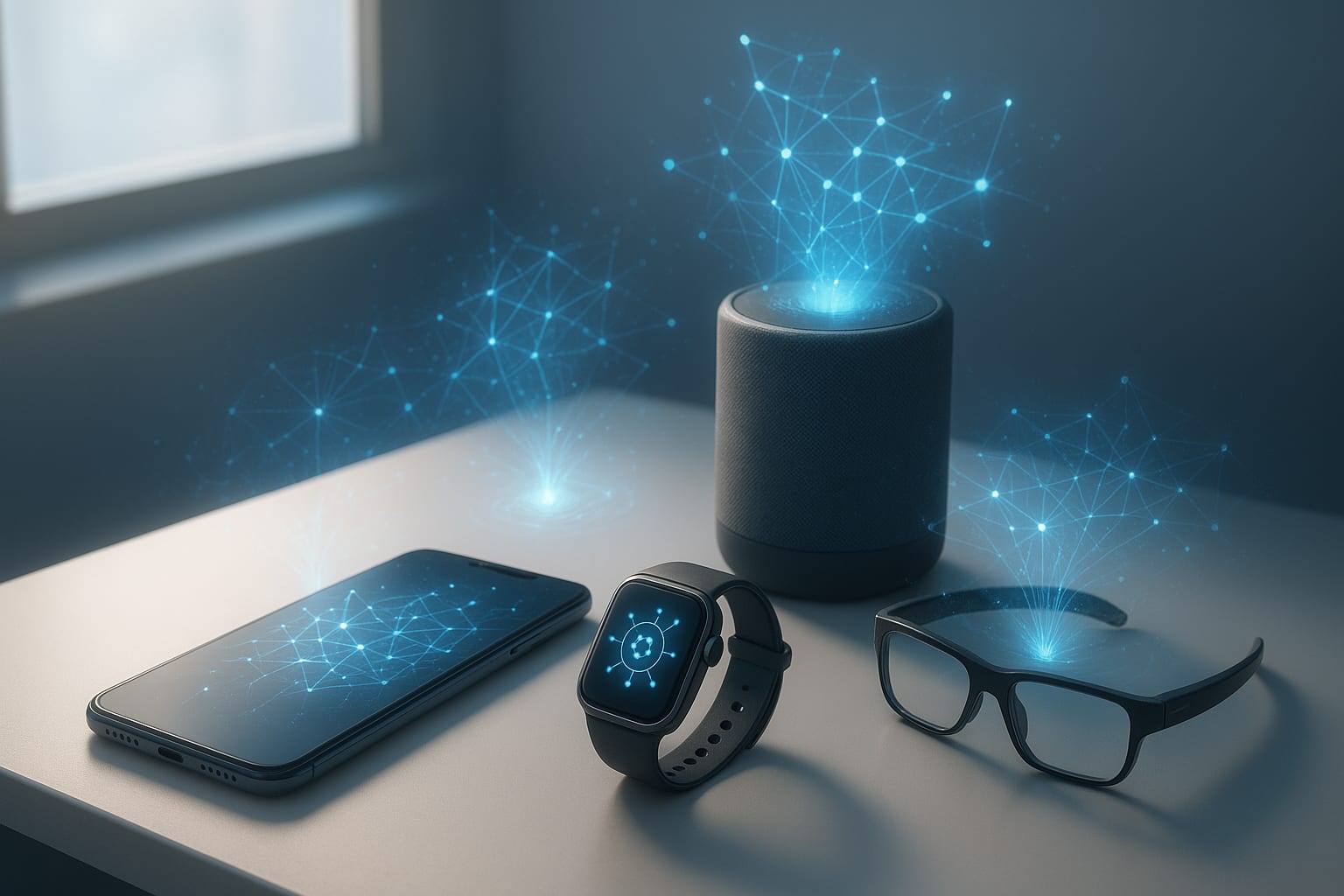
Face unlock, camera image enhancement, real-time audio transcription, and offline translation all rely on on-device AI.
Wearable:
The fitness tracker instantly detects irregular heartbeats and low oxygen levels, alerting you before the problem becomes an emergency.
Smart home gadgets:
Security cameras use AI to differentiate between passing cars and people at your front door, reducing false alarms.
car:
Advanced driver assistance systems (ADAS) analyze video and radar data in milliseconds and can prevent collisions or keep you centered in your lane.
Retail and security:
In-store sensors analyze customer flow and security systems can recognize suspicious patterns without constantly streaming video.
How does edge AI actually work?
Behind the scenes, Edge AI relies on specialized hardware and optimized software.
AI processor:
Chips such as GPUs, NPUs (Neural Processing Units), and AI accelerators are built into smartphones, smart speakers, and even cameras. These chips process complex calculations at lightning speed with minimal energy usage.
Model optimization:
AI models are first trained on powerful cloud servers with large datasets. Once trained, it is compressed and simplified using techniques such as quantization, pruning, and distillation, allowing it to run efficiently on smaller devices.
Edge expansion:
After optimization, the model is deployed to the device and runs continuously, interpreting sensor input and making instant, granular decisions.
This combination of hardware innovation and model efficiency makes it possible to pack powerful intelligence into compact, battery-powered gadgets.
Industries driving edge AI growth
While consumer electronics is getting the most attention, edge AI is spreading across industries at breakneck speed.
health care
Portable diagnostic tools can scan patients instantly. Continuous monitoring devices track heart health, blood pressure, and blood sugar levels without the need for a cloud server.
car
From driver assistance features to fully autonomous driving, cars rely on local AI to interpret sensor data from cameras, radar, and LiDAR in real time.
manufacturing industry
Machines equipped with Edge AI can detect production line defects, predict equipment failures, and adjust operations instantly.
agriculture
Smart drones and soil sensors make local decisions about irrigation, pest control, and crop health without waiting for cloud responses.
retail
Stores use edge-based cameras to measure foot traffic, manage inventory, and offer personalized promotions without risking customer privacy.
Challenges and limitations
Despite its potential, Edge AI is not without its obstacles.
- Hardware constraints: No device can match the raw computing power of a cloud server. Designing chips that balance performance and energy usage remains an engineering challenge.
- Battery life: Continuous AI processing will quickly drain the small battery. Wearable devices in particular must be carefully optimized.
- safety: Although the data may remain local, a compromised device can potentially leak the information. Edge AI requires robust device-level security.
- Model updates: AI models need to evolve. Updating thousands or millions of devices to the latest version requires a smart sync method.
Cloud + Edge: The hybrid future
It is important to note that edge AI is not a replacement for cloud AI, but rather a complement to it. The future will be hybrid.
Edge handles immediacy. The device makes instantaneous decisions such as applying the brakes, unlocking, and detecting movement.
Cloud deals with complexity. Large training datasets, global optimization, and long-term analysis are well-suited to large infrastructures.
This dual system keeps your device responsive and secure while benefiting from the immense power of cloud computing.
Why edge AI will define the next era of gadgets
We are moving towards an era where intelligence is embedded everywhere. Everyday tools are no longer passive. They are active and situational aware companions.
Picture this:
- Even when you're walking around a foreign city, your smart glasses will translate your conversations.
- A smartwatch that detects early signs of stress and illness.
- A refrigerator that understands your diet and suggests healthier alternatives.
These scenarios aren't decades away; they're happening now with edge AI.
Edge AI represents a fundamental shift in computing. By bringing intelligence closer to where data is created, we deliver speed, privacy, reliability, and efficiency not possible with cloud-only solutions.
From phones to cars, hospitals to farms, this technology is already transforming industries, and we're just getting started.
Tomorrow's gadgets will do more than just connect to the Internet. They understand, adapt and react instantly. And that is the promise of edge AI, an invisible revolution that will shape the future of everyday life.