In October, Australia expanded child safety measures to include AI chatbots.
France has also asked the EU to ban social media for children under 15.
Britain's Online Safety Act, which came into force in July, places strict age requirements on platforms such as Facebook, YouTube, TikTok and X, as well as sites hosting pornography, to protect children and remove illegal content.
But experts say such bans could cut off vulnerable users from important support networks, while privacy advocates worry that age-verification procedures could allow more personal data to be collected.
Youth protests and social media
The rapid spread of information on social media sparked mass protests among disillusioned youth in 2025 and contributed to the overthrow of unpopular governments in Nepal and Madagascar.
Protests in Indonesia have garnered local support after the death of a delivery driver was widely shared on social platforms and sparked demonstrations over income inequality.
Africa, home to the world's youngest population, has seen a wave of youth-led protests fueling dissatisfaction with corruption, poor governance, high living costs and rising unemployment.
Political analysts say the Gen Z uprising will continue to exploit social inequality and instability, with young Moroccans, Pakistanis and Peruvians taking part in recent protests.
internet shutdown
Governments are increasingly using internet blackouts to curb social unrest.
In October, the Tanzanian government restricted internet access for five days during the election period to restrict the flow of information, according to human rights groups.
Activists say the shutdown blocked major social media platforms including Facebook, WhatsApp, TikTok Live and Instagram Live, preventing real-time updates and online mobilization.
According to the African Digital Rights Network, the number of internet shutdowns across Africa has doubled in less than a decade.
In Afghanistan, the Taliban restricted internet access in September, then completely cut off connectivity for two days, denying millions of people access to the outside world.
After the Myanmar earthquake in March, internet shutdowns hampered aid efforts and allowed misinformation to spread.
Communications have been under the control of the military junta since it seized power from the democratic government in 2021.
Ahead of the first general election since the coup in late December, there are concerns about surveillance and internet blackouts aimed at suppressing opposition and suppressing information.
border control
As the number of people fleeing war, poverty, climate change, and other global turmoil reaches record levels, states are also increasingly turning to digital solutions to manage migration.
The UK has announced that it will use AI to speed up asylum decisions and introduce facial age estimation technology for asylum seekers who claim to be under 18 by 2026.
Britain is also planning a digital ID for all workers to control immigration, despite widespread criticism and privacy concerns.
President Trump has also ramped up the use of surveillance and AI tools, from facial recognition to robot patrol dogs, as part of his immigration crackdown.
Climate impact
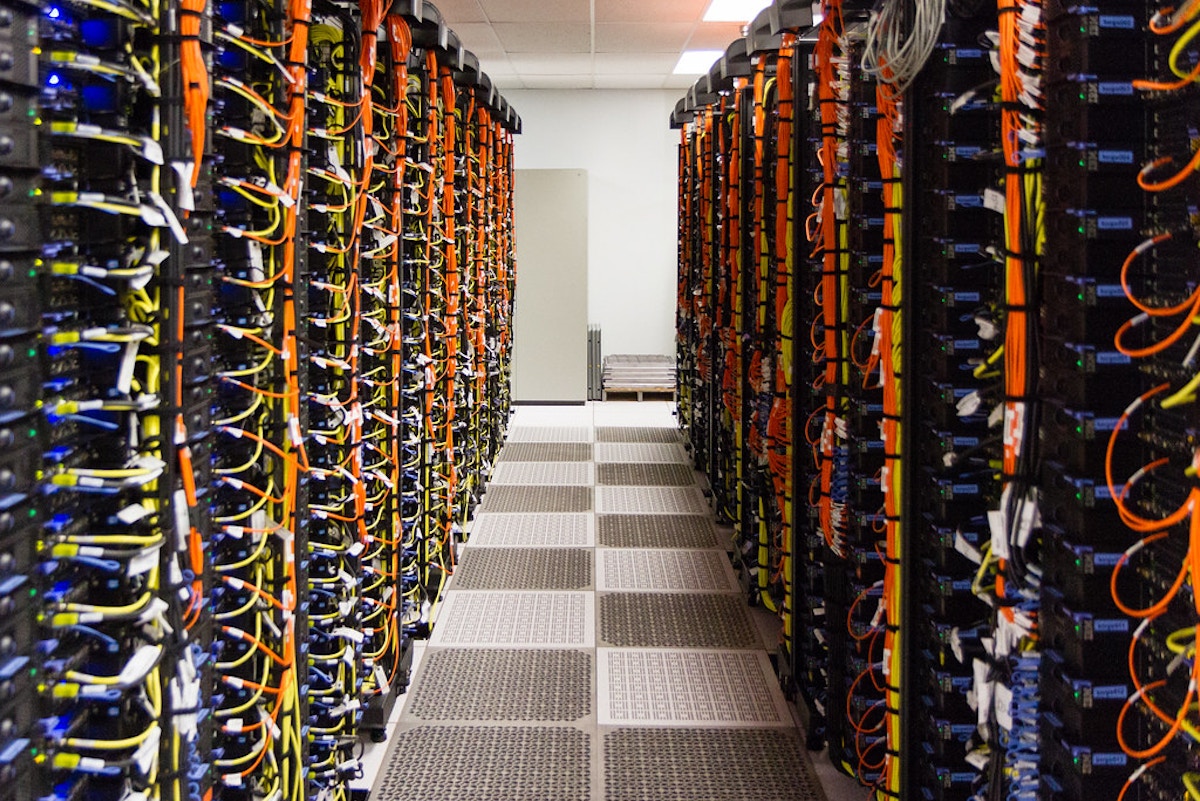
The number of data centers around the world is mushrooming to meet the surging demand for AI technology, but there is little information or accountability about their impact on the climate, according to a series of Context studies.
Data centers can house thousands of servers to store large amounts of data for AI tools generated by major technology companies such as Microsoft, Google, and Amazon.
Servers use a lot of energy to run and a lot of water to cool. Google announced that its data centers consumed 6.1 billion gallons of water in 2023.
Data centers in the United States could use up to 9 percent of all electricity generated by 2030, more than double the current consumption, according to the Electric Power Research Institute.
AI tends to increase the amount of water used in data centers because power-hungry processors have greater cooling requirements than traditional servers.
This article is published with permission from the Thomson Reuters Foundation, the charitable arm of Thomson Reuters, covering humanitarian news, climate change, resilience, women's rights, human trafficking and property rights. visit https://www.context.news/.