In 2025, Portugal will increase the adoption of artificial intelligence (AI) across all industries, including fintech.
This year has been marked by a surge in AI adoption and the rise of “AI-first” companies leveraging the technology to build smarter, faster and more adaptable financial solutions, according to a new report from industry group Portugal Fintech.

The Portugal FinTech Report 2025, published in October and produced in collaboration with KPMG, Visa and local law firm Morais Leitao, is based on a public survey of Portuguese FinTech members and an analysis of the sector. This highlights the depth and breadth of AI adoption in the Portuguese fintech landscape.
Of those reviewed and surveyed, 90% reported already implementing AI into their internal operations. This reflects a mature market where AI is no longer a competitive differentiator, but a fundamental enabler of efficiency and performance. Furthermore, 74% say they are directly integrating AI into their products or services, highlighting its role as a driver of innovation and growth.
In this context, financial management and regtech lead the way, with adoption rates of 91.7% and 90.9%, respectively. These companies are leveraging AI as a core driver of expansion, including ventures like nBanks and Zango.
nBanks is a Portuguese fintech that provides financial management software that aggregates financial and corporate information from businesses for data-driven financial insights, customized reporting, analysis, and forecasting.
Zango builds professional, expert-backed AI for financial services compliance teams. The startup, which only emerged from stealth in July 2025 after raising $4.8 million, has already recruited high-profile players including Novo Banco, Portugal's fourth-largest bank, and is now gaining traction with major European Union (EU) and UK neobanks such as Monzo and Juni.
In contrast, more traditional sectors such as payments and remittances and lending and credit recorded the lowest adoption rates at 35.7% and 50% respectively. This gap is likely due to a more stringent regulatory environment and the influence of existing players, the report said.

Increased efficiency and productivity
Across sectors, Portuguese fintech companies that have integrated AI into their products or services most often reported new product creation (45.3%) as the main impact. This highlights the role of AI as a catalyst for innovation in fintech.
Portuguese fintech companies using AI also reported improved profitability (24.5%) and increased revenue (20.9%), reflecting the potential of AI to drive both efficiency and revenue growth.
These benefits are also evident in internal operations. Almost half (48%) of respondents cited increased profitability as a key outcome of integrating AI into internal processes. Furthermore, 23.5% reported a reduction in structural costs and 14.3% showed a reduction in team size, reflecting significant increases in efficiency and productivity.

The rise of agent commerce
The report also highlights key fintech trends in 2025 and 2026, including the rise of agent commerce.
Agenttic commerce refers to the use of autonomous AI agents that can act on behalf of customers and businesses. These AI agents are designed to help customers search, compare, and shop based on their needs and preferences, aiming to improve customer experience, convenience, and efficiency.
Until now, AI agents were primarily limited to viewing and suggesting products, but not being able to actually pay for them. This is mainly because it was not connected to a secure and reliable payment system.
To fill this gap, Visa created Visa Intelligent Commerce to provide a set of tools and protections to support commerce on behalf of customers and enable AI-driven purchases through Visa's payments network. These tools include tokenized “AI-enabled” payment credentials, APIs for authentication, transaction controls, lifecycle management, personalization and consent-based data sharing, and fraud prevention and security features.
The Rise of Stablecoin Legitimacy
In addition to AI and agent commerce, the report highlights the growing relevance of stablecoins. According to Diogo Monica, co-founder of cryptocurrency firm Anchorage Digital and general partner of Haun Ventures, these digital currencies are steadily evolving from niche cryptographic tools to legitimate, programmable, borderless forms of money designed for global scale.
Monica identifies three enterprise use cases for stablecoins that are already thriving: payments, payments, and financial management. In the past, international payments could take days and involved multiple banks and intermediaries, making them slow and expensive. Stablecoins allow these payments to be made almost instantly and with much lower fees.
On the consumer side, stablecoins are best suited to the product market by protecting consumer savings and preserving value. This is especially true for countries like Argentina and Türkiye, whose inflation rates in 2024 averaged 117.8% and 58.51%, respectively.
Portuguese fintech
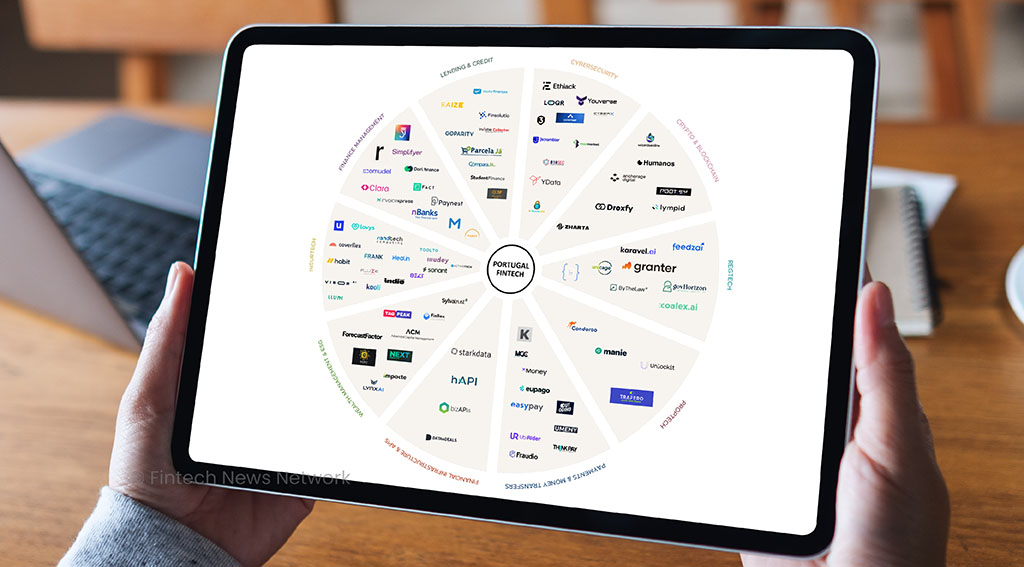
The report also provides an overview of the Portuguese fintech ecosystem, providing an overview of the key players, market trends, and funding trends among the Portuguese fintech members.
According to the report, more than 90 fintech companies are currently members of the industry group, with the most represented industries being insurtech (17%), followed by lending and credit (12.2%) and payments and remittances (12.2%).
Most of Portugal's fintech members are from their home country (73.9%), with the second most represented jurisdiction being the UK (8.7%), followed by France (2.6%) and Spain (2.6%).
These companies have secured nearly €1.2 billion (US$1.4 billion) in total funding to date, reflecting investor confidence. In 2025, 22.6% of them raised capital, indicating continued momentum in the sector.

Featured image: Compiled by Fintech News Switzerland based on image by farknot via Freepik