In the world of construction technology, a year brings big changes.
Attendees on day two of the recent Building Show in Toronto heard how agent AI is rapidly emerging as the third wave of AI in construction, moving beyond large-scale language models (LLMs) and automated workflows to create a world of autonomous systems that plan, monitor, update, and even write code for project tasks.
Mahir Diensa, a digital innovation specialist at Amrize (formerly Lafarge), who hosted the session titled “Al Agents and the Robotic Workforce: Reimagining the Future of Construction,” said the use of agent-based AI is accelerating so rapidly that the session preview he wrote for the program several months ago is already outdated.
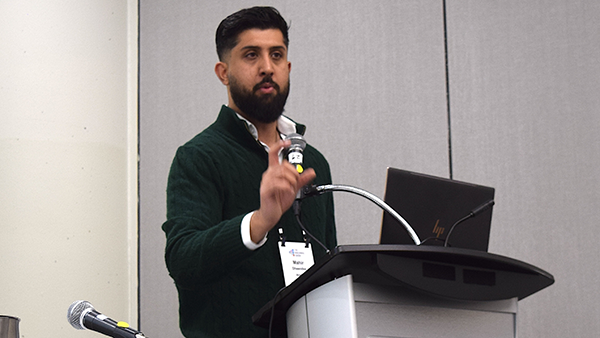
“Agentic AI is the hot topic in the AI space this year and is making big headlines,” said Dheendsa. “I don't think there's been much progress in robotics, so I think we can skip that.”
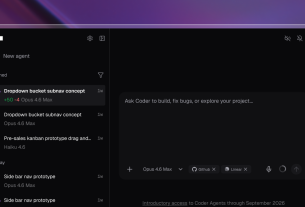
Platforms that offer AI agents, such as n8n, Gemini Agent Studio, Make.com, and Zapier, are democratizing agent development and allowing construction professionals to build custom automation without extensive coding expertise, Dheendsa said. Generative development tools like Lovable AI and Cursor go even further by generating, modifying, and testing software directly from written requirements, significantly reducing the time typically spent on planning and manual coding.
multi-level reasoning
He explained that LLM requires no tools or actions and is a one-step solution. AI workflow
You can connect multiple apps by following a fixed set of steps, but no reasoning or judgment is required. AI agents act as autonomous intelligence, using tools and APIs to make multi-step inferences that evaluate, retry, and create.
Dheendsa gave an example where supply chain coordination is in trouble. Twenty workers are standing around doing nothing because the steel beams have not arrived.
Agents can track suppliers' GPS data and production status updates in real-time, predict delays perhaps three days in advance, and suggest rescheduling of crane rentals.
Another example is a change order. A subcontractor may send an invoice for “additional work,” but no one remembers whether it was approved or not, Diensa said. Agents automatically scan thousands of emails, contracts, and meeting minutes to ensure that additional work is actually part of the original contract scope.
“AI agents have decision-making capabilities,” Dheendsa says. “The AI agent monitors and reports. It detects issues and, based on criteria you can provide, decides whether this is an issue worth raising.
“Then we decide which teams or which people need to be notified.”
He said he uses Replit, Lovable, and Cursor, all of which can work to generate responses to RFPs.
“Simply copy the RFP into the Lovable app and your software is complete,” says Dheendsa.
“If you have an idea and want to build an app, you don't even need to know how to write code. You just put your idea in there and it generates whatever you need, whether it's an app, a web app, or a website.”
humans in the loop
Dheendsa stressed that users still need to “stay informed.”
“It's easy to make mistakes. It's easy to hallucinate, but it's getting better.”
For example, for Gemini 3: “I'd say 85 percent. Very good.”
Another caveat is that users should not go for an AI solution if the original process is flawed. “Don't automate broken processes,” says Dheendsa.
Among the various risks he identified, he said the “risk of overconfidence” was extremely dangerous. Confidence and correctness are not the same thing. Always verify technical achievements and check them against standards and regulations, he said.
In an interview, Dheendsa said there are several reasons why Microsoft reports that construction jobs on construction sites are among the least threatened by AI.
For example, a dredger operator or crane operator represents many “moving parts.” Second, there isn't enough data collected in the field for AI to automate, he said.
“Administrative tasks like data entry and all repetitive workflows are easy to accomplish, so start there,” says Dheendsa.
“The barrier to entry has never been lower…I encourage people to start doing it, because even if you can't get it 100 percent, you can at least get 80 percent.”