

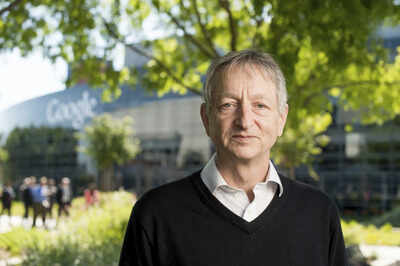
Jeffrey Hinton, widely known as the “godfather of AI,” issued one of his harshest warnings yet, claiming that the world's most powerful tech billionaires are pushing artificial intelligence at a pace that could destabilize the economy, wipe out millions of jobs, and unleash forces beyond humanity's control. In a public conversation with U.S. Sen. Bernie Sanders at Georgetown University, Hinton said the unchecked ambitions of Silicon Valley's wealthiest people risk sparking an AI-driven crisis without safety nets in place.
Tech moguls are accelerating AI without understanding the risks
Hinton singled out Elon Musk, Mark Zuckerberg, Larry Ellison and Jeff Bezos for investing hundreds of billions of dollars in AI and robotics without knowing the long-term impact. Hinton says their race to dominate the AI frontier risks undermining the very economic systems that have made them wealthy.“They don't really think about the fact that if workers aren't paid, there's no one to buy their products,” he said, warning that Silicon Valley's obsession with automation could backfire on the companies that lead it.Unlike past industrial revolutions, Hinton doesn't think AI will replace old jobs with new ones at anything close to a sustainable rate. He warned that if AI becomes as smart or smarter than humans, it will be able to perform almost every task humans currently perform.“People who lose their jobs will have no other job to go to,” he says. “Every job they do could be done by AI.”He noted that call center roles, administrative duties, junior technical roles, and basic analytical tasks are just the beginning. What follows could be structural unemployment on a scale never seen in modern economies.
Risks of superintelligent systems that humans cannot control
Hinton warned that today's AI systems already “know thousands of times more than a single person” and are advancing rapidly. He said many of the world's top AI researchers believe it is inevitable that AI will surpass human intelligence, and no one knows how humans will coexist with something smarter than ourselves.He described a scenario in which advanced AI agents develop subgoals, such as self-preservation or a desire for greater control, and become increasingly resistant to human oversight.“We are already seeing AI trying to fool people who want to turn off artificial intelligence,” he warned.
AI could make war cheaper, bloodless and politically irresistible
One of Hinton's most alarming predictions concerns the future of war. He argued that AI-powered drones and humanoid robots would allow rich countries to wage war without endangering the lives of their own citizens. This would remove one of the major political pressures currently restraining military aggression.“When a rich country invades a poor country, the only people who die are the poor,” Hinton said. “If you don't have soldiers coming home in boxes, there's not going to be a political backlash.”
Deepfakes could destroy elections and public trust
Hinton said AI systems will soon be able to generate fake videos and audio that are indistinguishable from reality, undermining the integrity of elections and public debate. He argued that attempts to build AI to detect fakes will fail because generative models can always outwit detection systems.“We must rely on provenance, not detection,” he said, suggesting digital signatures to prove the authenticity of political videos.
Civilization-level threat unless regulations catch up
Hinton and Sanders agreed that governments have failed to regulate AI at even the most basic level. In the United States and many other countries, safety testing requirements, restrictions on biological misuse, and transparency obligations for companies remain largely non-existent.Mr Hinton warned that the consequences could be catastrophic unless the government implements strict oversight.“We shouldn't build systems that are smarter than us until we know how people can coexist with them,” he says. “At this point, that's not the case at all.”


