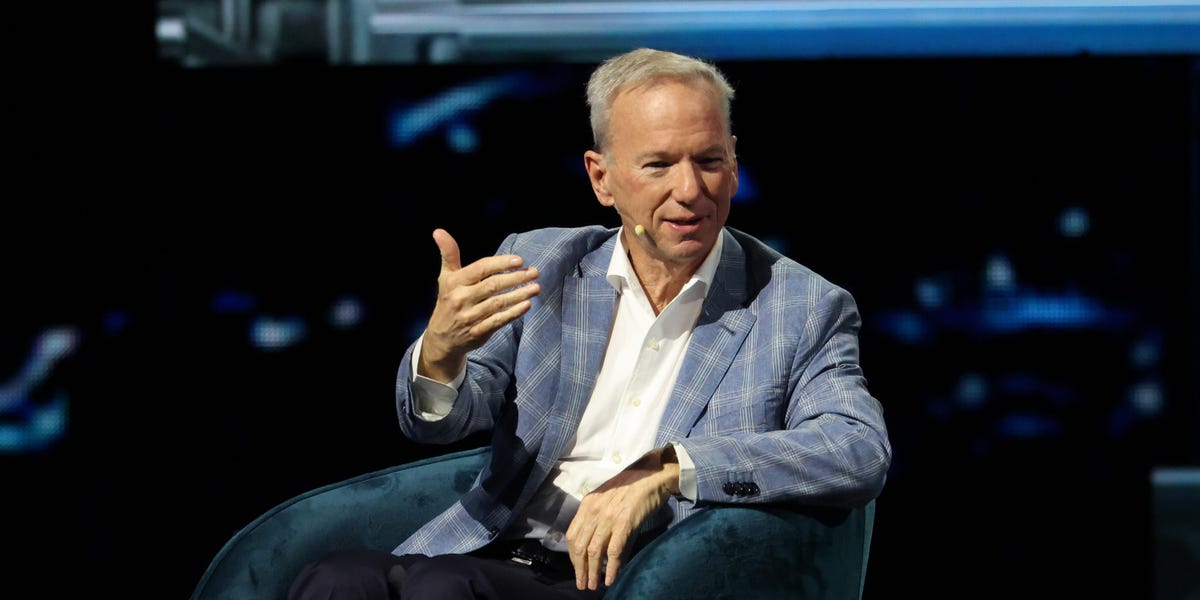
If you feel AI is overhyped, Eric Schmidt suggests companies should buckle down. The real chaos has not yet begun.
In an interview with Professor Graham Allison at Harvard University’s John F. Kennedy Jr. Forum on Monday, Google’s former CEO rejected the idea that AI’s rapid growth is a speculative bubble, saying the technology is actually under-hyped.
“If anything, it doesn’t get much publicity because it fundamentally automates the business,” he said.
He said the real transformation is happening deep within the enterprise, where AI systems are starting to take over the “boring” tasks that quietly consume billions of dollars in corporate spending.
of maximum profitHe suggested that it will come by automating the core of business operations: repeatable, time-consuming processes that are buried deep within every organization.
The former Google chief cited billing, accounting, product design, shipping and inventory management as examples.
“There are so many things out there that it’s extraordinary,” he said, pointing to fields such as healthcare, climate change solutions and engineering as areas where automation could accelerate breakthroughs.
Schmidt, who helped steer Google’s early investments in AI and later co-wrote a book on AI with Henry Kissinger, hinted that the technology’s economic impact will be much greater than the market and executives appreciate.
Still, not everyone agrees with that view. Some economists are warning that the AI boom is heating up.
Prominent economist Ruchill Sharma said in an interview this week that the rise in AI exhibits all four characteristics of a classic bubble and could burst if interest rates rise, while tech leaders such as Sam Altman and Bill Gates have warned that parts of the market resemble the dot-com era.
Much more than coding
To illustrate how rapidly AI capabilities are advancing, Schmidt explained that he has watched AI systems generate entire software programs.
“Oh my god, it’s over,” he said.
“I’ve been programming for 55 years, and it’s really profound to see something start and end before your eyes in your life,” he added.
But he said the long-term benefits of AI extend beyond coding.
From back-office workflows to logistics to scientific discovery, the automation curve is still in the early stages of expansion, and Schmidt believes Wall Street is underestimating the magnitude of the change.
“The reason people are spending so much money is to automate boring parts of their business,” he said.