
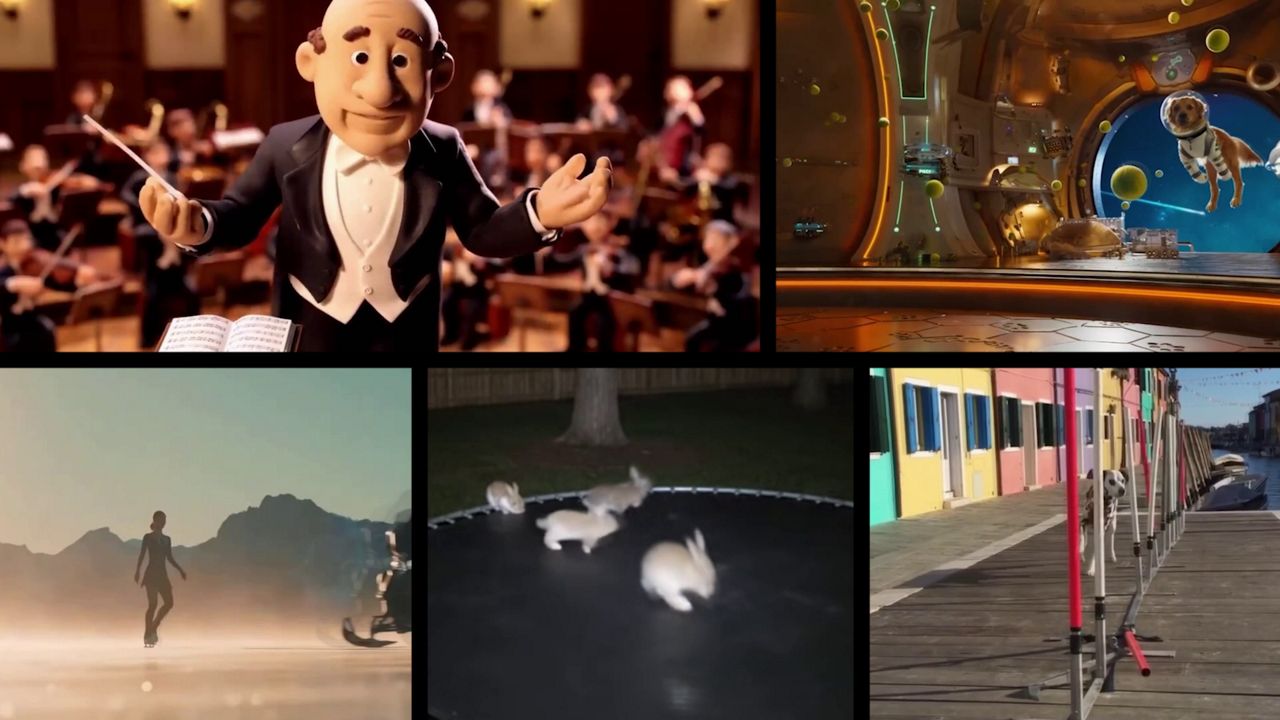
RALEIGH, N.C. — A new wave of hyper-realistic AI videos is sweeping social media following the release of Sora 2, a text-to-video generator from the makers of ChatGPT. Sora 2 can turn a few words into authentic, cinematic scenes.
What you need to know
- Sora 2, which previously required an invitation code, is now temporarily open to everyone
- Most videos produced with Sora 2 contain a visible watermark
- Cybersecurity company DeepStrike reports that deepfake files will increase from 500,000 in 2023 to 8 million in 2025.
This technology has inspired both awe and anxiety. For some, it represents a new creative frontier, but even experts admit that the line between real and fake is becoming increasingly difficult as videos become more convincing.
“AI models are getting better and better, and there are so many different AI models out there,” said Madeline Salazar, a content creator who has worked in the entertainment industry for the past 10 years. “You have to be careful of a lot of things. It’s difficult to catch them.”
Salazar has a large following on social media and teaches technology in a fun and relatable way. Her “AI or Real” series asks viewers to guess whether what they’re seeing is filmed or generated. She hopes her videos, which have millions of views, will make people a little more curious about what they scroll through every day.
A new talk about fake videos
Old perks like six-fingered hands, fuzzy teeth, and limbs that bend in impossible ways are no longer as reliable as they once were. Salazar said modern AI models pick up on these details accurately, so people need to look for more subtle clues.
“I saw someone post about a video in the gym where the weight wasn’t even on each side,” Salazar said.
She says texture and small details are often the biggest clues. The bubbles in your latte may appear to ripple or dance. Hair and fine lines may move slightly from frame to frame. Even objects that are supposed to be perfectly still, such as lamps or walls, can shift slightly because the model is still learning how to process pixels.
“The way these AI models process pixels is still not 100% accurate,” Salazar said. “It’ll probably go away within a month or two. But for now, it’s a good thing to take care of.”
AI can also struggle with complex structures, especially those that include repeating patterns, steep angles, or intersecting lines. Play equipment, buildings, and structures may be bent, distorted, or incorrectly placed in their actual location. These distortions are often easy to spot if you know how to look for them, she says.
Salazar added that some creators are intentionally deceiving people by generating fake security and body camera footage. Because viewers already expect those videos to be of low quality.
“One of the big trends is AI-generated security camera footage,” she said. “We already expect the footage to be grainy, so these AI-generated videos from surveillance cameras are created to fool people.”
Context clues matter most
Sometimes the biggest benefit isn’t in the image itself, but in the details around it.
“When I tell people what to look out for, one of the important things is context,” Salazar says. “Does the account post a lot of similar videos? Are there watermarks? What is their track record?”
Her advice also applies to photos that went viral earlier this year that purported to show trash washing into homes along the Outer Banks. Upon closer inspection, it was discovered that the roof lines did not line up properly and the windows were placed in odd positions. Digging deeper into the source of the image, we found that the account that posted the image had a feed full of other AI-generated content. Taken together, these clues strongly suggest that the photo is not real, even if many in the comments section believe it.
The dark side of AI pranks
While many people are turning to AI videos for fun and entertainment, this technology is also facilitating pranks that affect the real world. One widespread trend was for people to create fake images or videos of homeless intruders inside their homes and send them to family members to provoke a reaction.
In several cases, families believed the images were real and called 911, resulting in police responding. Law enforcement agencies in several states have warned that these AI-generated intruder hoaxes can divert resources from real emergencies and lead to dangerous situations. In October, two boys in Ohio were charged with criminal charges in connection with one of the incidents.
Salazar believes these incidents are part of the reason public opinion around AI is souring.
“That’s what’s creating anti-AI rhetoric,” she says. “But as a producer, without AI, we could have been misinformed five years ago. It’s not technology that’s misinforming. It’s people producing videos with malicious intent.”
creative advantage
Despite the risks, Salazar sees some positives. She believes AI tools will level the playing field for independent creators and small production companies, giving them access to technology that requires more expensive content.
“Now we have the advantage of being able to level up our media at a relatively low cost,” Salazar said.
Digital reality check
As AI gets closer to mimicking reality, Salazar says it may encourage us all to slow down, be more skeptical, and really question what we see. She believes this moment can help rebuild habits that may have been lost in the digital age.
“Ever since we were kids, we’ve been taught, ‘Don’t believe everything you hear. Don’t believe everything you see on the internet,'” she says. “Maybe AI will bring about a reset, where we can look at everything with a critical eye again and become less passive in what we believe online.”


