The Culture and Museum sector has witnessed the accelerated use of artificial intelligence focused on a variety of fields, including museum guidance and immersive exhibitions, according to industry experts at the Matchmaking Conference held in Shanghai on August 25th.
The city has been bolstering innovation efforts in the sector in recent years. In 2018, the Shanghai Museum established the country's first comprehensive database digital management platform. In 2021, Shanghai History Museum launched its city's first digital twin museum system, significantly improving its digital governance capabilities.
Several immersive exhibitions at various museums in Shanghai already utilize advanced technology and offer new cultural experiences while bringing the ancient Chinese civilization back to life.
read more: Infinite new lenses
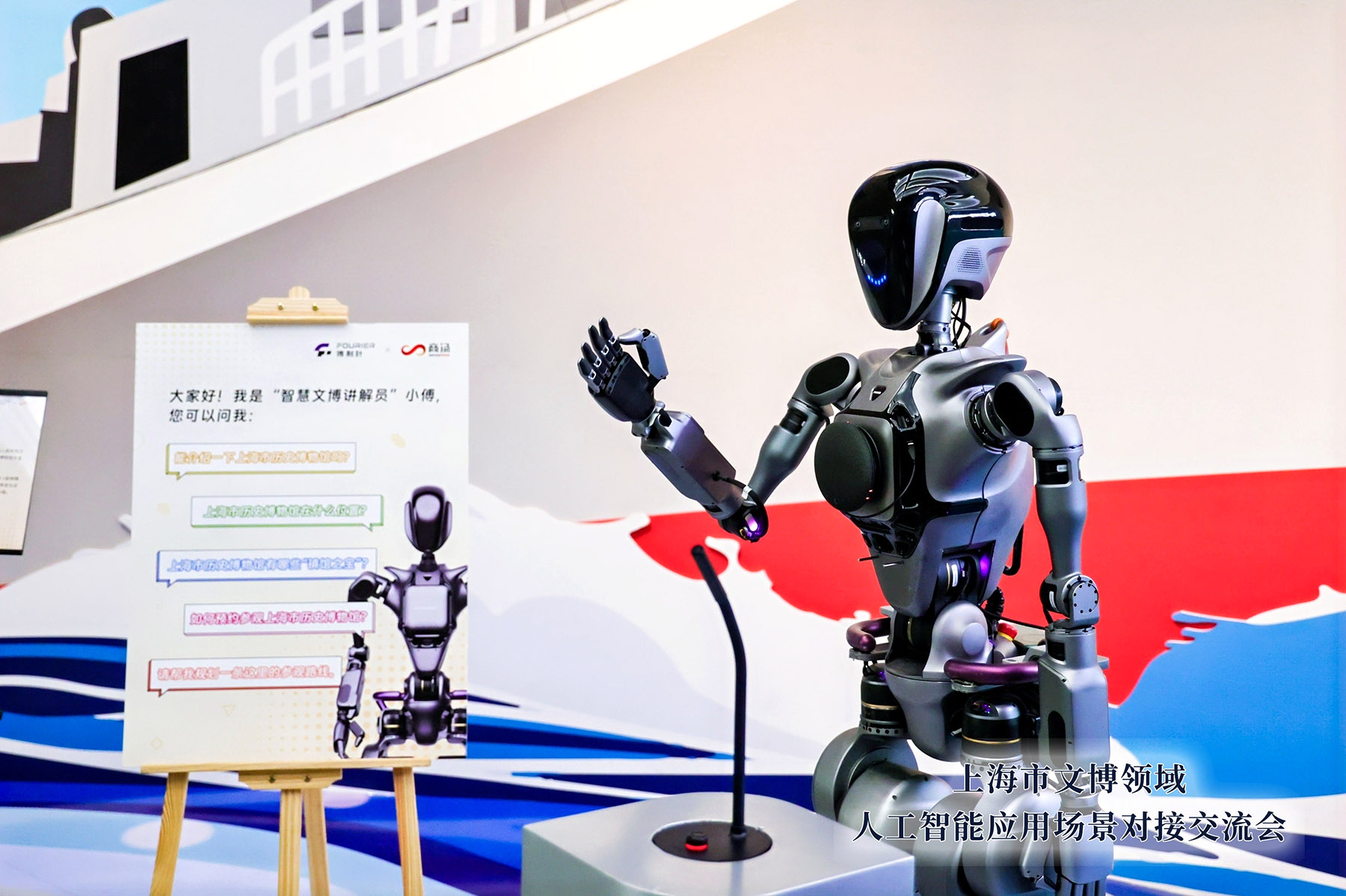
In collaboration with Chinese AI company Sensetime, Fourier's humanoid robots were demonstrated at the meeting, offering visitors a guided tour of the museum.
Xinke Animation Co has set up an immersive space with real-life virtual reality to take visitors on an expedition to the mystical Xixia Imperial Tombs.
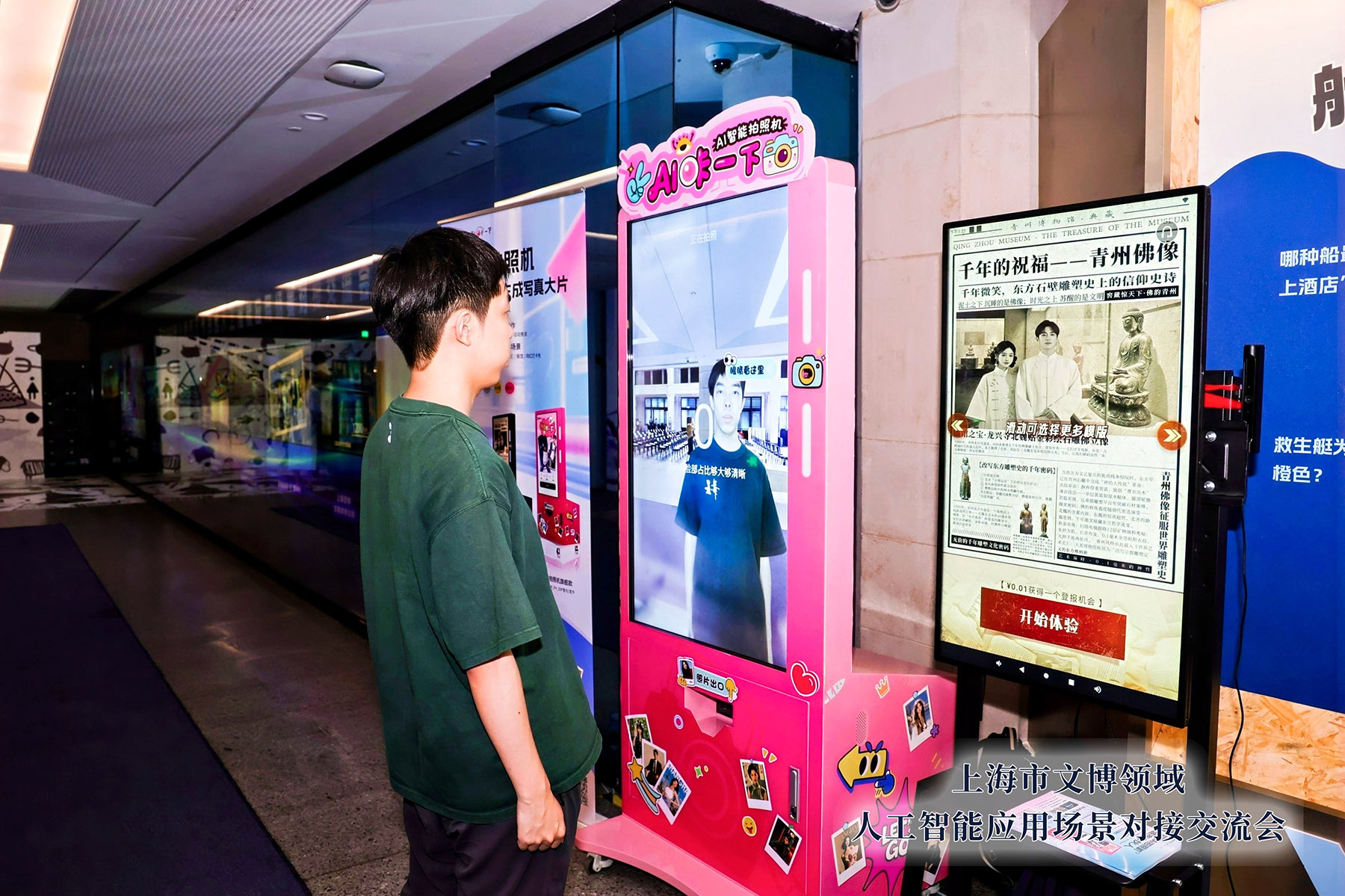
Bimoai also introduced an interactive terminal called “Bimoai Camera.” This provides visitors to museums and attractions with instant customization of AIGC (artificial intelligence-generated content) photos and newspapers.
“Artificial intelligence not only strengthened the interaction and involvement of visitors' experiences, but also optimized the management of cultural institutions and cultural artifact protection,” said Xiang Yhai, deputy director of the Department of Cultural Heritage, Shanghai Municipal Bureau. “The museum has evolved from a traditional exhibition space to a vibrant, interactive venue, and AI is becoming a 'super-translator' for telling the story of Shanghai. ”
Read again: ai adjusts music for healing purposes
Several collaborative projects were signed during the event to further promote AI application scenarios in the cultural and museum sectors.
Among them, the Shanghai Museum will partner with BestV to develop a digital twin museum, and the Shanghai Museum of History will work with four technology companies to deepen exploration of sectors such as spatial scanning, data collection, modeling, digital rights management, and intelligent guided tours.
At the conference, Ziaoton University in Shanghai also announced the construction of a research centre that optimizes the protection of cultural heritage architecture. With AI technology, the center will focus on key areas such as diagnosing architectural flaws in cultural heritage, risk forecasting, and protection measures.
“There is great potential and promising prospects for China's cultural tourism market. For example, there is a growing market demand for Bimoi Cameras in Shanghai. We are discussing potential collaborations with around 100 museums and cultural tourism sites.” “We are confident that the application of AI in this sector will continue to grow.”
Please contact the writer at wangxin2@chinadaly.com.cn