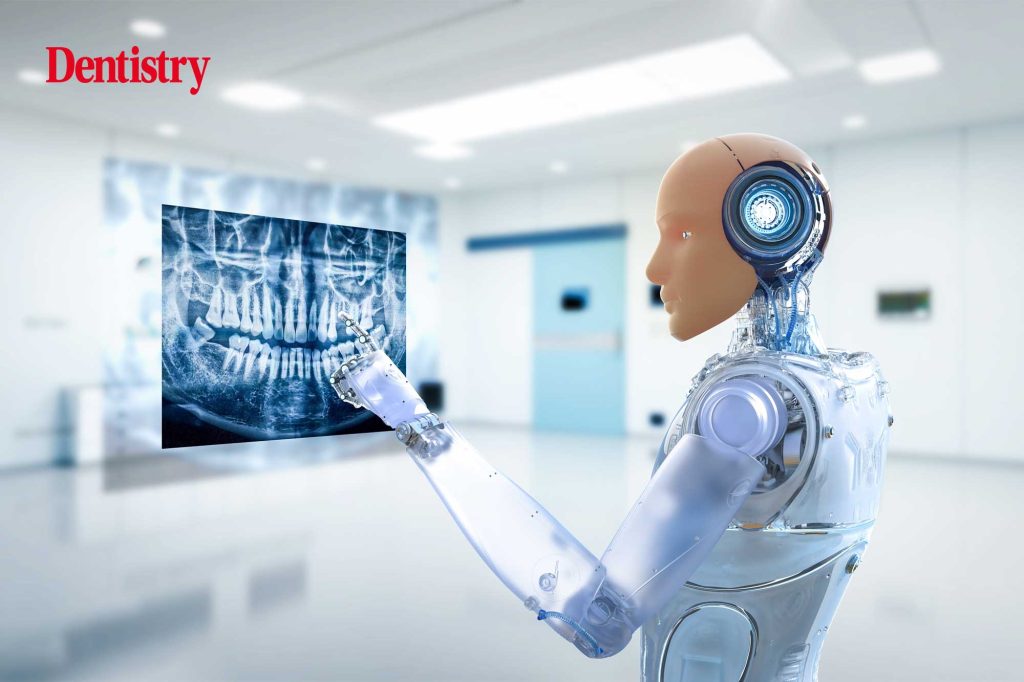
Helen Kanney weighs some of the potential drawbacks against the current use of artificial intelligence (AI) in dentistry.
AI is no longer a concept of the future. It's already restructuring healthcare, and dentistry is no exception. With its ability to simulate human intelligence, AI offers important opportunities to improve diagnostic accuracy, treatment planning, and patient communication. But like all innovations, its integration needs to be managed with caution.
Where AI is affecting it
The current strengths of AI in dentistry lie in image analysis, predictive modeling, and management efficiency. It has been trialled:
- diagnosis: AI can detect tooth decay, oral pathology and assist in the interpretation of x-rays. While it is promising, its diagnostic accuracy requires robust clinical verification
- Treatment Plan: In Orthodontics and Implant Dentistry, AI tools help develop more efficient workflows and strengthen the consent process through treatment simulation
- Risk forecast: The algorithm can estimate the likelihood of conditions such as tooth decay, periodontal disease (accurate pocket depth measurement), oral cancer, allowing for more aggressive care
- Practice management: From booking scheduling to data processing, AI streamlines back-office capabilities
- Other applications in dentistry: AI is also being investigated to manage cleft lip and palate patients to produce crown and bridgework using CAD/CAM design and 3D printing.
It is not a replacement for clinical judgment
Currently, the biggest use of AI in dentistry is record management and patient communication. Some tools use digital imaging to help dentists explain clinical concepts to patients. These are stored in the patient's records and can be assisted in obtaining consent. Other AI-driven tools help in documenting and transcription efficiency.
Ultimately, technology that improves patient communication, promotes consent and improves recordkeeping is nothing more than a good thing. However, despite this possibility, AI must support the expertise of experts. Clinicians should remain legally and ethically responsible for maintaining accuracy, ensuring that content generated by AI is customized and critically reviewed.
Legal and ethical considerations
Using AI for clinical documentation or patient interactions also creates data protection and consent issues. Clinicians should check whether recordings are stored and ensure GDPR compliance. If there is a discrepancy between the transcript and the recording, this could form the basis of a legal challenge.
Define clear boundaries
Interpretation of X-rays is a high-risk area where AI can prove transformative. Overlooked tooth decay often forms the basis for clinical negligence claims. AI can improve diagnostic accuracy, but the final interpretation should remain at the dentist.
AI has already developed treatment plans in some areas, such as orthodontics. But where is the responsibility lie if the machine-led or remote clinician's plan fails? Occupations must now define these boundaries, not later.
The promise of AI is to increase accuracy, reduce administrative burdens, and support clinical decision-making. However, clinicians continue to take responsibility for better or worse. As technology evolves, careful optimism combined with strict surveillance is key to unlocking the fullest potential in dentistry.
It is essential to provide information and prepare for AI. MDDUS has developed practical AI for dental checklists to help clinicians navigate the adoption of these technologies safely, ethically, and confidently.
mddus can be by your side as a dental professional
Our empathetic and experienced Dentolegal Advisory team manages thousands of inquiries from our members each year on a wide range of issues.
Are you interested in becoming a member? Get a quote and apply online.
This article is sponsored by MDDUS.