highlights
- AI video editor automates cutting, captioning, color correction, and content pacing.
- Today, in the creator economy, speed and consistency trump technical perfection.
- Professional editing tools remain essential for complex storytelling and creative control.
- AI is reshaping editing workflows by acting as an assistant rather than a replacement.
Video editing is a professional skill, an art mastered through years of learning and trial and error using extremely powerful software. Timelines were a nightmare for the unskilled, and color grading required expert know-how. Also, the final video export can take many hours. This was a barrier that could only be overcome by creators who had been trained in the presence of professional editing. In 2025, that wall is about to be torn down.
AI editors promise results in minutes instead of hours. Creators simply upload their footage, choose a style, and the algorithm automatically handles cuts and edits, transitions, music, captions, and even pacing. For these new creators, editing has become more of a process of supervision than a learning skill.
This change raises questions such as: Will AI-powered video editors replace professional tools, or are they simply redefining who is a “professional”?

How AI editors work behind the scenes
The latest generation of AI video editors integrates numerous machine learning models trained on large amounts of footage, cutting patterns, and viewer engagement metrics. They already have the ability to recognize faces, detect scene changes, analyze audio quality, and even figure out the emotional tone of a video.
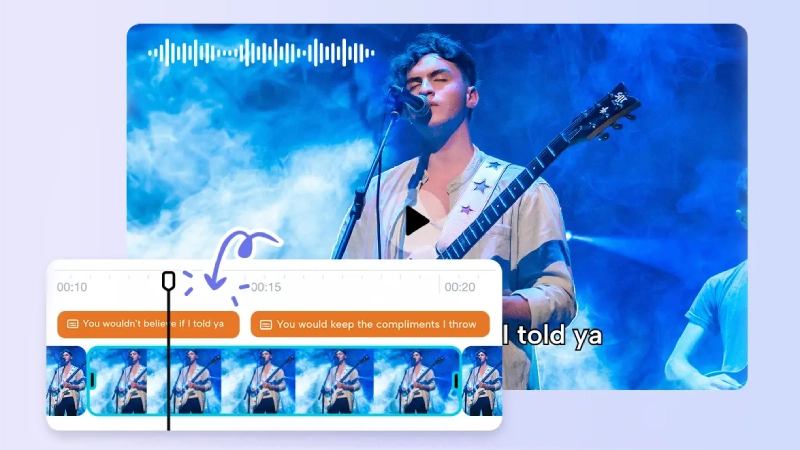
As soon as your footage is uploaded, the software automatically cuts out silence, removes filler words, smoothes audio, and selects the most visually appealing clips. Some programs will get you through the editing stage by doing color correction, adding captions, and recommending B-roll content or background music depending on the content type.
What really attracts filmmakers to these editors is not just the automation, but also the fact that the editor's decisions are made. The AI just doesn't follow the commands you set. Editorial decisions are made based on social platform patterns that work well in some cases.

Increased speed as a creative value
AI editors are a game-changer, redefining content quality. In the past, quality was closely tied to technical and aesthetic levels, and imperfections were not tolerated at all. But the modern creator economy has a different metric, where quality is directly measured through relevance, frequency, and engagement.
AI editors are the winners in this context. It's easy to create and distribute more content quickly, in a format that's always consistent and optimized for different platforms. For marketers, influencers, educators, and small businesses, speed is often the most important factor, even more than aesthetics.
In contrast to these professional tools, these premium solutions are quite time consuming. These offer the best control but are priced the same. It requires care, skill, and often powerful hardware.
The result is a clear separation. While AI editors put content quality below delivery ability, traditional software puts the opposite scenario into the equation.

What’s great about AI Editor: What’s missing?
AI-powered editors shine in well-structured, repeatable workflows. Talking head videos, podcasts, tutorials, and social media clips are particularly suited to automation. Tasks like jump cuts, subtitle generation, aspect ratio adjustments, and platform-specific formatting are handled with amazing efficiency.
However, creative ambiguity remains a challenging area for AI. It is difficult for AI to understand unconventional storytelling, experimental pacing, and subtle emotional beats. AI can combine footage in any way it wants, but it still can't understand the intentions of a human editor the way humans can.
Complex projects involving layered effects, detailed color grading, sound design, or narrative rhythm still require specialized tools and human judgment.
A professional editor's perspective:
The wave of AI tools is stirring mixed emotions among professional editors. While I feel anxious, I also feel a little liberated. The reason for the first point is that automation could potentially automate the basic editing processes that were previously the basis of professional rates, which could result in professional rates being truncated or even discontinued. Second, by removing the tedious task of editing, editors can focus on making better creative decisions at a higher level.
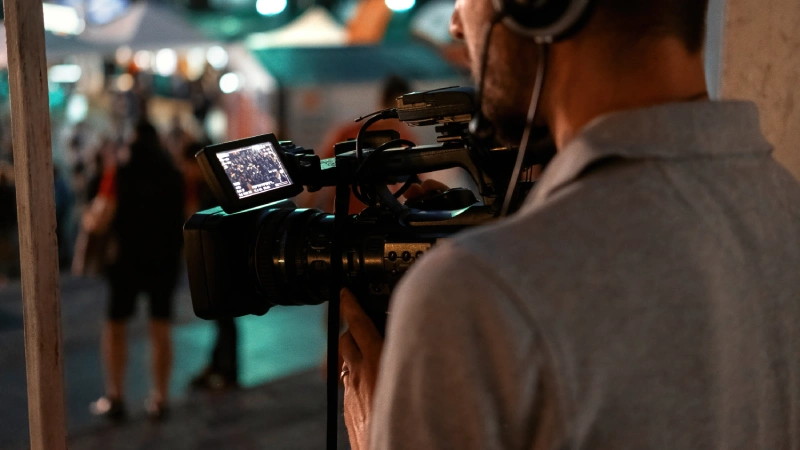
AI is already being used in many studios, not as a replacement, but as an assistant. Cutting rough drafts is done automatically, transcripts are generated instantly, and metadata tagging is handled by algorithms. Human editors then smooth and reshape the material to make it even better.
This teamwork reinforces the need for a future in which professional tools are designed to incorporate AI, rather than simply compete with it.
Cost and Accessibility: A Big Shift in Power
Traditionally, professional software has always been expensive, with additional costs such as subscription fees, hardware requirements, and long learning curves. However, AI editors are typically cloud-based, cheap, and easy to use.
This opened the door for anyone interested in video creation. One-man bands and small groups can create the same content that would have required professional resources just a few years ago. At the same time, the amount of online video content has increased significantly.
But as the saying goes, “the more the merrier” means you have a bigger audience, but at the same time it's harder to get noticed. When everyone can edit, it takes more than technical skills to stand out. The next thing we look for is originality and individuality.
Creativity and algorithm optimization
AI editors are one of the most subtle but important concerns when it comes to creative impact. The high performance of content training of some AI tools tends to strengthen existing trends.
AI-edited videos tend to have a similar look and feel, with a familiar pace, predictable transitions, and optimized hooks. This homogeneity not only helps engagement metrics, but also risks reducing creative diversity.
Professional tools are more difficult to use, but free users from algorithmic preferences. These give editors the opportunity to experiment, set new standards, and create their own visual identity.
The conflict between optimization and representation is expected to characterize the next phase of video production.
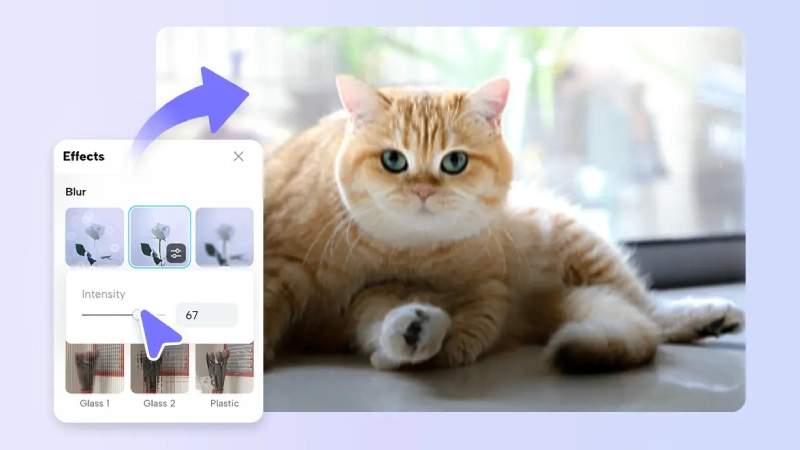
Image credit: Pipit AI
Platform influence and the creator economy
Social platforms are a major factor driving the adoption of AI editors. The algorithm prioritizes consistency, frequency, and platform-specific format. These are all areas where AI excels. Creators focus more on speed and output than on the quality of their work. In such a scenario, the AI editor is no longer just a tool, but a strategic advantage.
While professional tools continue to dominate film, television, and luxury advertising, the online content market is shifting its center of gravity. The question is no longer whether AI tools are “good enough,” but rather whether they are fast enough.
Will AI replace professional video editors?
The answer is no, at least in 2025, but it will change the way professional editing is used. AI editors do not take away talent, but rather help them perform tasks. They are very good at doing mechanical tasks, but they don't have the intuition, emotional intelligence, and creative judgment that are the hallmarks of good storytelling.
Professional tools will continue to be essential for complex, high-stakes projects. However, professionals who ignore AI will fall behind in the competition with AI-enabled professionals. The editor of the future will not be one who competes with AI, but one who will know which AI tasks are most fruitful and when it will take the lead again.
Bottom line: Redefine, not replace.
AI-powered video editors won't make professional video editing obsolete. They are the ones who will change that. In an attempt to make the overall process less technically complex, they are leading more people to participate in the creative process. The way professionals spend their time is also changing as routine tasks become automated. Additionally, they encourage certain types of video content to be viewed more on the internet, increasing engagement, in exactly the same way as trendsetters.

In 2025, the key difference will not be between the use of AI tools and non-AI tools, but the creative ability of those who adapt and the resistance of those who still maintain the old ways. The video editing industry will no longer be solely a field of machines or humans. The person who masters the art of using both at the same time will win.