

In the fast-paced world of digital marketing and content creation, video is king. However, traditional video production is often expensive, time-consuming, and technically difficult. Embark on the AI video generator revolution. That's changing, as these powerful tools allow anyone to turn simple text scripts into professional-quality videos in seconds.
Whether you're a marketer looking to increase engagement, a YouTuber looking for B-roll, or an educator looking to simplify a complex topic, text-to-video technology is the ultimate solution. This guide introduces six AI tools that can instantly turn text into stunning videos, maximizing your creative output and saving you time.

1.Polo AI
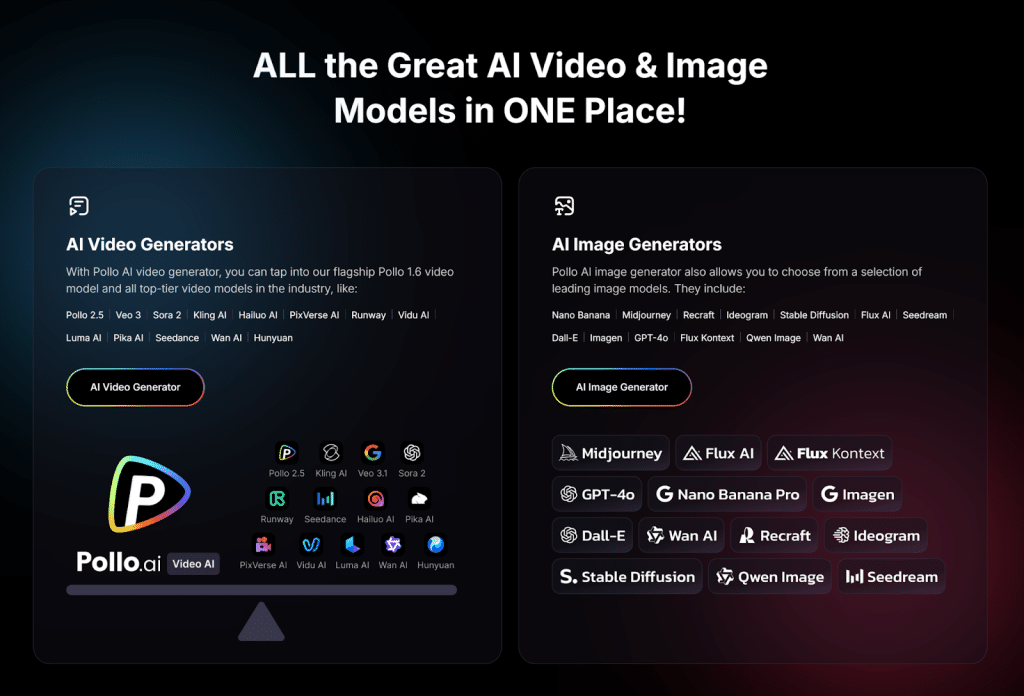
Polo AI is quickly emerging as a top contender in the generative video space, known for its ability to generate highly realistic and consistent visuals from simple prompts. Featuring advanced foundational models that understand complex narrative structures, creators can produce videos that maintain consistent lighting, character consistency, and fluid movement. Unlike many early AI tools that struggle with “warps” and unnatural physics, Pollo AI's text video generator provides a cinematic polish that feels professional right out of the box.
Polo AI is designed for efficiency and creativity. It provides an intuitive interface where users can enter text descriptions and choose from a variety of art styles, from photorealistic cinematography to stylized animation. This versatility makes it an excellent choice for creators who need high-quality output for social media advertising, storytelling, and promotional content, even without video editing experience. If you're looking for a video creation app that balances ease of use and visual fidelity, Pollo AI is the perfect starting point.
2. Sora (by OpenAI)
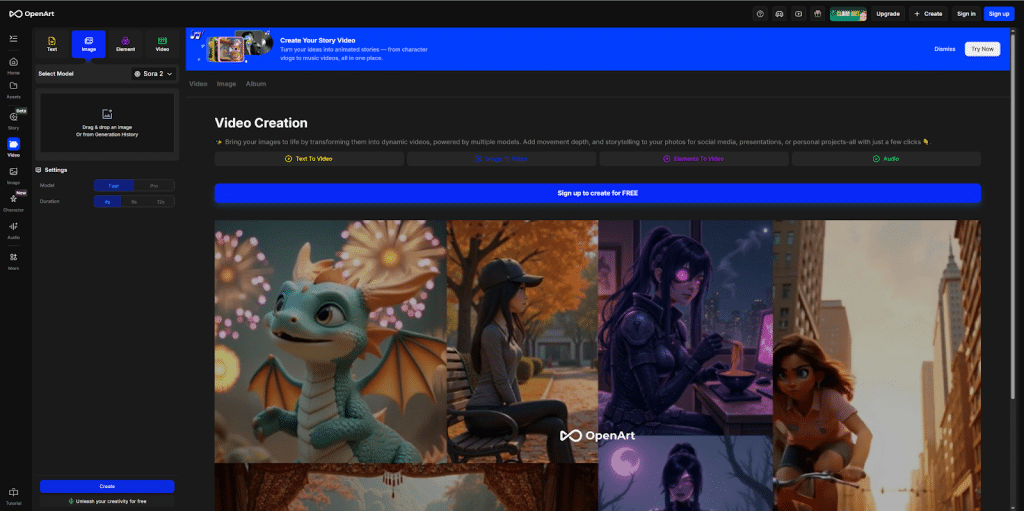
Sora represents a major advance in the field of generative AI, developed by the creators of ChatGPT to simulate the physical world in motion. Its main claim to fame is its ability to generate videos of up to 1 minute while maintaining high visual quality and compliance with user prompts. Sora excels at creating complex scenes with multiple characters, specific types of motion, precise details of subjects and backgrounds, and understands not only what the user is asking for in the prompts, but also how they exist in the physical world.
Currently, Sora primarily provides feedback for red teamers and creative professionals, but it has set a new benchmark for what is possible with text-to-video generation. Generate complex camera movements such as panning and tracking shots without losing story line or visual coherence.
3. Runway Gen-2

Runway Gen-2 is a powerhouse in the creative AI industry, widely used by professional artists and filmmakers for fine-grained control over video generation. This allows users to synthesize new videos using only text prompts, images, or existing video clips as references. Runway stands out by offering a series of “magic tools” as soon as it's produced, including a motion brush feature that allows users to paint specific areas of an image and precisely control movement, giving creators unprecedented direction over the final output.
The platform is built for experimentation and high-end creative work, and supports various aspect ratios and high-resolution upscaling. Runway Gen-2 is particularly good at conveying abstract visuals and style, making it popular for music videos and artistic projects. For creators who want to go beyond simple prompts and actively direct the output of their AI, Runway provides the depth and toolset they need.
4.Pika Labs (Pika Art)
Pika Labs has gained a huge following due to its accessibility and unique strength in animating characters and objects in a unique and engaging style. Originally launched through the Discord community, Pika has evolved into a robust web platform that excels at converting text prompts into dynamic short video clips. It's particularly praised for its ability to handle anime and 3D animation styles, making it the go-to tool for content creators in the gaming and entertainment niches who need fast, engaging visuals.
One of Pika's unique features is its “Lip Sync” feature. This allows users to have generated characters speak with synchronized mouth movements, adding a layer of realism to storytelling. This tool also offers features such as region modification, which allows you to modify specific parts of the video frame without changing the entire scene.
5. Luma Dream Machine
Luma Dream Machine is a fast, high-quality video model built by Luma AI, designed to bridge the gap between speed and photorealism. We pride ourselves on producing incredibly high-fidelity 5-second clips in a very short amount of time, allowing for rapid iteration. The “Dream Machine” is built on the Universal Transformer Architecture, which effectively understands physics and object persistence. This means that objects in the video behave in a way that is understandable to the human eye, even during complex movements.
This tool is especially useful for product visualization and creating realistic B-roll footage that requires expensive camera setups. Luma allows users to use both text and images as starting points, and the image-to-video conversion feature is especially powerful for bringing static photos to life. Whether you're an architect visualizing a space or a marketer displaying a product, Luma Dream Machine provides a reliable, fast, and visually impressive solution for turning static concepts into moving reality.
6. Kling AI
Kling AI is a strong competitor emerging from Kuaishou Technology that has made waves for its ability to generate augmented video clips with incredible temporal coherence. Supports generation of up to 2 minutes of video (in advanced mode) at 1080p resolution. This is a huge advantage compared to many competitors, which are limited to just a few seconds. Kling utilizes a 3D spatiotemporal attention mechanism, which allows it to model large-scale movements and complex interactions between objects more effectively than many previous models.
The tool is designed to handle both realistic and imaginative scenarios, giving users precise control over camera movement and framing. Kling AI is gaining traction for its ability to simulate real-world physics, such as fabric movement and water flow, giving your output a grounded and authentic feel.
conclusion
The age of AI video generation is here, and tools like Pollo AI, Sora, and Runway are leading the way. Whether you prioritize ease of use, cinematic realism, or fine-grained control, this list includes tools to suit your specific needs.
By integrating these text-to-video AI tools into your workflow, you can dramatically reduce production costs and unleash your creativity. Start experimenting now and watch your text instantly transform into stunning visual stories.


