Stefano Mazzola // Shutterstock
4 Successful Attempts to Leverage AI in Restaurants So Far
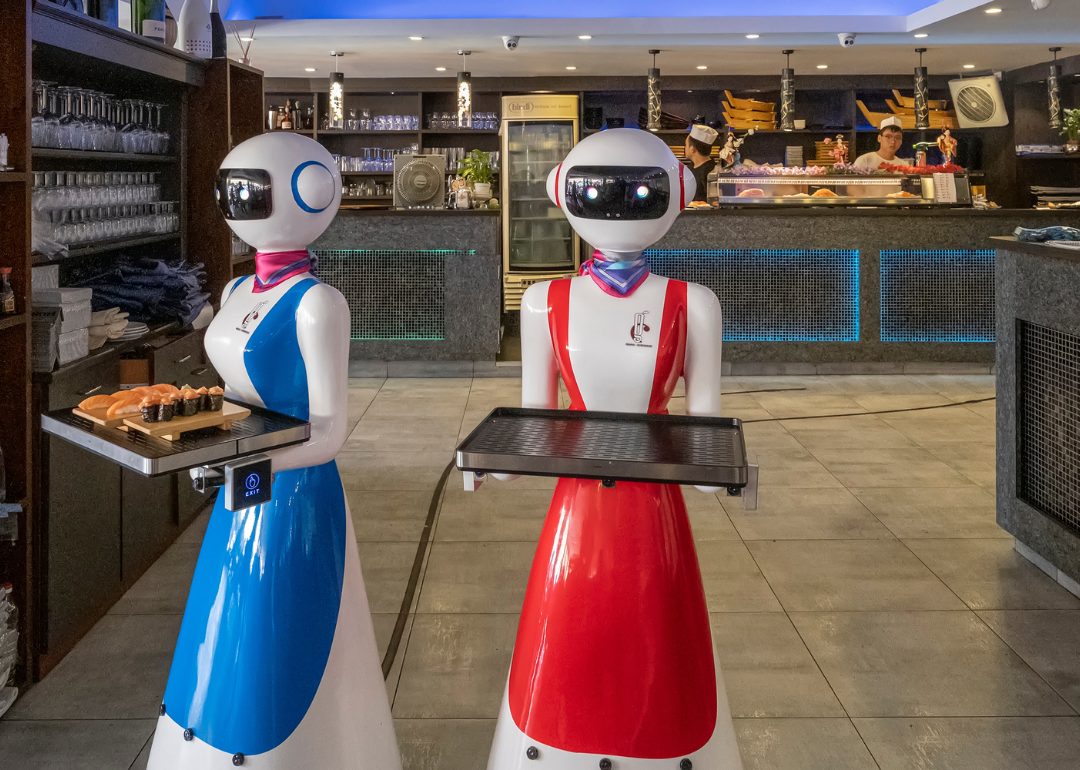
A waiter robot serving food to customers in Rapallo, Italy.
With the advent of artificial intelligence, McJobs may become a relic of the past. Restaurants struggling to find staff and supplies during the COVID-19 pandemic are now leveraging new automation technologies to manage repetitive tasks and speed food preparation.
Restaurants with automation are enabling automation through robotics and AI. Robotics are real robots programmed to make deliveries and perform simple tasks in the kitchen, such as making crisps or emptying a basket of French fries.
The task group analyzed authoritative news reports, income statements, and research to demonstrate four ways companies are using artificial intelligence in the restaurant industry. Whether or not robots will cook your meals remains to be seen, but these first advances show what’s possible with AI.
AI allows restaurants to automate some customer interactions, such as drive-thru and phone orders. This will improve order accuracy and help alleviate staffing shortages that some restaurants have experienced during the pandemic.
Restaurants can use AI to predict orders and speed up food preparation, as well as enable restaurant managers to optimize several critical tasks such as inventory management. AI can also predict the types and amounts of supplies needed, saving money and reducing food waste.

Calimedia // Shutterstock
McDonald’s wants to automate and predict orders
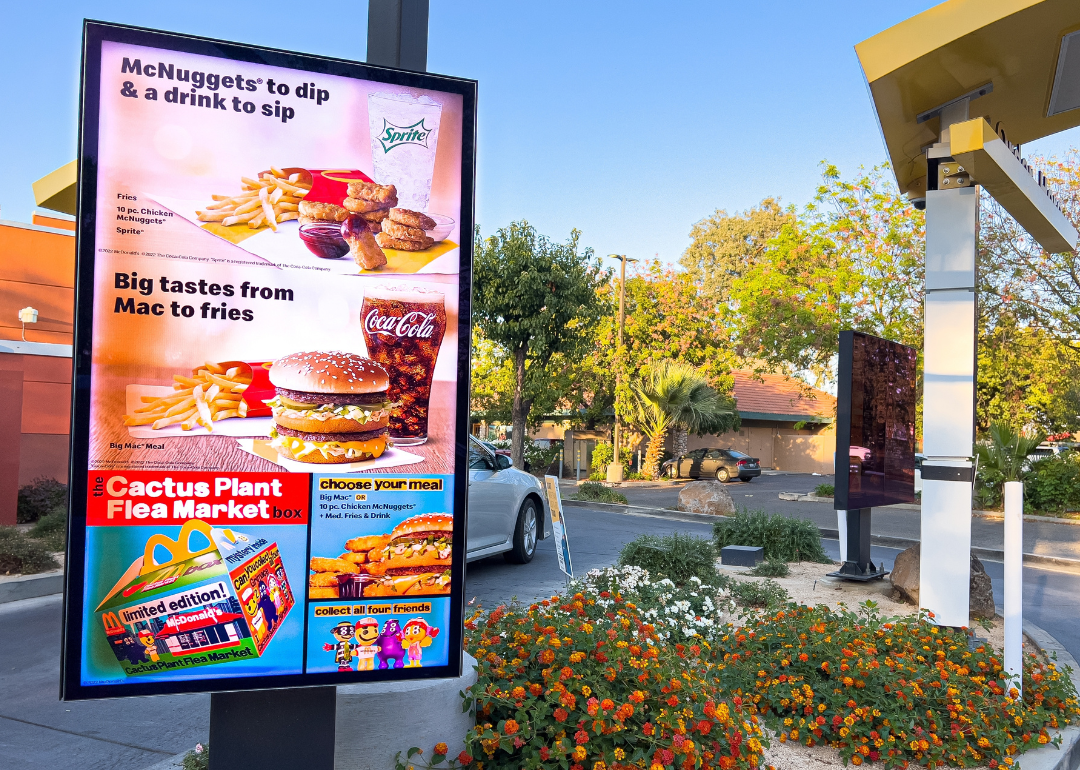
A screen displaying a digital menu at the entrance to a McDonald’s restaurant.
AI is nothing new to Golden Arches. In 2019, the fast food giant began investing in AI and machine learning technology to introduce more automation and predictiveness into the ordering process. Customers ordering in-store can do so using touchscreen kiosks.
At the drive-thru, its digital menu board can be adjusted to feature more popular items based on specific times of day, specific weather, or how busy the restaurant is. When a customer places an order, the technology suggests potential items to add to the bill and automates the upselling process. Recent tests have added automated voice ordering technology, personalized greetings, and customized recommendations with license plate recognition technology.
Don Juan // Shutterstock
Autonomous delivery robots eager to replace delivery drivers
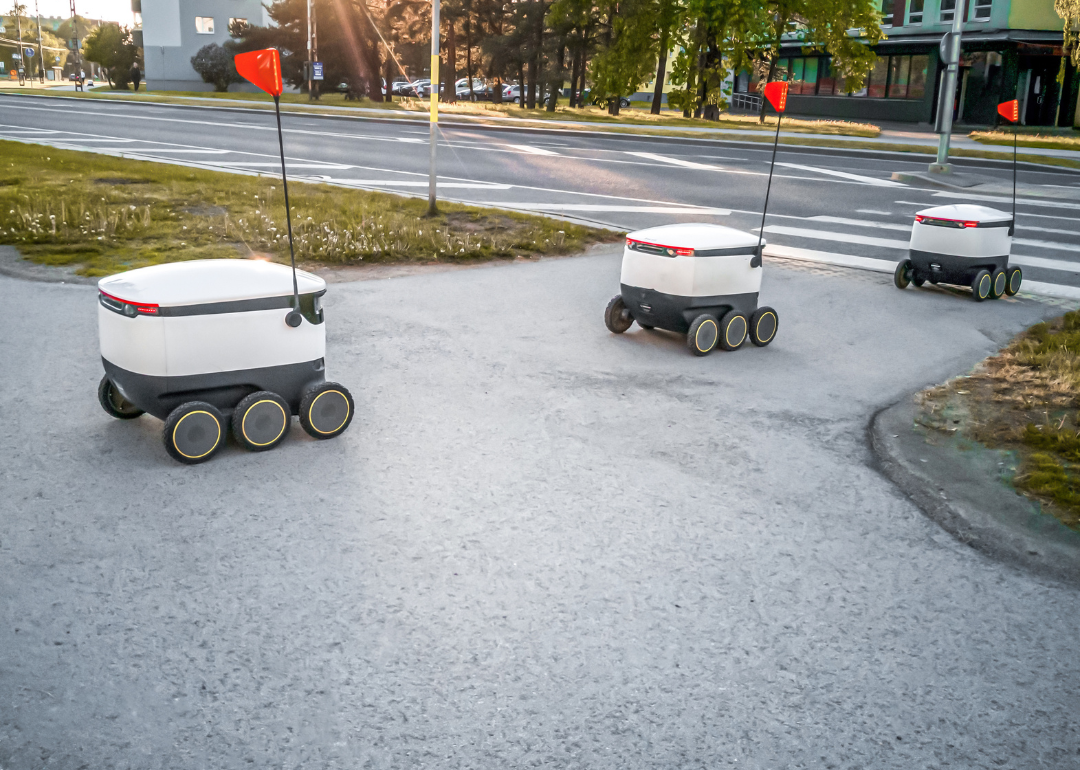
A delivery robot rolling down the street.
Labor shortages remain a major factor in the restaurant industry, with nearly 1.3 million vacancies remaining despite hiring more. Autonomous delivery robots have the potential to alleviate some of this labor shortage pressure by making last-mile, short-haul deliveries.
Also, restaurateurs don’t have to worry about robots canceling or rejecting deliveries due to bad weather, and customers don’t have to pay for delivery but tip.
Delivery robots have the potential to further increase sales. The Einstein Brothers of Missouri Institute of Technology found that at his Bagels, sales increased by $4,000 a week without a significant decline in in-person dining since introducing robot delivery.
Fixed-area college campuses are great for food delivery, and Grubhub is using robots for food delivery at several college campuses across the country. Uber Eats will begin testing delivery robots on sidewalks in Miami in 2022, and added another in Fairfax, Virginia, in April 2023.
sdx15 // Shutterstock
Domino’s pizza optimizes toppings
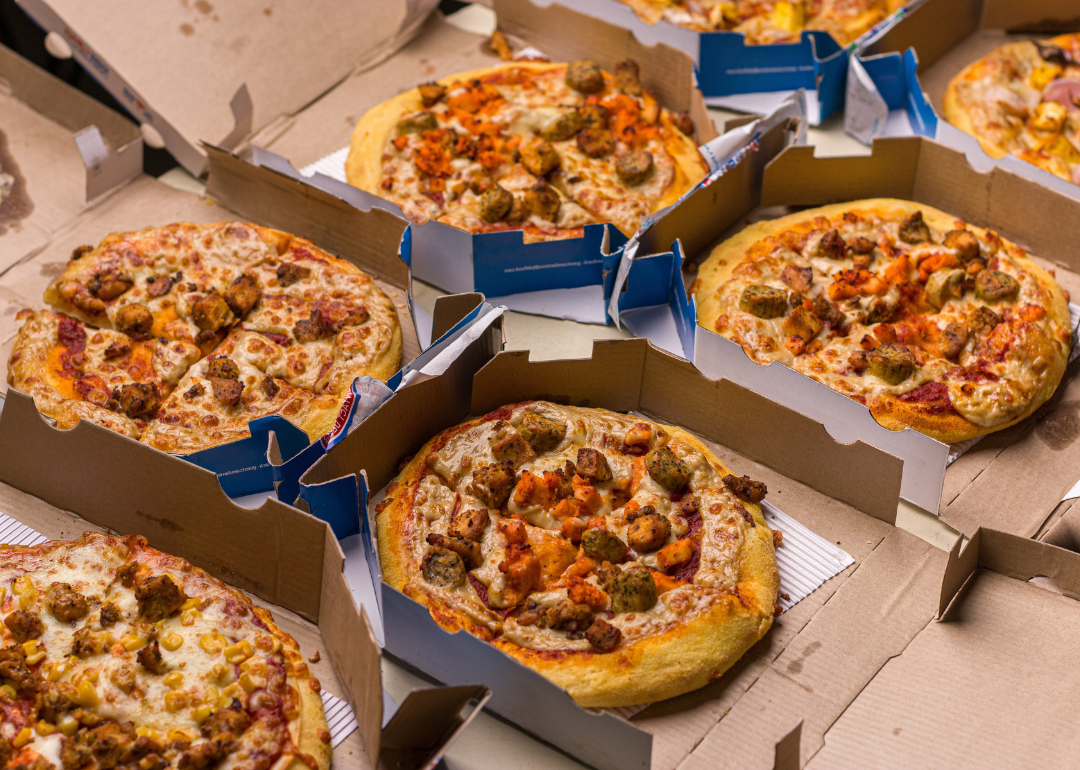
Several people opening domino pizza boxes.
Domino’s Pizza partnered with technology company Dragontail Systems to develop the DOM Pizza Checker and launched it in Australia and New Zealand in 2019. The system used computer vision (a camera that captures and analyzes images) to check the quality of pizzas before slicing and delivering them. Customers received images of their pizzas before delivery so they could verify that their orders were correct.
Pizzas that did not meet standards were remade and data was recorded to enhance employee training. According to Domino’s, the system improved his product quality by more than 15%. Yum for 2021! The acquisition of Dragontail Systems by Pizza Hut parent company Brands appears to have marked the end of DOM.
Rawpixel.com // Shutterstock
Wingstop virtual assistant takes phone orders
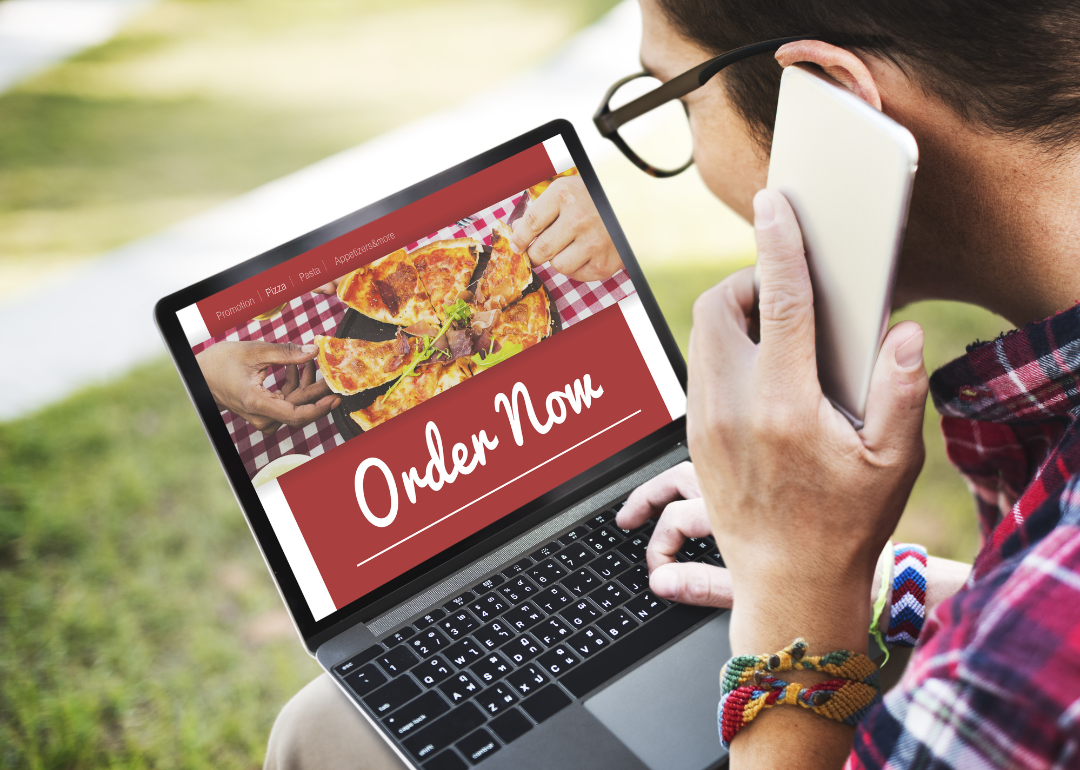
Person ordering pizza using mobile phone.
When you call Wingstop to order chicken wings, you may have a conversation with the bot. In March 2023, the restaurant chain began piloting a virtual assistant that takes phone orders, giving employees more time to focus on cooking and serving customers at the restaurant. This technology aims to reproduce human conversation. Through machine learning, you can also customize recommendations for your customers.
Wingstop hopes the technology will reduce customer wait times, as virtual assistants can take multiple orders at the same time. However, the bot never takes over. Customers can still choose to have a human take their order.
Data report by Dom DiFurio. Story editing by Jeff Inglis. Copyedited by Paris Crouse.
This story was originally posted and created in a task group.
Distributed in partnership with Stacker Studio.