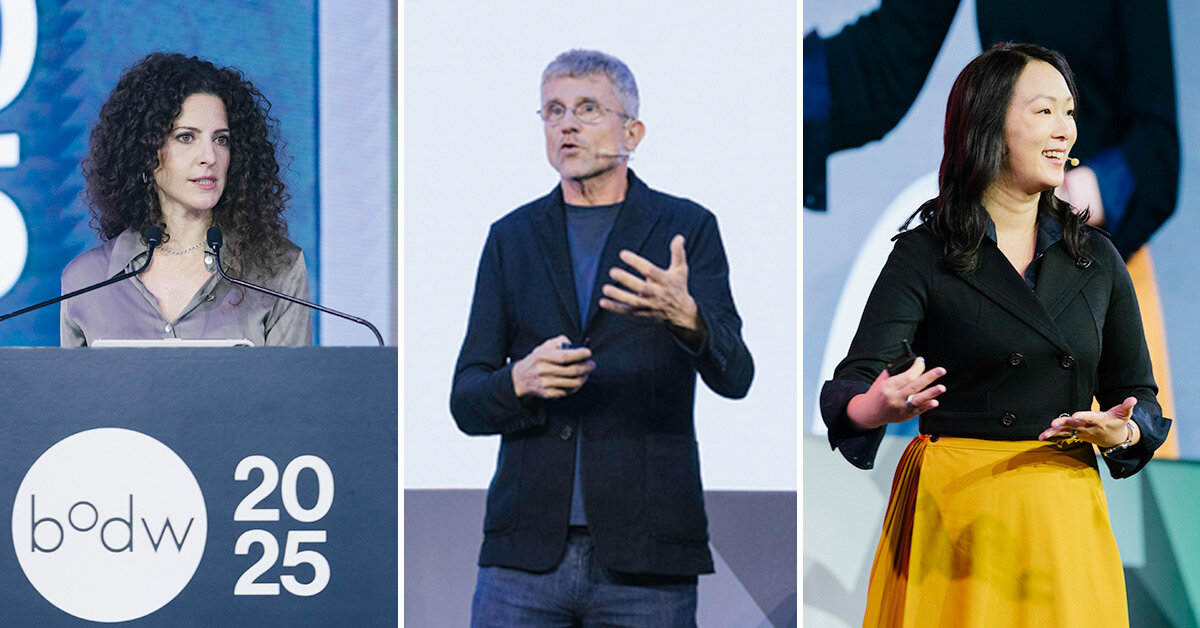
Curiosity drives design innovation at BODW 2025 in Hong Kong
Business of Design Week (BODW) 2025 Summit will be Hong Kongleaving a new blueprint for the future for the global creative community. With contributions from over 60 global business and design experts and a total of over 15,000 participants from the Hong Kong Convention and Exhibition Center, BODW 2025 partnered with Italy to explore the theme ‘Curiosity sparks innovation in design’.. The three-day summit moved beyond traditional design discussions to explore how curiosity can act as a catalyst for systemic change and a super-connector for international cultural dialogue.. From a pioneering leader urban design Aimed at legacy brand directors and trend forecasters, this summit will reveal vital insights into the future of smart cities, heritage and culture. A.I..
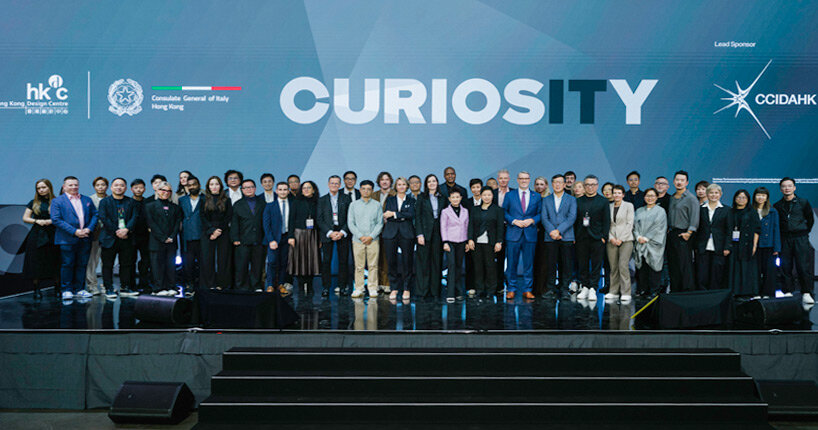
BODW Summit 2025 brought together over 60 global business and design experts to explore their curiosity in design innovation. All images courtesy of BODW
Urban design needs to function as a responsive organism
The design world has been focused on reducing environmental impact for 30 years, but current climate realities demand systems that sense and respond in real time. The opening keynote address was “Curiosity. Adaptation.” Dr. Carlo Ratti, co-founder of the CRA – Carlo Ratti Associati and director of the MIT Sensible City Lab, reimagined cities as living, breathing systems rather than static grids. Proposing active adaptation as an essential design frontier for a century-old and already changing planet. He introduced the Roboboat project, the world’s first fleet of autonomous boats developed for Amsterdam’s canals, and demonstrated how these modular, self-driving vessels can go beyond simple transportation. and sensing their surroundings through open electronics, allowing them to be dynamically clustered into floating bridges and stages, effectively moving road traffic onto waterways while monitoring air and water quality in real time. Ratti has demonstrated that curiosity-driven technology can transform historic cities into living laboratories for climate resilience, treating urban infrastructure as responsive superorganisms.
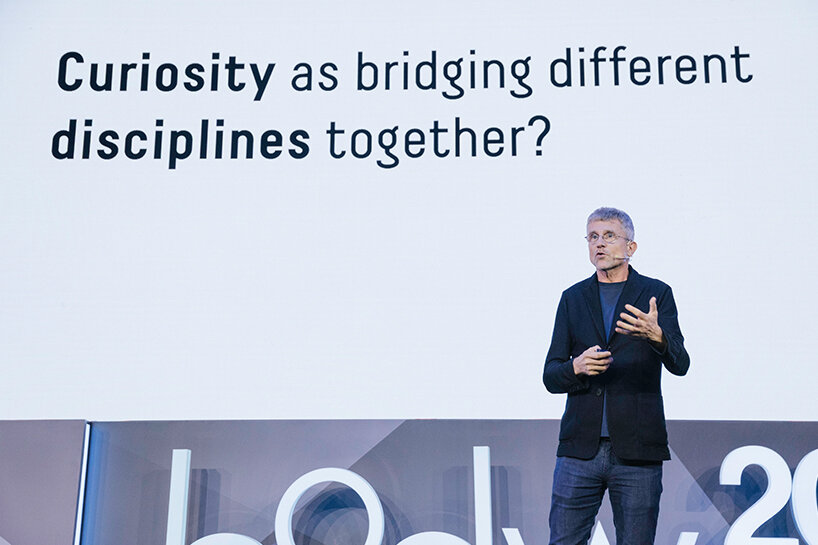
Dr. Carlo Ratti’s opening keynote speech, “Curiosity.” Adaptation. collaboration. ‘ At BODW2025
Heritage is a continuous spiral of adaptation
Susanna Minotti, Head of Home Decor at Minotti, defines curiosity not as a search for novelty, but as the intentional discipline of listening before shaping. In her keynote speech, ‘In “Curiosity as Craft: How to Design,” she argues that tradition evolves not linearly but spirally, where designers must return to the same core questions of comfort and identity with a different lens. Rooted in Brianza’s artisan tradition, Minotti shows how a localized productive ecosystem can successfully absorb international perspectives, integrating Japanese, Brazilian and Scandinavian voices into a single, coherent design language. By treating design as an integrated lifestyle vision rather than a collection of independent objects, she demonstrates that the evolution of tradition requires a precise balance between innovation and the affective science of comfort.
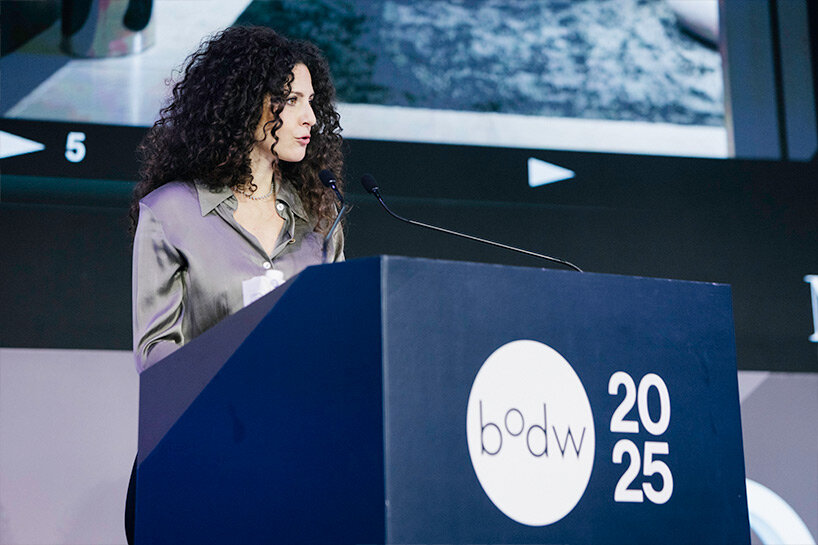
Susanna Minotti talks about “Curiosity as a Craft: How to Design”
Human storytelling is the only cure for “AI slop”
Emma Chiu, trend forecaster and global director of VML Intelligence, reveals how the convergence of the physical and digital worlds is rapidly reshaping human potential. In an exclusive preview of VML’s ‘The Future 100: 2026’ report, she explores the paradox of relevance. While many feel that technology brings people together, others worry that it is eroding the very attention spans and personal interactions that define us. This shift is most profound among younger generations, who navigate hyperreality, moving seamlessly between online inspiration and physical creation, often finding digital experiences as meaningful as the physical world.
The ability to generate complex visuals and narratives through natural language makes the tools of creativity accessible to everyone and fundamentally fuels the creator economy. However, Chiu suggests that while AI can speed up production and even manage brand heritage, it cannot replicate human traits such as empathy or imagination. After all, work that stands the test of time is one that moves people through lived experiences of hardship and joy that technology cannot. To succeed in this new economy, creators must use these intelligent tools not to replace intuition, but to amplify the storytelling that remains central to the human experience.
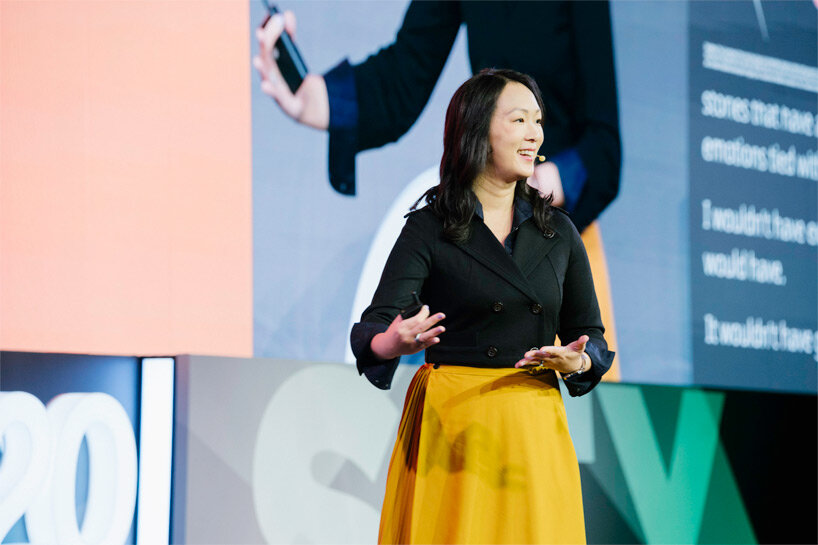
Emma Chiu presents “Unlocking the Future: Technology as a Catalyst for the New Creative Economy”
Unlock the full version of BODW 2025 bodw+ archive Enjoy unlimited access to hand-picked video content from the 2025 Summit and previous editions. The insights shared by Ratti, Minotti, and Chiu are just the beginning of a cross-disciplinary dialogue. Delve deeper into six topical pillars: Urban Vision, Mobility Revolution, Craft Living, Rethinking Luxury, Innovation with AI and Technology, and Cultural Innovation and Creativity, and explore sessions featuring more than 60 global experts shaping the future of design.
Register for free on bodw+.
Project information:
event: Design week business (BODW) 2025 | @bodwplus
Organizer: Hong Kong Design Center (HKDC) | @hkdesigncentre
date: From December 1st to 6th, 2025
Partner country: Italy