
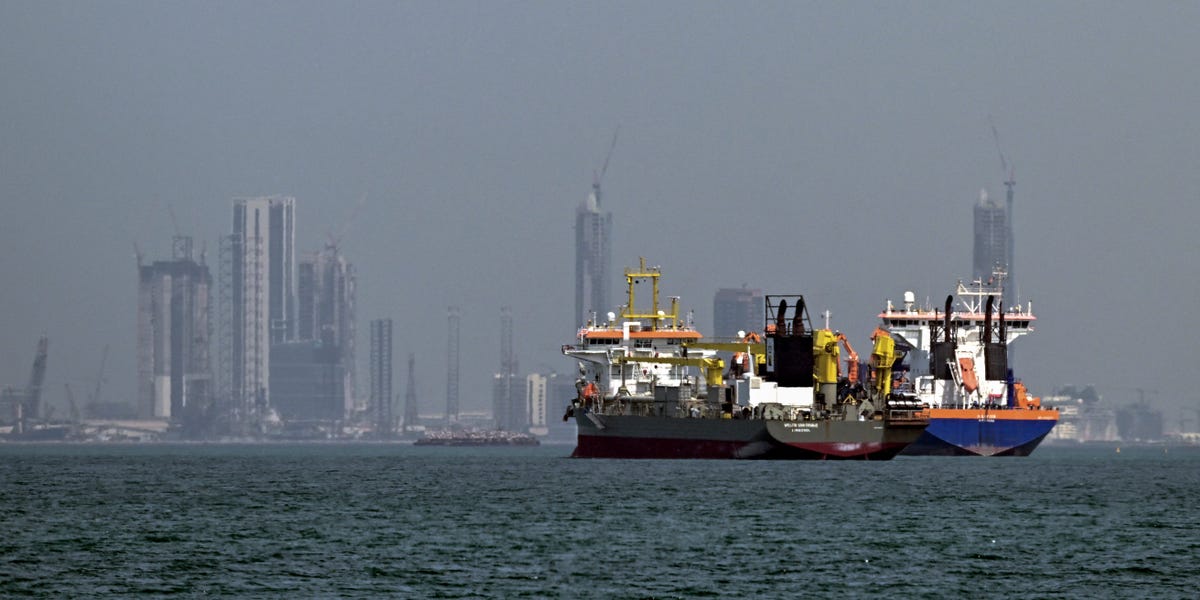
Oil has dominated the headlines as the supply chain most disrupted by the Iran war, but the impact is not limited to energy markets.
Beyond oil, the conflict has disrupted the flow of other vital materials and goods, including helium, medicines, and fertilizers.
“The Strait of Hormuz is a key barrier not only for global energy, but also for other goods,” UBS analysts warned clients. “Prolonged disruption will not only affect energy prices, but also food prices and industrial production.”
Some of the products that are vital to the global economy and have been affected by war include:
helium
The war has crippled the world’s supply of helium, used in high-tech AI hardware and medicine.
Following Israel’s attack on Iranian gas fields, Iran attacked a liquefied natural gas plant in Qatar. The plant accounts for almost a fifth of the world’s LNG trade and, given that the gas is extracted as a by-product of LNG processing, is responsible for a significant portion of the world’s helium supply.
Qatar is one of the world’s largest helium producers after the United States, and will produce more than a third of the world’s helium by 2025, according to data from the U.S. Geological Survey.
UBS reported that helium is “an important raw material for semiconductors, industrial manufacturing, and medical imaging.”
The helium supply disruption comes at a particularly inopportune time, given the efforts of big tech companies to build out AI infrastructure.
“As helium evaporates during storage and must be delivered to end users within ~45 days, the market is currently losing approximately 5.2 million cubic meters of helium per month, leaving little spare capacity worldwide,” a study in The Kobeissi Letter found.
The study also showed that the supply shock could cause helium prices to double and rise by another 25% to 50% if the disruption lasts longer.
pharmaceuticals
The disruption to commercial transportation caused by the Iran war is having a negative impact on global pharmaceutical trade.
The medicines most at risk are those with short shelf lives and whose quality is compromised by transport delays.
These include vaccines, insulin, biologics and cancer treatments, according to Think Global Health, an initiative of the Council on Foreign Relations.
Reprinted from CFR/Alison Krugman, Center for Global Development
The think tank said the risk of short-term drug shortages in most countries is low given inventory buffers, but drug companies could pass on related costs to consumers.
The duration of the war will determine the severity of the impact on the pharmaceutical industry.
fertilizer
The suspension of transport of crushed material in the Strait of Hormuz has affected the flow of fertilizer products, which are critical to the agricultural industry.
of United Nations estimates Approximately one-third of the world’s marine fertilizer passes through the Strait of Hormuz.
As the war drags on, fertilizer prices will rise, raising costs for farmers during the spring planting season and potentially leading to food inflation for consumers.
The fertilizer supply shock is accompanied by rising energy costs and already record input costs for farmers, industry advocacy groups have warned.
Consumers may feel supply shocks through price increases at grocery stores and restaurants at a time when affordability is a key concern.