image:
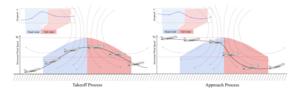
Graphic of an aircraft encountering a microburst during takeoff and approach. Generally, the aircraft is first exposed to an increasing headwind, increasing airspeed and increasing lift. The aircraft will then be hit by a sudden strong tailwind, causing an undesirable drop in airspeed, resulting in a dangerous stall, loss of balance, loss of control, and ultimately exiting the area affected by low-level wind shear.
view more
Credit: Ji Song et al.
Wind shear (sudden changes in wind speed or direction) is a major cause of aviation accidents. This was the cause of 18% of aviation accidents in 2022. Predicting wind shear phenomena is a priority for aviation safety because it allows pilots to avoid areas where wind shear may occur. Currently, aircraft-based wind shear detection relies on the F-factor, a measure that captures current wind speed and direction, as well as current aircraft speed. However, the F-factor cannot predict future wind shear events. Xiaowei Yue et al. propose a transformer-based model that leverages physical mechanisms to generate reliable predictions of wind shear. The model was trained on 19 key parameters from the NASA DASHlink sample flight dataset, primarily the aircraft’s mechanical, power, and control systems, and the external flight environment. When tested on a real-world in-flight dataset, the model provided pilots with at least 15 seconds of warning before a potential windshear risk occurred. The model output deviated within 5% from the actual results over all forecast periods. The authors say the study suggests that combining machine learning and physical measurements can improve aviation safety.
Article title
Mechanism-based transformers could change aviation safety during flight
Article publication date
June 9, 2026
Disclaimer: AAAS and EurekAlert! We are not responsible for the accuracy of news releases posted on EurekAlert! Use of Information by Contributing Institutions or via the EurekAlert System.