

Tools powered by artificial intelligence are useful, but there are also potential risks and concerns
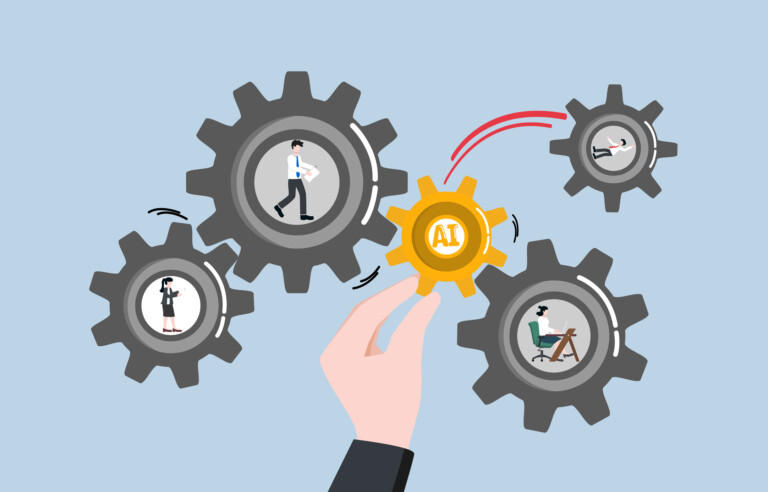
Everyone seems to be talking about artificial intelligence and all the ways it will change the way we live and work in the not too distant future. One way companies are already leveraging AI is in their recruitment and hiring processes.
Employers have found ways to use AI to streamline and simplify the challenge of finding the right talent to fill a job opening. While the use of AI in recruitment opens up some interesting possibilities, employers considering this option should be aware of potential risks such as avoiding unintended discrimination that can arise from AI-driven recruitment efforts. There are risks and concerns.
Employers can use AI at every stage of the hiring and onboarding process, from candidate discovery to résumé screening to conducting interviews. AI can also help with paperwork and orientation activities for new hires. One common use of AI in the hiring process is screening a potential employee’s resume.
Machine learning algorithms analyze resumes to identify candidates who may be a good match based on keywords, educational background, or specific experience, and the system can screen candidates who are less likely to be a good match. The result is a smaller, higher-quality pool of candidates for HR professionals to consider. For interviews, AI chatbots can generate pre-programmed questions and use machine learning to analyze candidate responses. These AI-powered pre-interviews help streamline the interview process for subsequent live interviews.
Somewhat controversial is the use of AI tools to conduct skill and personality tests, or comb the web to find and analyze social media and other online data about candidates. .
The Equal Employment Opportunity Commission took note of the speed of adoption of AI recruitment tools and identified several significant risks they pose regarding potential discrimination in hiring.
To help employers navigate this uncharted territory, the EEOC recently issued guidance for employers considering using AI recruitment tools. One of the key recommendations is to learn about the AI tools your employer uses and understand how they work. Employers need to understand what data inputs are used by the tool and question how the algorithm makes decisions. The EEOC suggests that employers test AI systems before using them to ensure that they do not unintentionally lead to biased results. Employers should also ensure that chatbots do not ask potential employees unacceptable questions about disabilities or health conditions that could lead to unlawful selection of candidates for protected classes. , you should have a good understanding of what kinds of questions the AI system asks.
Similarly, the EEOC says employers should ensure they have full access to the AI systems they are considering so that all candidates have an equal chance to participate in the recruitment process. .
The EEOC also recommends that employers be transparent about the use of AI in their recruitment efforts and that employers inform candidates that part of the hiring process is being assisted by AI. increase. Candidates should also know what data is collected and how the algorithm analyzes it.
The role of AI will continue to grow Aligned with the way a company operates its business, there are some best practices companies can consider when considering introducing AI into their hiring process.
The first is to think of AI as one of several tools to help with adoption and adoption, not as a complete replacement for existing systems. No matter how sophisticated the technology is, there will always be a human element, especially in critical parts of the process like final interviews and final hiring decisions.
Second, employers believe that while AI has the potential to reduce bias by removing emotions and unconscious decision-making from the process, there is still a risk that AI systems will inject unintended biases. must be recognized. It is important to understand what data is being used, how it is being analyzed, and to continually review and test the results.
Another best practice is to follow the EEOC’s advice on being transparent about the use of AI in your processes. It helps build rapport with the people you expect to be your new co-workers.
Finally, if AI tools fail to attract better candidates and new hires, companies may need to pursue alternative AI tools or return to more “traditional” recruiting methods. I guess.
There is no doubt that AI has the potential to revolutionize the hiring and hiring process, as some employers are already realizing. However, like anything new, employers should weigh both the benefits and risks carefully before introducing his AI as part of their company’s hiring practices.
Adam Hummel, Director of Litigation at McClane Middleton & Co., chairs the firm’s Employment Law Practices Group. You can contact him by:adam.hamel@mclane.com.

