00:00 Speaker A
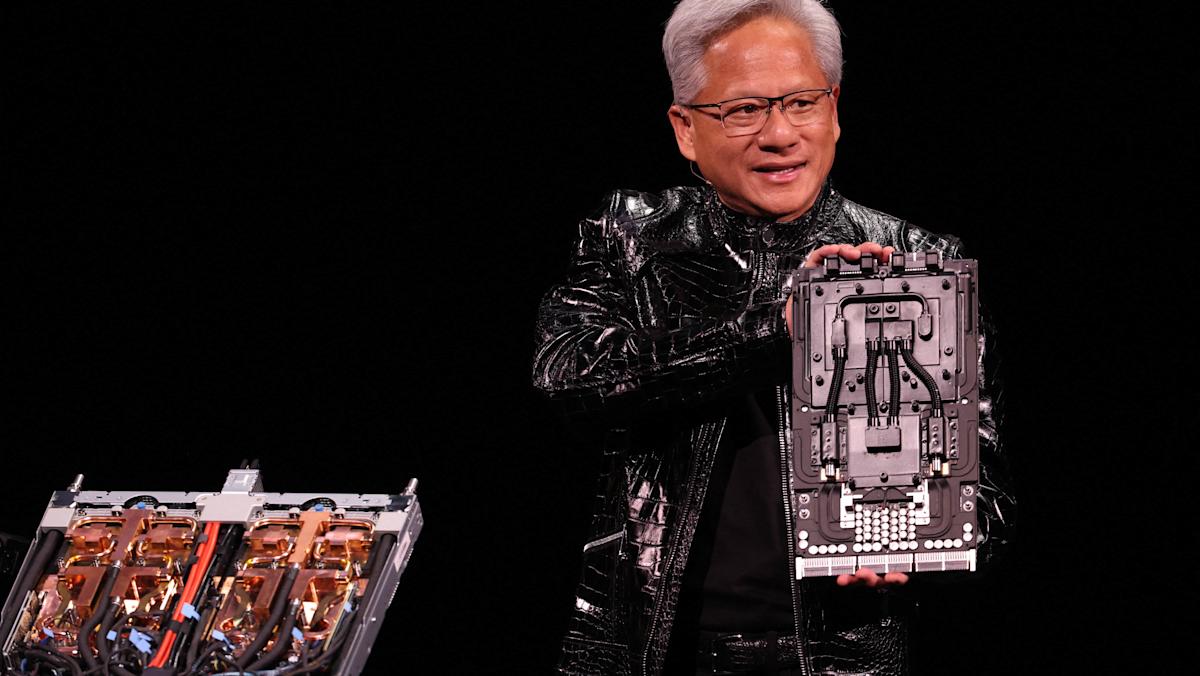
And we'll probably start with Vera Rubin here in Austin. This is Nvidia's new superchip.
00:04 Speaker A
Jensen Wong said it is currently operating at full capacity. So this is one of six chips that make up what Nvidia is now calling the Ruben platform. What's your technical perspective in Austin? And of course, we turned to you because, listen, you're a former hardware engineer at Intel and you have the talent to be here.
00:29 austin
Yes, this is everything we expect from Nvidia. 10x higher throughput and 10x lower token cost.
00:39 austin
It is through innovation at the system level. So we've seen some innovations not just in GPUs, but in GPUs, networking, and even memory storage. So I think this is exactly what everyone expected from Nvidia's technology leadership.
00:58 Speaker A
I want to bring Paul here too. But Austin, right off the bat, I had another technical question as I was listening there. Austin, these Rubin-based systems that Jensen are talking about, how are they different? How do you compare and contrast Austin? Can you briefly explain the previous version of Blackwell? Is it in terms of Austin's performance? Will running costs be cheaper? How do they compare and contrast?
01:25 austin
Yes, computing power is increasing, but the system is optimized by software. Using these DPUs, system-level network processors, you also get LLM and run it at much higher throughput and at a much lower cost. I mean, it's like Blackwell, it's like Hopper. It's the next generation, but it's just been improved. It's everything from more computing, better networking, and more system optimization, especially around LLM.