
A few months ago, when all eyes were on the results of Davos in Switzerland and World Economic Forum meetings on topics of global interest, this article appeared that featured CNBC senior technology correspondent Arjun Karpal talking about CEOs.
One particular section caught my eye unexpectedly.
“Physical AI is expected to make it onto this year’s list of technology buzzwords. The term refers to applications where AI takes physical form, from robotics to self-driving cars. My own experience at Davos highlighted how real this push is. One night at dinner, a robot was sitting at the table.”
“EY’s Sharma calls physical AI the ‘next wave’ and estimates that it could be five to six times the size of the agent AI market within five to six years.
Meanwhile, Sashin Ghazi, CEO of semiconductor design tools company Synopsys, said he initially expected physical AI to be “more than five years” away, but now it’s happening “much faster.”
Well, it’s late March and I’m back to this topic as I prepare to head to the RSA conference in San Francisco.
What is physical AI?
Below are some definitions, examples, and implications from various sources.
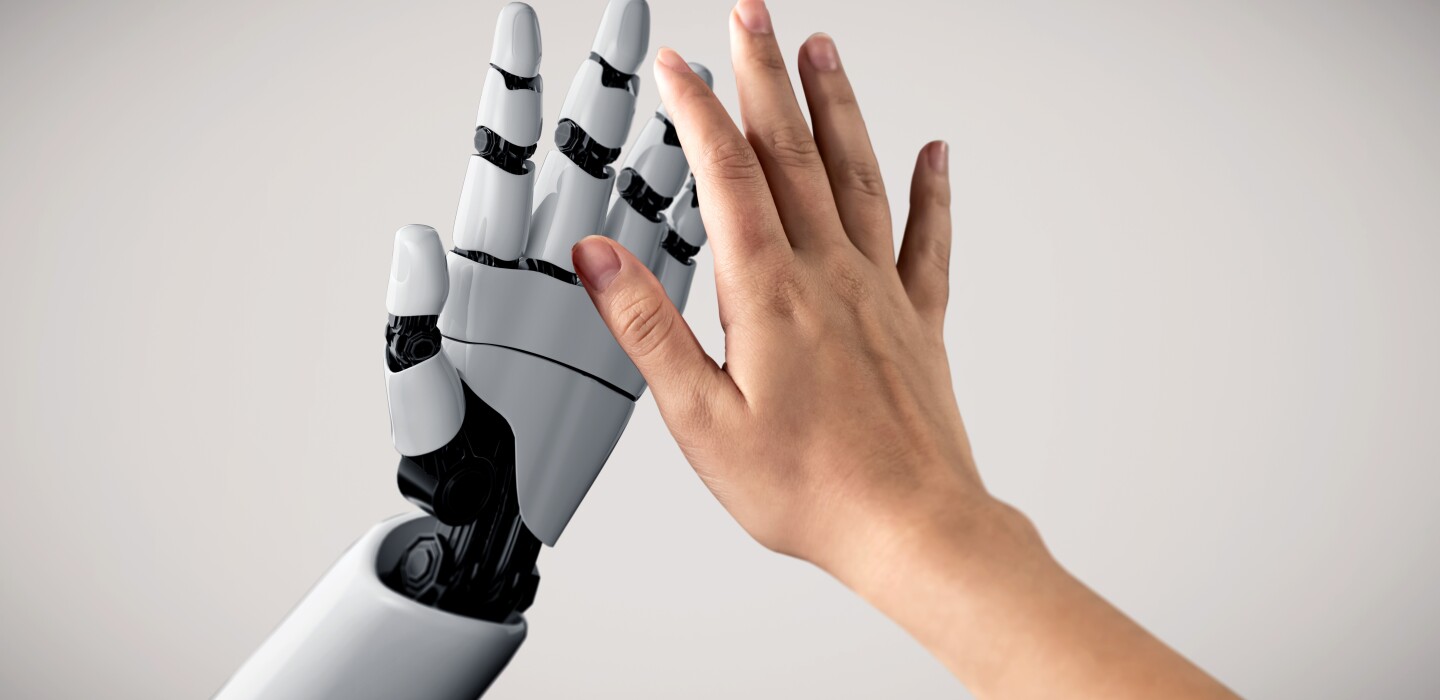
IBM: “What is physics AI?” — “Physical AI refers to artificial intelligence (AI) systems that operate within and interact with the physical world, rather than existing solely in software or digital environments.
“Physical AI typically involves combining AI models with sensors, actuators, and other control systems to enable models to interact with real-world environments, taking models from the realm of bits to the realm of atoms. AI enables advanced physical systems to perceive their environments, reason with the power of large-scale language models (LLMs), act accordingly, and learn from the results of their actions.”
NVIDIA: “What is Physical AI?” — “Physical AI enables autonomous systems such as cameras, robots, and self-driving cars to perceive, understand, and reason in the physical world and perform or coordinate complex actions.…
“Until now, autonomous machines have been unable to see or sense the world around them. But with physical AI, we can build and train robots to seamlessly interact with and adapt to their real-world environments.”
Global X: “Robotics and Physical AI: A New Era of Automation” — “Robotics elevates AI from the digital realm to the operating system of the physical world. As generative AI models become more capable and the associated hardware becomes cheaper and more versatile, we are rapidly moving into the era of physical AI, where networks of machines can think, see, move, and act in real time to augment human workflows.
“This shift has profound implications. As more people deploy robots to perform physical tasks, human labor productivity could increase significantly. Entirely new use cases will emerge across areas such as last-mile logistics, autonomous driving, and robot manufacturing. In our view, robotics and physical AI will form the defining theme of the intelligence era.”
citygroup.com: “Embodied Intelligence: The Rise of Physical AI” — “With abundant capital, mature technology, and a diversifying ecosystem, we believe physical AI is at an inflection point. AI-enabled edge devices (devices at the “edge” of the network rather than central data centers or clouds) have the potential to grow at double-digit rates, as do design and simulation software. …
“In recent years, AI investments in industry names have been dominated by the impact of Generative AI (GenAI) and LLM on data centers and related infrastructure. Physical AI is different in that it is domain-specific, requiring separate adoption by end markets, each with unique requirements. This means that spending patterns will be defined by the pace of adoption in each end market, rather than by the capital expenditure plans of hyperscalers.”
“We believe that the three pillars of success for industrial companies are digital twin models (virtual representations of physical processes), real-world data collection through edge devices, and simulation. We are at the beginning of this journey, as technology development is in its early stages and industrial cycles come into play. However, companies are already preparing for what is to come, and we expect investment to continue to be centered around the adoption of physical AI.”
Further impact of physical AI
Consider these deeper stories about physical AI.
IBM: “What is Physical AI?” — “Several bottlenecks that have previously held back the physical AI revolution are being removed simultaneously. The first and most important is the emergence of generative AI that leverages foundational models. Today’s large-scale computer vision and multimodal The model can recognize objects, understand spatial relationships, and generalize across settings. This reduces the amount of specific training required for individual tasks and allows the system to reuse intelligence across tasks.
“The second challenge is now being overcome by the power of modern simulation, which combines high-fidelity physical modeling, photorealistic rendering, and parallelization. This dramatically reduces model training time, making simulation useful not only for testing but also as the primary training ground. A related trend is the explosive increase in computing availability. Breakthroughs in GPUs and data centers have made training at scale achievable.”
“Finally, the hardware is better than ever. Modern robots have better sensors and lighter materials. Robots can take advantage of recent breakthroughs in edge AI and better communication capabilities. These innovations have made it possible for even small startups to experiment. As a result, we are seeing a resurgence of efforts in physical automation, from self-driving cars to industrial robots to healthcare bots performing surgeries and other complex procedures.”
Intense network: “LoRaWAN brings IoT into the physical AI realm” — “It may sound strange that a low-power IoT technology like LoRaWAN is poised to be the perfect partner for power-hungry AI, but that’s exactly what the LoRaWAN Alliance frames as such.
LoRa Alliance CEO Alper Yegin said, “The next thing AI needs to do is take hold of the physical world. To do that, it needs to start sensing the physical world and giving commands to it. We are perfectly positioned to be the primary connector between the physical world and AI.”
“More than a decade after it was established as an IoT specification, LoRaWAN certainly enjoys a robust ecosystem, with over 625 devices certified and over 125 million LoRaWAN devices deployed worldwide, with a compound annual growth rate of 25 percent.”
Nikkei Asia: “Physical AI will impact 41% of companies within three years, says Deloitte.” — “Physical AI is a hot topic in 2026, but a new white paper finds that only 3% of companies surveyed by Deloitte have broadly integrated physical AI into their operations. However, 4 in 10 companies expect physical AI to have a transformative impact within three years.”
final thoughts
So, are countries ready for a new world with a new “AI economy”?
According to BCG’s report, the AI Maturity Matrix, the simple answer is no. “Economic and workforce development leaders across the country largely agree on the importance of AI, with 88 percent believing it is essential to the competitiveness of the economy. However, fewer than 10 percent say their states have a clear strategy to address the economic impact of AI.”
This report provides many suggestions not only for physical AI but also for other areas of AI development.


