
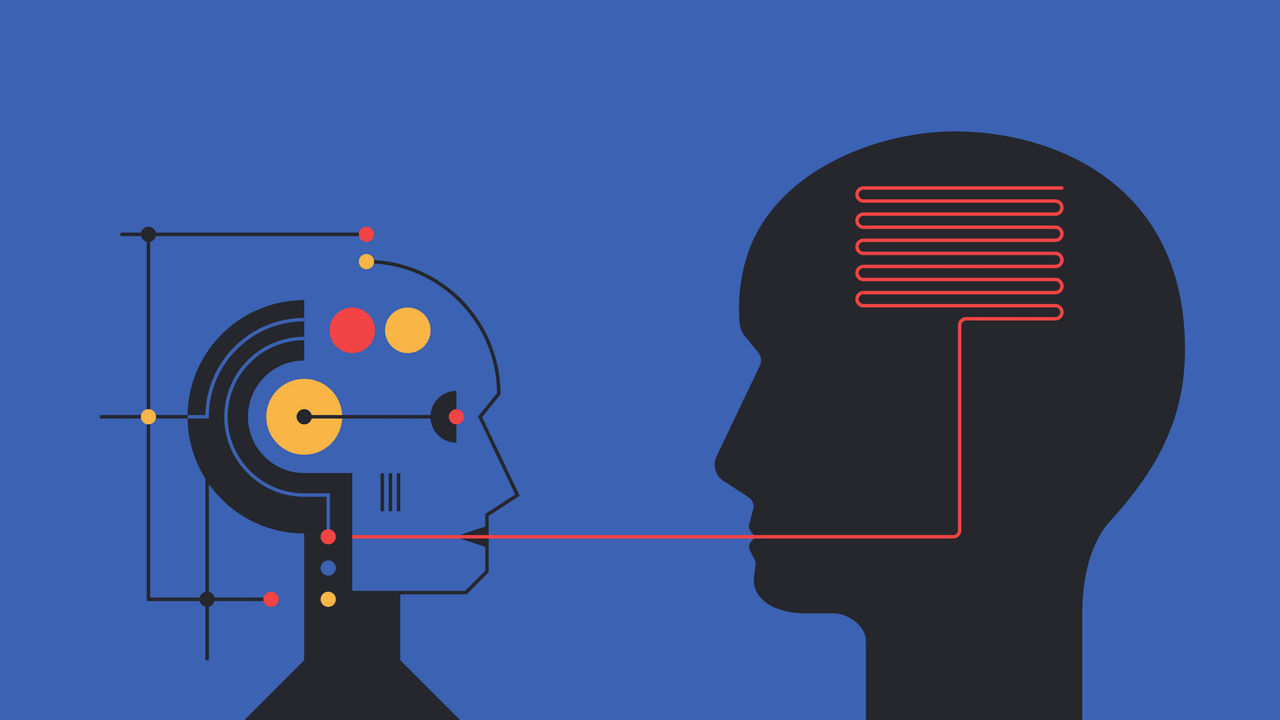
Neural networks learn useful internal representations directly from data, capturing nonlinear structure that classical models miss. With sufficient capacity, appropriate goals, and regularization against overfitting, it scales from small-scale benchmarks to production systems such as computer vision, natural language processing, speech recognition, and prediction, delivering measurable improvements in accuracy and robustness.
Modern deep learning extends these foundations. CNN specializes in extracting spatial features from images. RNNs model temporal dependencies within sequences. Transformers take advantage of residual connections, normalization, and efficient parallelism on GPUs to replace recursion with attention.
Despite the differences in architecture, training remains end-to-end with backpropagation on large datasets, and the core idea is still maintained. is learned by constructing data-dependent transformations with nonlinear activations. Generative AI builds on the same principles on a larger scale. Large-scale language models, diffusion models, VAEs, and GANs learn distributions across data to synthesize text, images, audio, and code.
The leap from multilayer perceptrons to state-of-the-art generators is primarily one of architecture, data, and computing. Understanding activation functions, training requirements, and the main types of networks provides a practical bridge from classic neural networks to today’s generative systems and explains why these models are at the heart of modern AI.


