
A wave of “AI Plus” applications and innovation took center stage at the ongoing World AI Conference 2026 (WAIC) and Sunday’s High-Level Conference on Global AI Governance, as developers and startups pivoted from academic concepts to real-world deployments. It was the third day of the event.
The Shanghai event focused on practical applications, showcasing how artificial intelligence is transforming traditional sectors such as transportation, logistics, finance, education, and disaster management.
At a forum dedicated to AI-powered earthquake mitigation, researchers presented a series of results including seismic agents and large-scale AI models for seismology.
In the future, China plans to build a 4-in-1 AI technology architecture that integrates data, models, platforms, and applications to better support disaster prevention and relief.
Meanwhile, at the Frontier and Agent AI Safety Forum, AI safety was the main focus, with experts discussing Frontier AI risk management, agent loss of control risk, and emergency management. The forum announced five groundbreaking research findings, establishing a comprehensive AI safety management framework that spans technology tools, standards, and emergency protocols.
At the Expo Exhibition and Convention Center, the event’s core venue, the spotlight shifted from academic research to commercial reality.
Various cutting-edge AI technologies and highly functional intelligent robots were exhibited, attracting many visitors.
One of the highlights was a mind-controlled wheelchair developed by a husband-and-wife entrepreneurial team. Inspired by her husband’s incapacitation several years ago, the couple leveraged AI technology to create an assistance device that could be operated through an external headset that deciphered thought patterns.
Creators said they hope the event will help wheelchairs transition from a novelty at a trade show to homes for people with disabilities.
The couple’s venture is one of more than 150 startups featured in the exhibit hall. Many of the concepts on display were confined to academic papers just a year ago, but have since materialized into physical products.
Another notable exhibit allowed visitors to pet a robotic dog fitted with a touch-sensitive artificial skin, demonstrating a technology that could benefit elderly care as the sensitive artificial skin allows the robot to measure the fragility of human bones and apply the necessary force when assisting patients. A live demonstration applied to the vest showed a screen that instantly registered haptic feedback from the composite layer.
To facilitate the commercialization of these technologies, organizers have also set up a business matchmaking zone where startups can pitch directly to buyers with specific industrial needs.
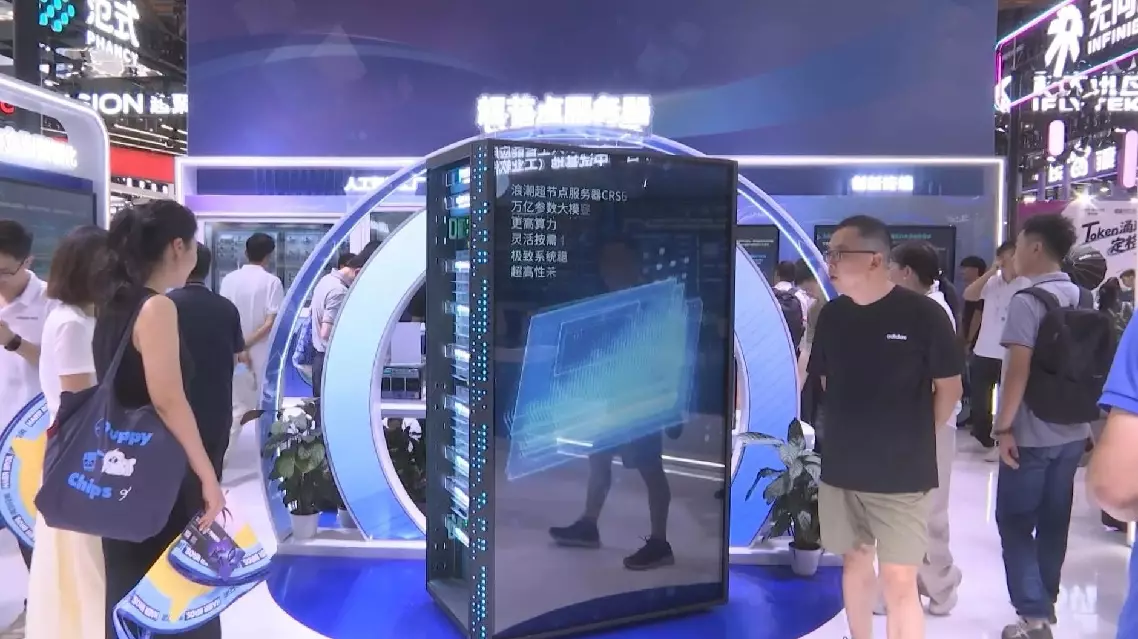
WAIC spotlights AI Plus applications and innovations on day 3
The 2026 World Artificial Intelligence Conference (WAIC) brings together business leaders, researchers, and entrepreneurs from around the world for discussions focused on turning AI innovation into cross-border partnerships and real-world applications.
The 2026 WAIC will be held in Shanghai from Friday to Monday with the theme of “AI Partnership for a Brighter Future.”
Throughout the exhibit hall, conversations often extended beyond product demonstrations, with visitors exploring potential partnerships, supply chains, and international expansion.
Among them was Paolo Brizzi, Chief Information Officer of the Italian Industrial Manufacturing Competence Center (CIM), who met with Chinese AI companies to discuss cooperation ranging from industrial applications to access to the European market.
“My point is not to be a customer or technology provider, but to identify parts. [where we can] We actually collaborate and work together,” he said.
The four-day conference also created opportunities for startups to connect with investors, researchers, and potential customers. One startup launched an online networking group on its first day, attracting hundreds of participants to exchange ideas, explore business opportunities, and explore technological solutions.
Participants said AI innovation relies not only on technological advances but also on collaboration across industries and countries.
Florian Wohlrab, CEO of Canada-based OpenHW Foundation, says, “Collaboration is important because you can’t do much alone. It has to be an ecosystem of team support.”
For many international visitors, the conference is also an opportunity to explore how AI can help solve real-world challenges. Omar Khan, a participant from Pakistan, said international cooperation is essential for AI to benefit everyone.
“For me, I think we’re all one. We’re human beings and I think we can work together a lot,” he said.
Some participants were looking for solutions to problems in their home countries. A visitor from Kenya said AI applications such as weather forecasting and soil analysis could help improve agricultural productivity in many parts of Africa where agriculture remains the basis of the economy.
As countries compete to advance AI technology, participants at this year’s WAIC said the conference has become a platform to connect ideas, technology and demand across borders, helping to turn AI innovation into practical international cooperation.
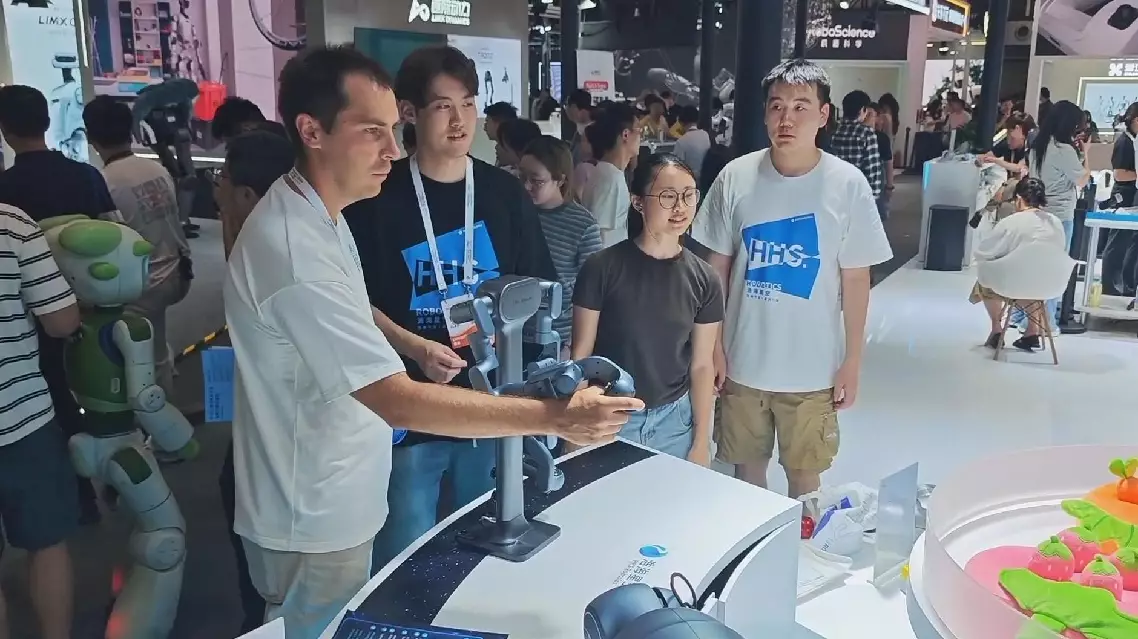
World AI Conference highlights growing demand for global AI partnerships