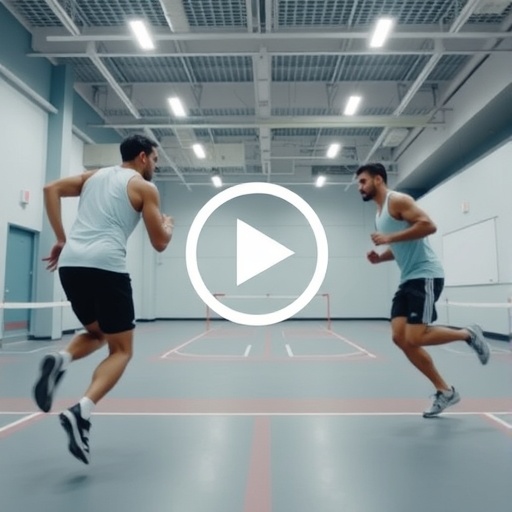
In a groundbreaking study that promises to redefine the sports analytics landscape, researchers Giovannini and Moura have unveiled a pioneering method to automatically track indoor athletes. This innovative approach leverages advanced video-based deep learning techniques to significantly enhance player tracking capabilities. The implications of this research go far beyond mere statistics. The possibility of reshaping coaching techniques and game strategies holds great promise for athletes and teams alike.
The dilemma of tracking athlete movements in dynamic and cluttered indoor environments is a well-known challenge in sports technology. Traditional methods often rely on manual observation and rudimentary automation, making it difficult to keep up with the rapid pace of indoor sports. This innovative research proposes a comprehensive solution using video-based deep learning algorithms that can process and analyze real-time data faster and more accurately than ever before. Indoor sports such as basketball, volleyball, and badminton require quick reflexes and quick decision-making, so the need for accurate tracking is critical.
At the core of their methodology is a sophisticated deep learning architecture designed to identify and track players through video footage. By leveraging a large dataset of labeled player movements, the researchers trained their model to distinguish between individual players even in visually complex scenarios. This feature not only addresses the growing demand for data-driven performance analysis, but also ensures that coaches have access to a wealth of information about player efficiency and in-game interactions.
As research progresses, one of the key aspects under investigation is the concurrent validity of this tracking system. By comparing the performance of automated tracking with established methods, Giovannini and Moura aim to prove that their system is not only reliable but superior. This critical validation approach ensures that the results are robust and provides a legitimate alternative to existing tracking technologies in the field of sports engineering. Validating the technology through empirical research allows for a seamless transition to commercialization.
The introduction of this technology could change the way coaches prepare for games. It not only provides insight into player positions and movement patterns, but also enables analysis of gameplay dynamics. Coaches can accurately analyze plays and learn how spatial configuration affects the outcome of a match. Such detailed analysis fosters an environment of continuous improvement as teams adopt a more scientific approach to training and gameplay.
Furthermore, the implications of this research go beyond the realm of direct gameplay. Player health and safety is paramount in any sport, and the data generated from this tracking system provides insight into player fatigue and injury risk. By monitoring movement patterns over time, trainers can identify at-risk athletes and take preventive measures. The fusion of performance data and health analytics could revolutionize the way teams manage athletes' workloads and recovery regimes.
As technology evolves, so does the need for integration within existing infrastructure. Researchers are keen to enable deep learning tracking systems to adapt to different indoor sports environments with minimal adjustment. This versatility means schools, athletic trainers, and professional teams can all benefit from this technological advancement without requiring major infrastructure changes.
Society's growing interest in sports technology highlights the growing demand for innovative solutions among fans and stakeholders. Spectators are eager to experience enhanced live coverage that includes player tracking data. The launch of such automated systems will allow sports venues to provide fans with real-time analysis of player performance, improving the viewing experience. This technology is universally applicable, not only for professional leagues, but also for amateur competitions and youth sports programs.
The research published in Sports Engineering paves the way to further explore the capabilities of deep learning in sports analytics. Efforts to develop reliable, efficient, and scalable tracking solutions signal a potential shift in the industry's view of player movement analysis. This result may soon increase the focus on the use of artificial intelligence in the field of sports engineering.
There are also exciting prospects for researchers aiming to develop further applications of deep learning technology. As the demand for data-driven insights in sports continues to grow, the framework developed by Giovannini and Moura serves as a foundational example. Future research could adapt and extend these principles to areas such as crowd management, referee support systems, and even fan engagement strategies.
Through this research, the concept of engaging with the broader data ecosystem also emerged. By leveraging open datasets and fostering collaboration between different sports institutions, developers can improve model accuracy by training diverse movement patterns across multiple sports disciplines. This spirit of collaboration fosters innovation and leads to further advances in automated analysis.
Finally, the importance of this study cannot be overstated. Automated tracking of indoor athletes is more than just a technological achievement. It embodies the fusion of sports, technology and data analysis. The path laid out by Giovannini and Moura paves the way for future innovations and highlights nascent areas ripe for exploration. As the sports world increasingly turns to technology to improve performance, keep athletes safe and keep viewers engaged, research like this will serve as the backbone of that evolution.
As this journey unfolds, the lessons gleaned from these explorations will have a lasting impact and form the basis of sports technology in meaningful ways. The excitement for the study's comprehensive results is palpable, as players, coaches, and fans alike await concrete results from this groundbreaking study.
While the immediate focus remains on validating and refining tracking systems, the long-term vision includes broader applications of these technologies in various aspects of sports management and athlete care. The convergence of sport and technology, especially through advanced methodologies such as this deep learning approach, promises to change the sports landscape for years to come.
Research theme: Automatic tracking of indoor athletes using deep learning technology.
Article title: Automated tracking of indoor athletes using a video-based deep learning approach: A concurrent validity study.
Article references:
Giovanini, B., Moura, FA Automatic tracking of indoor athletes using a video-based deep learning approach: A concurrent validity study.
Sports Engineering 29, 1 (2026). https://doi.org/10.1007/s12283-025-00535-2
image credits:AI generation
Toi: https://doi.org/10.1007/s12283-025-00535-2
keyword: Video analytics, deep learning, sports tracking, player performance, sports engineering.
Tags: Advanced player tracking technology Application of deep learning in sports Automated tracking of indoor athletes Indoor sports technology challenges Technology-enhanced coaching techniques Deep learning algorithms for video analysis Player identification in sports analysis Real-time data processing for athletes Innovating game strategy with AI Sports analytics innovation Tracking movement in dynamic environments Video-based deep learning for sports tracking