

Artificial Intelligence and Machine Learning, Healthcare, Industry-Specific
The goal is faster and better treatment innovation, drug therapy
Marianne Korbasuk McGee (health information security) •
April 29, 2026
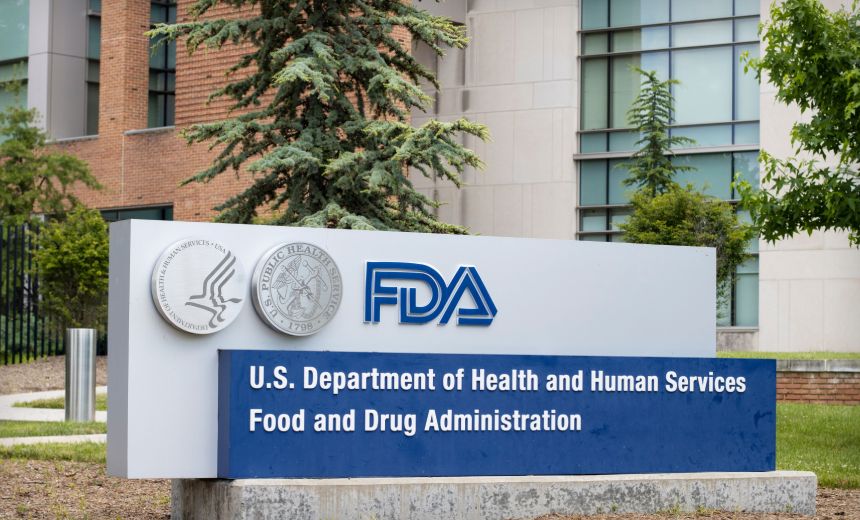
The U.S. Food and Drug Administration plans to test real-time clinical trials using artificial intelligence tools and data science. The goal is to accelerate the development of promising new drug treatments, which authorities say are being slowed by data and procedural bottlenecks.
See also: Reduce healthcare cloud risks with security by default
The agency announced Wednesday that real-time clinical trials have already “successfully initiated” two proof-of-concept trials, one by pharmaceutical giants AstraZeneca and Amgen.
AstraZeneca is conducting a Phase 2 multicenter trial called Traverse in patients with mantle cell lymphoma who have not yet received treatment. The trial involves the University of Texas MD Anderson Cancer Center and the University of Pennsylvania.
Amgen is conducting a Phase 1b trial called Stream-SCLC in patients with limited-stage small cell lung cancer. Final site selection is underway.
The agency said it met with sponsors of both trials to establish standards for reporting important data signals, such as efficacy results and safety concerns.
The agency plans to expand these two proofs of concept into a broader pilot program. In a request for information released Thursday, the agency asked for comments on how AI-enabled technology “could improve the efficiency, speed, and quality of decision-making in early clinical trials.” The RFI seeks input on the design and implementation of potential pilot programs, as well as evaluation metrics and success criteria.
“While we have conducted clinical trials the same way for 60 years, critical data signals can take years to reach the FDA,” FDA Commissioner Marty McCulley said in a statement. “The lag can unnecessarily delay regulatory decisions and delay drug development timelines.”
“We are boldly advancing a modern approach that allows FDA scientists to see safety signals and endpoints in real time as trials progress. This will accelerate promising treatments and move us toward our ultimate goal of continuous trials in real time at every stage of drug development.”
The FDA did not provide details about the AI and data science technologies used in the AstraZeneca and Amgen proof-of-concept projects.
In the RFI, which is open for public comment until May 29, the FDA asked for comments on the types of trials that could most benefit from the application of AI, the type of infrastructure needed, and how pilots could accommodate participants with varying levels of AI proficiency.
Most clinical development occurs in separate stages. “Each defined stage of clinical development is carried out according to a protocol, usually as a separate study, which typically results in a down period in the development program as one stage ends and the next begins. This slows down the pace of product development,” the agency said.
The agency said it plans to disseminate final selection criteria for the broader testing program in July and complete testing selection in August.
Some experts said the FDA’s introduction of AI into the clinical trial process is an important and promising move.
“AI can compress timelines by automating tasks that agencies have traditionally performed manually, such as detecting adverse event signals, monitoring protocol deviations, and reviewing and pattern-recognizing millions of pages of submitted documents,” said Jim Foote, founder and CEO of First Ascent Biomedical, a biotech company that leverages AI-enabled tools in its work finding advanced oncology treatments.


