

Romanians generally have a positive perception of artificial intelligence, which is mainly associated with the concepts of robots, technology, the future, and innovation. Some negative aspects are related to unemployment, the perception that AI does not provide correct information or may be dangerous. Moreover, AI tools have generated excitement due to their rapid adoption and are generally considered to be beneficial to workplace activities and society.

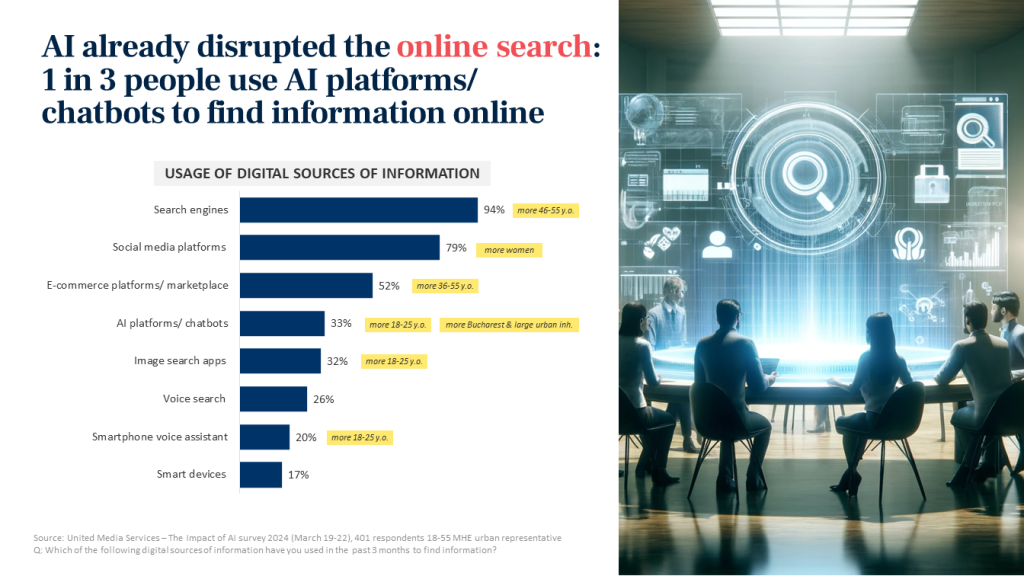
The results are part of a study carried out by the independent organization United Media Services from March 19 to 22, 2024, on the subject of the impact of artificial intelligence (AI) on Romania's urban population.


This study presents a complex perspective on how Romanian urban consumers view the evolution of artificial intelligence, balancing optimism about the potential benefits with caution about possible risks. are doing. Users have a high degree of adoption of tools on the market and incorporate their use into specific aspects of their daily lives, particularly in the areas of education, travel recommendations, diet, and administrative assistance.

Generated AI is already part of our daily lives, with 53% of respondents saying they often recognize AI-generated content in the content they consume, and 45% using AI at work. They answered that they are using the application.

“In recent years, we have been constantly interested in developing research studies that apply to some relevant consumer segments in Romania, through a dedicated team within the Authority. You can bring people a set of relevant information and conclusions about current trends.This time, we have selected one of the hottest topics and trends that are on the agenda every day, both in the marcom industry and in business. Intelligence has become a part of our daily lives, especially our professional lives, and in order to stay relevant in our business and consumer interactions, we want to know as much as possible about the impact that artificial intelligence has on consumers. thinking about.” Said Anca Băcăianu, Head of Strategy and Research, United Media Services:


The main conclusions of the study are:
- Increase in usage: 40% of urban Romanians use AI applications at least weekly, 28% use them at work, and the most popular chatbot is ChatGPT, followed by Google Gemini and Microsoft Copilot. ChatGPT is used especially by young people to find information, develop skills, experiment, and generate new ideas.
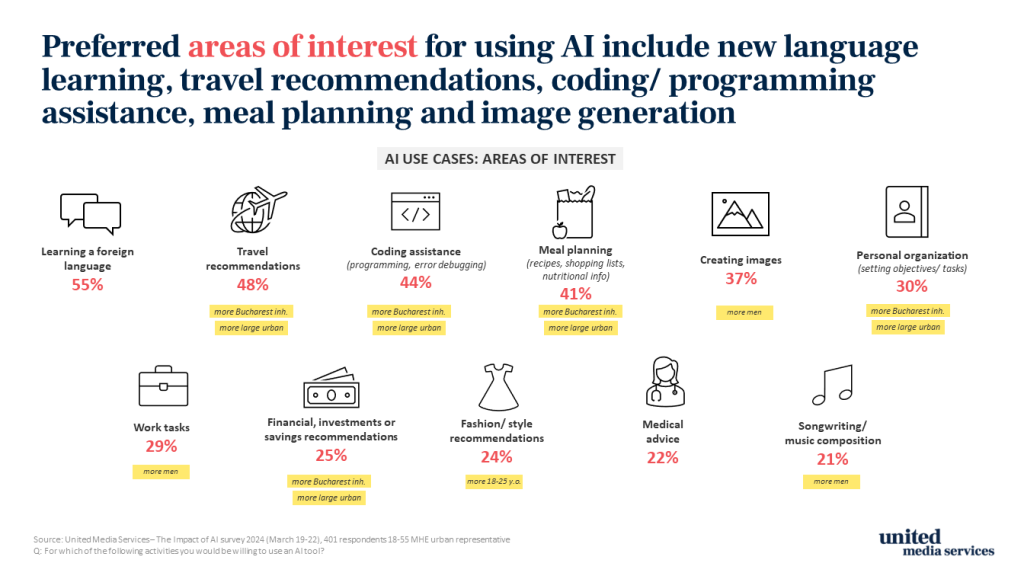
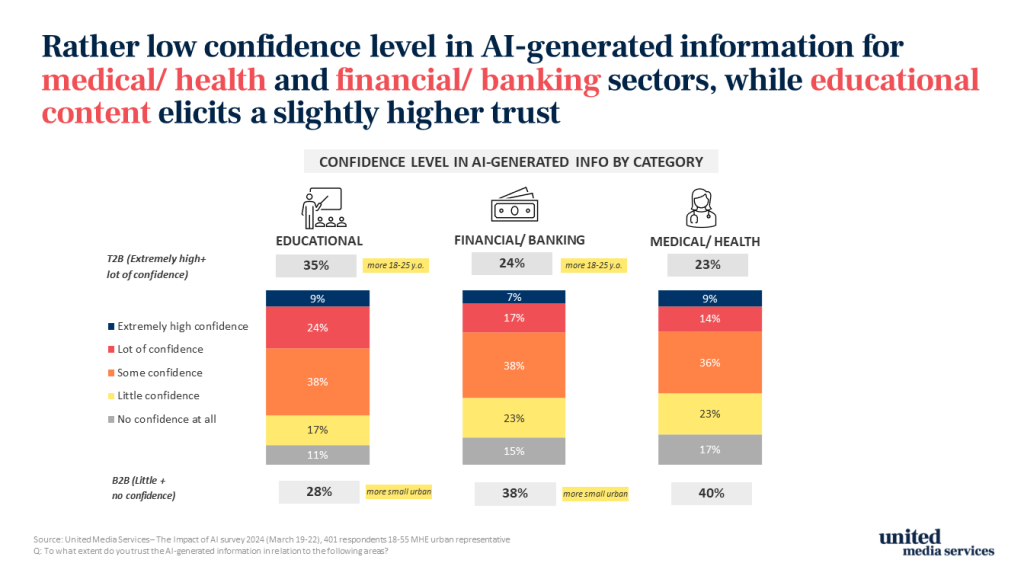
- Preferences in using AI: Education is the component where users show the highest trust in collaborating with AI (35% vs. 28% in healthcare). Current favorite uses for AI are language learning assistance, travel recommendations, coding, and programming. Furthermore, 50% of respondents said that integrating AI tools within their shopping experience would be very helpful. This insight opens up a wide range of project opportunities and service expansion for companies operating in the field of e-commerce and digital marketing.
- Positive perception of AI: Most respondents associate artificial intelligence with innovation, technological evolution, and a better future and believe it is beneficial to society. About 67% of respondents are excited about advances in AI, and 56% believe it will improve conditions in the workplace.

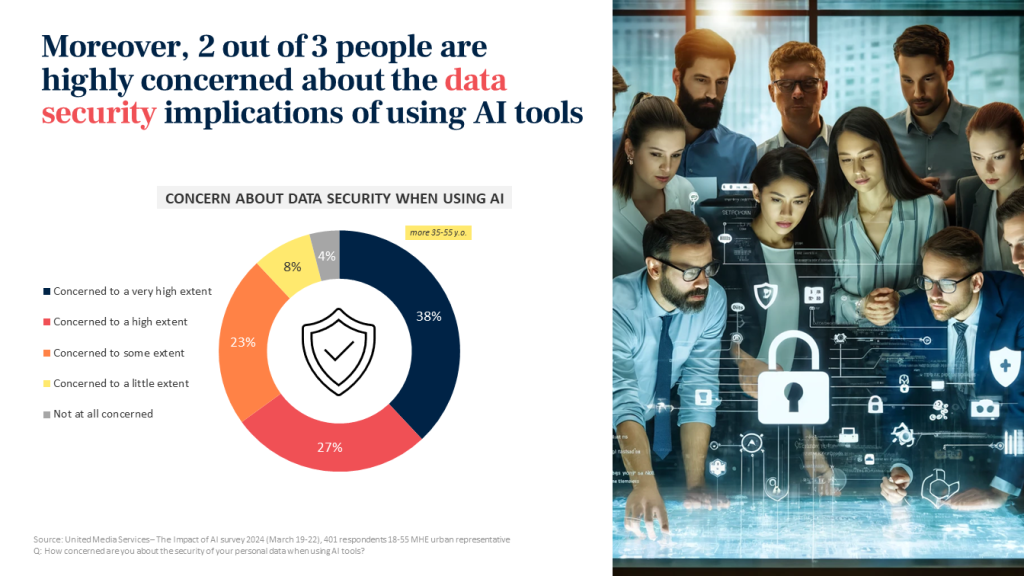
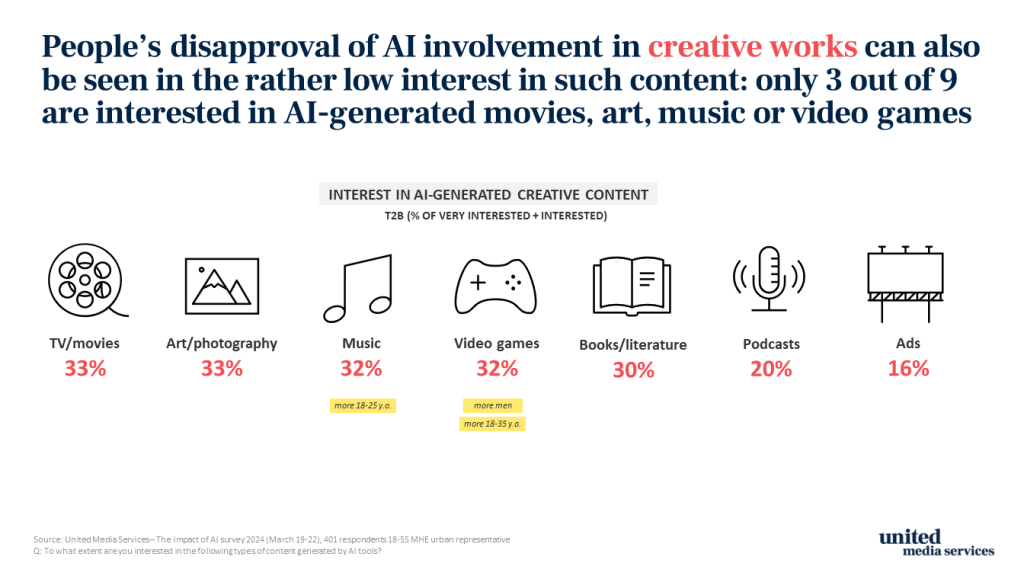
- Reservations and concerns: However, the rapid growth of AI has raised concerns about job losses, data security, and unethical use of the technology. Two out of three survey participants are very concerned about the security of their personal data when using AI tools. Issues and questions also arise regarding creativity and its impact on the work of artists and professionals in creative fields. For example, 44% of respondents believe that artificial intelligence can create quality music and art, and 60% of respondents (particularly women) wonder how AI tools will impact their industry. I am concerned about this.
- AI education and training: Half of employees say they recognize the significant impact AI will have on their work and are motivated to learn how to use AI applications. This openness to training emphasizes the importance of adaptability in the face of technological change.
- The need for transparency and regulation: Respondents emphasize the need for transparency from companies developing AI tools and strict regulation of the use of AI, especially in sensitive areas such as human creativity and copyright.

methodology
The study was conducted from March 19th to 22nd, 2024 and focused on the impact of artificial intelligence (AI) on Romania's urban population. This study uses a representative sample of 401 respondents, ranging in age from 18 to 55, from an urban environment and having a middle-to-high school level of education, to find out more about their attitudes and behaviors regarding the use of artificial intelligence. Gain insight.


