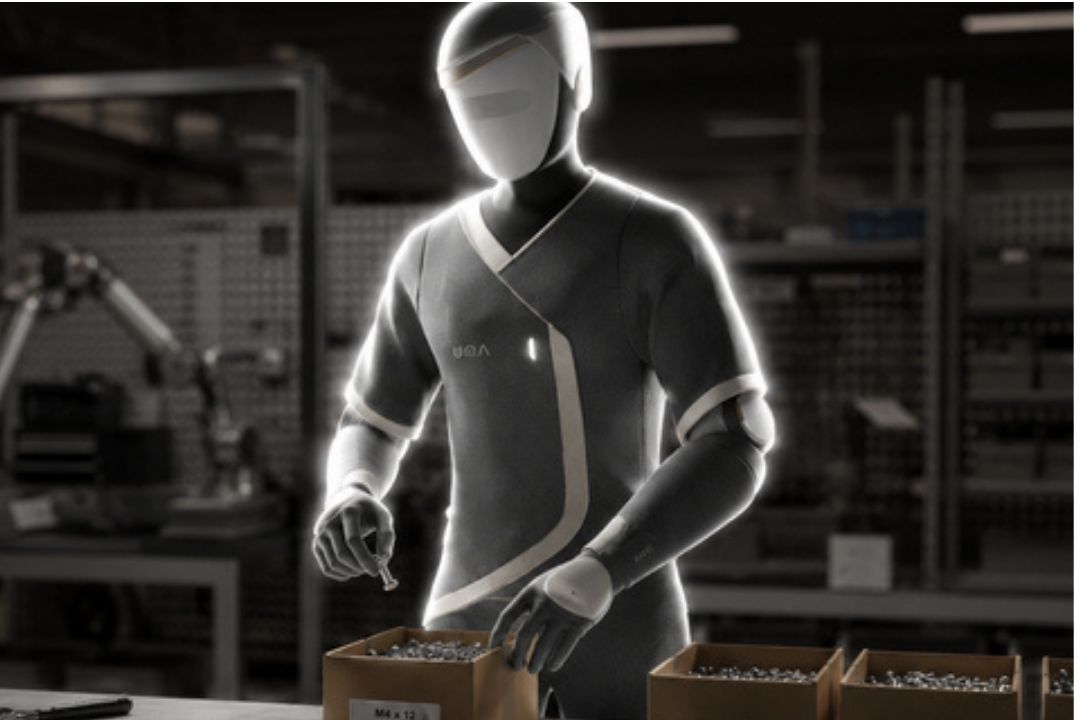
European physics AI company UMA has unveiled its first humanoid robot design, introducing a new learning system called real-time learning designed to help robots learn new skills through human demonstration rather than traditional programming. The announcement was made at the Machina Summit and marks a major step in the company’s efforts to develop intelligent robots for industrial settings.
UMA said its technology is aimed at addressing growing labor shortages due to population aging, industrialization and the global energy transition. According to industry estimates, the world could face a shortage of 85 million workers by 2030, potentially posing significant challenges to manufacturing and other labor-intensive sectors.
The company designed its humanoid robots to work in factories, warehouses, distribution centers, and industrial facilities where existing infrastructure for humans has already been built. Using human-like dimensions, robots can operate standard tools, navigate existing workspaces, and work alongside employees without making major changes to the production environment.
Unlike robots that rely on complex manual programming, UMA’s real-time learning platform allows machines to learn by observing demonstrations. This system allows robots to understand new tasks, adapt to changing environments, and improve performance over time through continuous learning. This approach is expected to reduce deployment time and make automation more flexible across a variety of industrial applications.
UMA also introduced a unique robot design that combines human-scale proportions with a neutral visor rather than facial features. The robot has visible mechanical joints but a protective outer shell, giving it an industrial appearance that distinguishes it from a human. The company says the design focuses on functionality, safety and reliability, rather than creating a human-like appearance.
Remi Cadene, co-founder and CEO of UMA, spoke at the launch and said intelligent robots are expected to become an important tool for industries facing labor shortages. He said the company’s goal is not to replace talent, but to support it by taking over repetitive, physically demanding and dangerous tasks, allowing employees to focus on creativity, decision-making and innovation.
Founded in 2025, UMA leverages expertise in artificial intelligence, robotics, embedded systems, and industrial engineering to develop intelligent humanoid robots. Headquartered in Paris with teams in London and Geneva, the company builds a physical AI platform that enables robots to learn from experience and operate safely in real-world industrial environments. UMA believes its technology can help improve industry productivity while supporting workers in higher-value roles.