
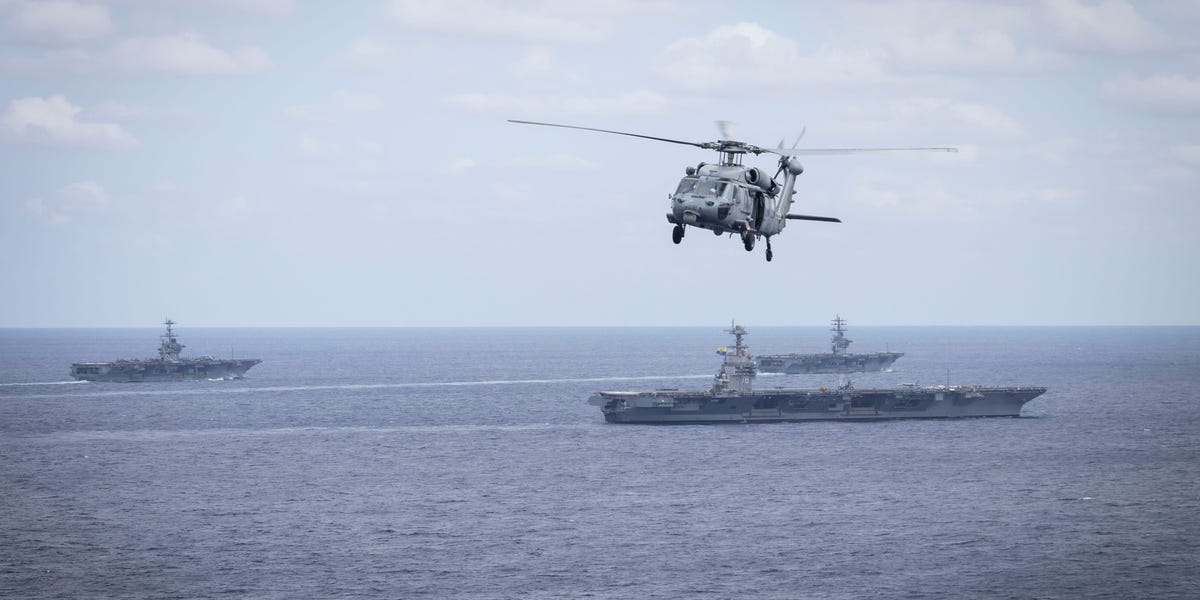
The U.S. Navy wants to build a new “AI-first” fleet, and is betting better data, faster technology adoption and more tech-savvy sailors will help make it happen.
The service’s newly announced strategy focuses on using AI and data in more ways, and will depend on seafarers becoming proficient with the technology and able to keep up with the rapid pace of development. The Navy’s approach is just one example of a broader transformation across the U.S. military that incorporates AI across operations, missions, and systems.
The push is important because future naval warfare may depend on which forces can gather, process, and act on information the fastest. Speed can be the deciding factor.
This week, after more than a year of work, the Navy released information on its roadmap for “weaponizing data and artificial intelligence,” which includes building a data-enabled and AI-enabled force.
“This strategy will enable the Department of the Navy to rapidly deploy data and artificial intelligence to overwhelm, learn and fight any adversary,” said Acting Secretary of the Navy Hung Kao, according to a press release. “This is our roadmap to building an ‘AI-first’ fleet that turns information into warfighting advantage and enables faster and better decision-making.”
The plan focuses on six core areas. The Navy plans to accelerate its use of AI by determining which projects have the most promise for full-scale implementation. The service also plans to streamline the way it collects, organizes and interprets data, making it easier and faster for the service’s sailors to understand data, which is a critical concern with new technology being introduced to the military service.
The Navy also plans to upgrade its hardware to better support data and AI capabilities. It will also optimize organizational processes within the service, giving more people a voice and authority over the use of data and AI. There will also be a focus on partnerships with industry, academia, the larger federal government, and U.S. allies and partners.
While AI is being integrated into weapons and technology, it is also being used at the employee level for paperwork and menial tasks. U.S. Marine Corps photo: Lance Cpl. Alison White
The maritime service also plans to develop a more capable workforce in data and AI technology. This includes hiring people with specific skills, building expertise across the workforce, and helping employees prepare for rapid changes in these technologies.
The plan would ultimately lead the Navy to what Cao described as an “AI-first” fleet.
U.S. Navy spokesman Lt. Jake Ryan told Business Insider that AI First Fleet is an initiative that “intentionally integrates artificial intelligence across the entire fabric of naval operations to strengthen America’s warfighting advantage in the digital age, where the speed of intelligence gathering is the critical variable for maintaining superiority.”
The Navy’s AI plans are consistent with the broader U.S. military strategy for using these technologies. The service is investing in automation and AI in shipbuilding, including an AI program that cuts 160 hours of work on a submarine program to 10 minutes, and an automated factory to manufacture parts for a major nuclear submarine program.
The Army is testing the use of AI in its new combat software, Next Generation Command and Control, to provide soldiers with up-to-date information while identifying specific use cases for the technology. AI and automation can help synthesize and process data, as well as predict ammunition, supply, and maintenance issues.
While the U.S. military is exploring the potential of AI in weapons such as unmanned systems, intelligence and target analysis, the Department of Defense is also recognizing the value of leveraging AI in more tedious administrative tasks and reducing the cognitive load on service members. The Pentagon’s AI program recorded 1.5 million daily users last month, up from 80,000 in December 2025.