
The Pensions Regulator (TPR) has set out expectations for the responsible use of artificial intelligence (AI) in workplace pensions, suggesting that trustees will continue to be held accountable for outcomes, even as pension funds and service providers increasingly deploy AI tools across administration and member services.
In its latest guidance and AI plan, TPR emphasizes that AI should be used to support, rather than replace, human decision-making in pension scheme governance.
Regulators have made clear that responsibility for compliance, operational resilience and member outcomes cannot be delegated to technology providers, even if systems are automated or externally managed.
The intervention comes as pension schemes, administrators and asset managers consider the use of AI across a wide range of functions, including member communications, fraud detection, data processing and improving operational efficiency.
TPR’s position effectively brings AI into the mainstream of fiduciaries’ oversight expectations, placing it alongside other core governance concerns such as cyber risk, data quality, and third-party risk management.
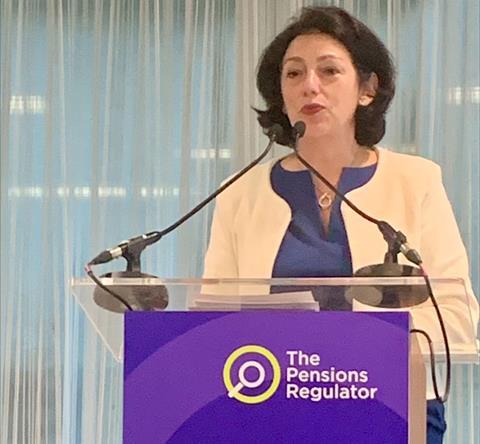
Nausicaa Delfas, CEO of TPR, said: “AI has the potential to transform pensions for the better, improving how schemes are run, how they support members and how they deliver value across the system.”
“But trust is the most valuable asset in our system, and that trust depends on deploying AI safely and responsibly for the benefit of our members.”
Although regulators have stopped short of introducing new binding rules, the tone of the guidance signals a shift towards formal oversight. Administrators will be required to understand how AI systems are being used within the governance chain, especially when third-party administrators or service providers are deploying generative and predictive tools on their behalf.
The practical implications are that schemes may need to revisit their supervisory frameworks to ensure that the use of AI is documented, explainable and subject to appropriate human controls. This includes clarity on how data is used, how output is validated, and how errors and biases in automated processes are identified and corrected.
Delfas said: “Our message to trustees, administrators and scheme administrators is clear: Act now. Put strong governance in place, invest in data quality, understand where and how AI is used within your scheme and protect your members from AI fraud.”
The TPR guidance also highlights a broader regulatory trend toward overseeing emerging technologies based on principles rather than prescriptive rules.
By framing AI as an extension of existing governance obligations, regulators are effectively indicating that while trustees do not need to become technology experts, they do need to ensure that appropriate controls are in place and that ultimate accountability remains clearly defined.
As the adoption of AI in the pensions sector accelerates, attention is likely to shift to how regulators actually test compliance. The immediate question for fiduciaries is not whether to adopt AI, but more importantly how to demonstrate that the use of AI is well-managed, transparent, and consistent with their fiduciary responsibilities.


