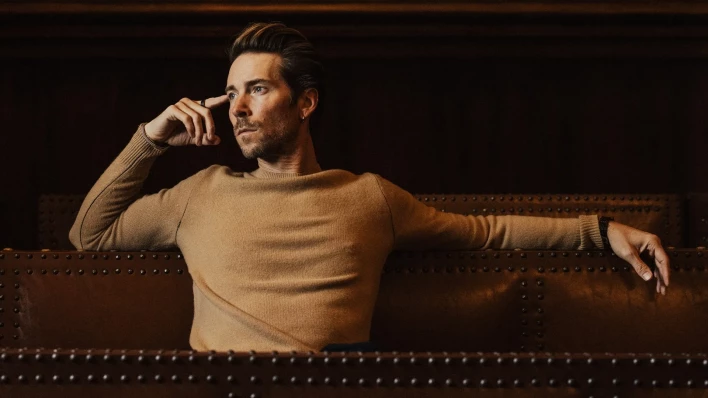
Troy Baker, the famous voice actor behind characters like Joel and Indiana Jones, has expressed a strikingly optimistic view of artificial intelligence. His stance contrasts with the prevailing atmosphere within the video game voice acting industry, where AI is often viewed with skepticism or outright opposition.
Even before Baker made his position public, many voice actors had already expressed strong concerns about the growing role of AI in the industry. Brianna White as Aerith Gainsborough Final Fantasy VII Remakehas previously warned that AI is causing panic across the industry. Similarly, Julie Nathanson, known for voicing Samantha Maxis, call of duty black ops In the series, she joined the SAG-AFTRA strike after stressing that the idea of AI replacing her voice was fundamentally unacceptable.
Against this backdrop of widespread criticism, Baker game business show On January 6th, he argued that there is little value in reflexively attacking or demonizing AI. He suggested that conversations need to be more nuanced, rather than treating technology as an inherent threat.
During the show, Baker acknowledged that the capabilities of AI are now widely understood and increasingly impressive. But there is no need to denigrate it to recognize its technological advances, he stressed. He pointed out that for more than 2,500 years, audiences have consistently sought performances that felt authentic and emotionally authentic. He argued that while AI may continue to improve when it comes to content creation, it lacks the ability to create truly original art in a human sense. From his perspective, art remains inseparable from human experience and has become an essentially human domain.
Baker went on to suggest that advances in AI could paradoxically increase people's perception of human authenticity. As synthetic content becomes more prevalent, he believes audiences may become increasingly drawn to experiences that bring to the fore unmistakably human qualities, such as seeing someone sing live, reading a book imbued with a distinctly human sensibility, and engaging with work created through lived experience rather than virtual reality. In that sense, he saw the rise of AI not just as a threat, but as a potential opportunity for human creativity to stand out more clearly.
This article has been translated from the original article published in INVEN.