A before and after comparison shows Topaz Labs’ AI image enhancement. Denoising, sharpening, and upscaling images in one step, the Wonder 2 model is the first to ship with NeuroStream optimization. [Courtesy of Topaz Labs]
Dallas-based Topaz Labs has released what it calls a breakthrough in local AI processing. The company says its proprietary technology, called NeuroStream, can reduce memory demands for large AI models by up to 95%, bringing professional-level image and video enhancements to the desktop without relying on the cloud.
Topaz said NeuroStream is not limited to its own models. The company positions this as a fundamental technology.
The Emmy Award-winning company for its AI-powered TV restoration technology has built a loyal following among creators and professionals since its founding in 2005. The company says its technology is used by 1.5 million customers, including 20 of the world’s top 50 companies.
Now, Topaz says NeuroStream has the “power to transform the use of local AI models across the image and video industry.”
Foundational Technology – Powered by NVIDIA
Topaz has worked with NVIDIA to optimize NeuroStream for its hardware, and the company says that the technology implemented allows models that previously could not run on consumer systems to run on all NVIDIA GeForce RTX and RTX PRO GPUs.
“As the demand for local processing on RTX GPUs continues to grow, NeuroStream provides the opportunity to run complex AI models on almost any hardware,” said Gerardo Delgado Cabrera, director of AI PC products at NVIDIA.
Cabrera said the collaboration with Topaz Labs is part of the company’s continued efforts to help develop technology optimized for use on NVIDIA-powered devices.
Topaz’s NeuroStream technology also works with AMD GPUs and Apple Macs, according to company CTO and IEEE Fellow Xiaoyu Wang, who wrote on LinkedIn that NeuroStream “automatically analyzes the underlying hardware and applies adaptive optimizations” without manual tuning.
break down the wall of memory
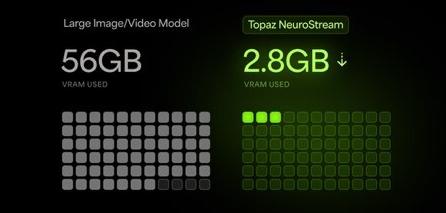
According to Topaz Labs, Topaz NeuroStream reduces VRAM usage by 95%. In this example, the memory requirements for a large image/video model are reduced from 56GB to 2.8GB. [Courtesy of Topaz Labs]
Running large-scale AI models on standard desktops, laptops, and Macs is typically cost-prohibitive. This is because the models require much more video memory (often 30 GB or more of VRAM) than consumer hardware provides, and such capacity is only found in expensive server-grade GPUs. As a result, users must rely on cloud processing, which means ongoing costs, potential privacy concerns, and dependence on remote infrastructure.
NeuroStream is Topaz’s attempt to break this trade-off.
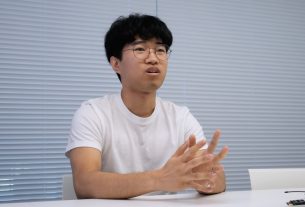
“We envision a world where AI models simply reside on your device, with no need for the cloud, no additional usage costs, no dedicated hardware, and no security gaps,” CEO Eric Yang said in a statement. “Professional customers have been asking for this ever since we introduced our first large-scale generative model, and now we’re extremely excited to make it a reality.”
Mystery 2: The first model with NeuroStream
Wonder 2 is the first Topaz model to ship with NeuroStream optimization. First announced in January 2026, Wonder 2 is designed to simultaneously denoise, sharpen, and upscale images in one step, and is now available in Topaz Photo.
Specifically speaking about VRAM reduction, Yang wrote on LinkedIn that Wonder 2 models typically require about 30GB of VRAM. This is the kind of capacity found in high-end datacenter GPUs such as the NVIDIA H100. NeuroStream runs at 6GB and “results are the same” in internal benchmarks, with performance only “2-8% slower,” according to Yang.
Yang teased the broader rollout on LinkedIn last month. “Cloud processing is always available as an option, but it shouldn’t be the only way,” he wrote. “Creators don’t need specialized hardware or complex workflows to achieve professional results.”
Yang said all of Topaz’s cloud models will be available for local deployment in the coming months, starting with Wonder 2.
scale up
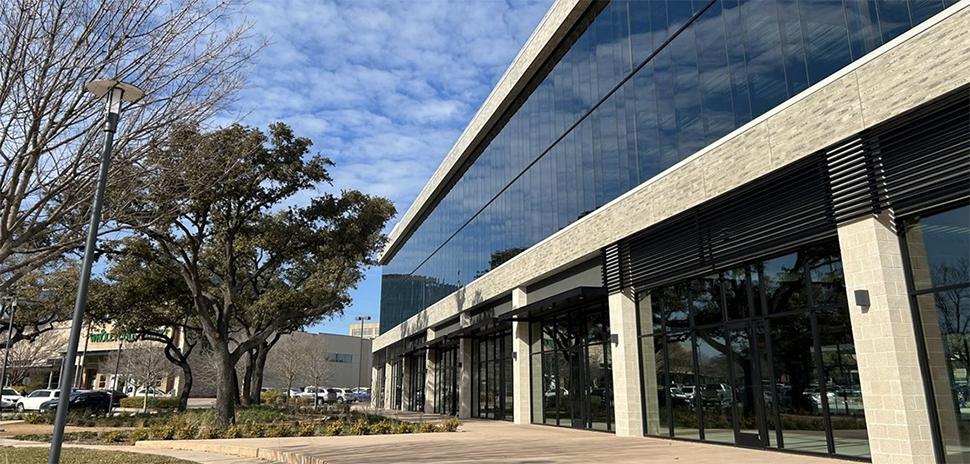
Topaz Labs’ new headquarters is located in Building 900 at Village on the Parkway in Addison. The company nearly quadrupled its office space from 7,000 square feet to approximately 28,000 square feet. [Courtesy of Topaz Labs]
In addition to winning an Emmy last year, the company was also named a finalist for D CEO and Dallas Innovates’ 2026 Innovation Award in the AI and Machine Learning category. Its founder and current Topaz advisor, Feng “Albert” Yang, was named to the inaugural Dallas Innovates AI 75 list, which recognizes the top AI visionaries in North Texas.
NeuroStream’s launch comes after a significant physical expansion for the company. In January 2025, Topaz announced it would nearly quadruple the size of its Addison headquarters from 7,000 square feet to approximately 28,000 square feet and become the sole office tenant in Building 900 at Village on the Parkway. The company said it plans to invest at least $2.5 million to build an innovation lab and collaborative workspace.
The company has secured a $200,000 grant from the city of Addison to help expand, and plans to add 130 high-tech jobs by the end of 2027.
Nick Lee, president and principal of NAI Robert Lynn’s office division, which represented Topaz Labs in securing its new headquarters, said the deal reflects the company’s “rapid growth in the AI industry.”
Don’t miss what happens next. Subscribe to Dallas Innovates.
Track the state of business and innovation in Dallas-Fort Worth with handpicked news delivered Tuesday through Thursday.
Read next
-
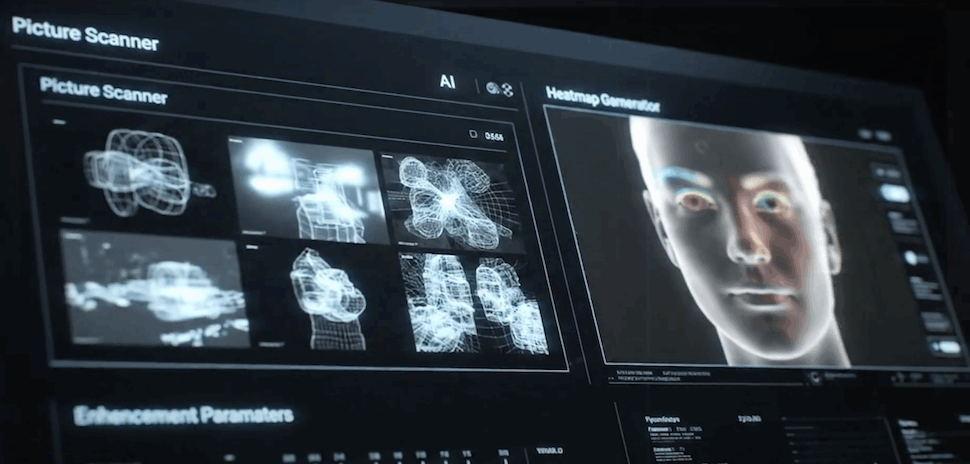
The system’s open-source framework integrates more than 50 specialized AI models that autonomously analyze, plan, and restore images, “mirroring the decision-making process of professional editors.”
-

Data scientist Ammolika Singh has put Dallas on the world map of AI Tinkerers. The first meetup brought together more than 30 experts, from founders to Fortune 500 technologists, to exchange ideas, projects, and solutions.
-

At the 76th Annual Technology & Engineering Emmy Awards held recently in New York City, Topaz Labs won a major award in the AI Image/Video Enhancement for High-Quality TV Catalog Restoration category.
-

Avoid common pitfalls with practical insights from guiding Fortune 500 companies through AI implementation
-

Does the AI seem overwhelming? Just go to office hours.