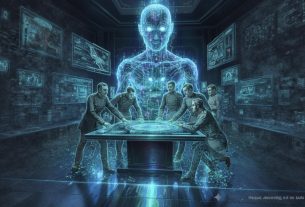
The AI-generated movie Hell Grind is pushing the boundaries of what a movie experience can be. The film was shown at a private screening in Manhattan’s Chelsea neighborhood, and the reaction was mixed, with both curiosity and bewilderment at what they saw on screen. This information is based on a report by variety journalist Tatiana Siegel, who attended the preview screening.
The film is approximately 95 minutes long and was created by San Francisco-based AI startup Higgsfield AI. The film was produced in just two weeks and had a budget of about $500,000, according to the company. Most of that cost went to computing power and AI tools, such as ByteDance’s Seedance video generation model and Higgsfield’s proprietary system.
What makes this experience unique is not just the movie itself, but its setting. The screening felt like a normal movie event. People sat in recliner theater seats, ate popcorn, and watched the screen just like they would at a traditional movie. But everything on screen was generated by artificial intelligence, from the characters, the city environment, the music, and even the food scenes.
Hell Grind’s story is strange and chaotic. It follows four orphan criminals led by a character named Rocco. They attempt a robbery, gain unexpected superpowers, and then get into a scuffle with a demon who kidnaps one of their friends. The group then goes through various difficulties to rescue her. The plot involves portals, magical artifacts, and battles in an underworld setting.
The film came out at a time when there was a growing focus on AI in entertainment. The screening was also attended by journalists, investors, and Higgsfield staff. The company presented the film as a technology demonstration rather than a traditional film intended to compete with Hollywood storytelling.
Higgsfield CEO Alex Mashrabov explained the purpose of the project in an interview. he said: “We need to focus on the areas where technology is most powerful and see where it fits the needs of creators.” He added that as technology develops, genres such as comedy and drama are also expected to improve soon.
Although many of the visuals were slick and surprisingly realistic, the film still had glaring weaknesses. Some characters didn’t show strong emotions and the dialogue delivery felt flat at times. According to the report, even the story’s villain had limited range of expression. The music in the film was also mostly generated by AI, with only a few pieces by real artists.
Mashrabov also said that early viewer feedback pointed out that the film lacked elements normally associated with human production. He noted that the voice acting was one of the weakest parts of the project and needed improvement in the future.
Despite its flaws, Hell Grind shows how rapidly AI filmmaking tools are developing. The company claims that around 15 people and 30 AI agents worked on projects within the platform. The script was written before production, but most of the visuals and scenes were generated through an AI system.
Higgsfield said the company’s platform already has thousands of users and is growing rapidly. The company, which was valued at $1.3 billion earlier this year, is also building a training program to teach creators how to use its tools. In the future, it is expected to be used in advertising, post-production work, and speeding up film production cycles.
A sequel is teased at the end of the movie, but it is not currently in development. It’s unclear whether it will happen, but the idea of turning projects in weeks rather than years is already part of the conversation. Variety reports that the film hints at a future where movies can be produced faster, but still raises questions about how “human” those stories will feel.
Have something to add? Let us know in the comments!