
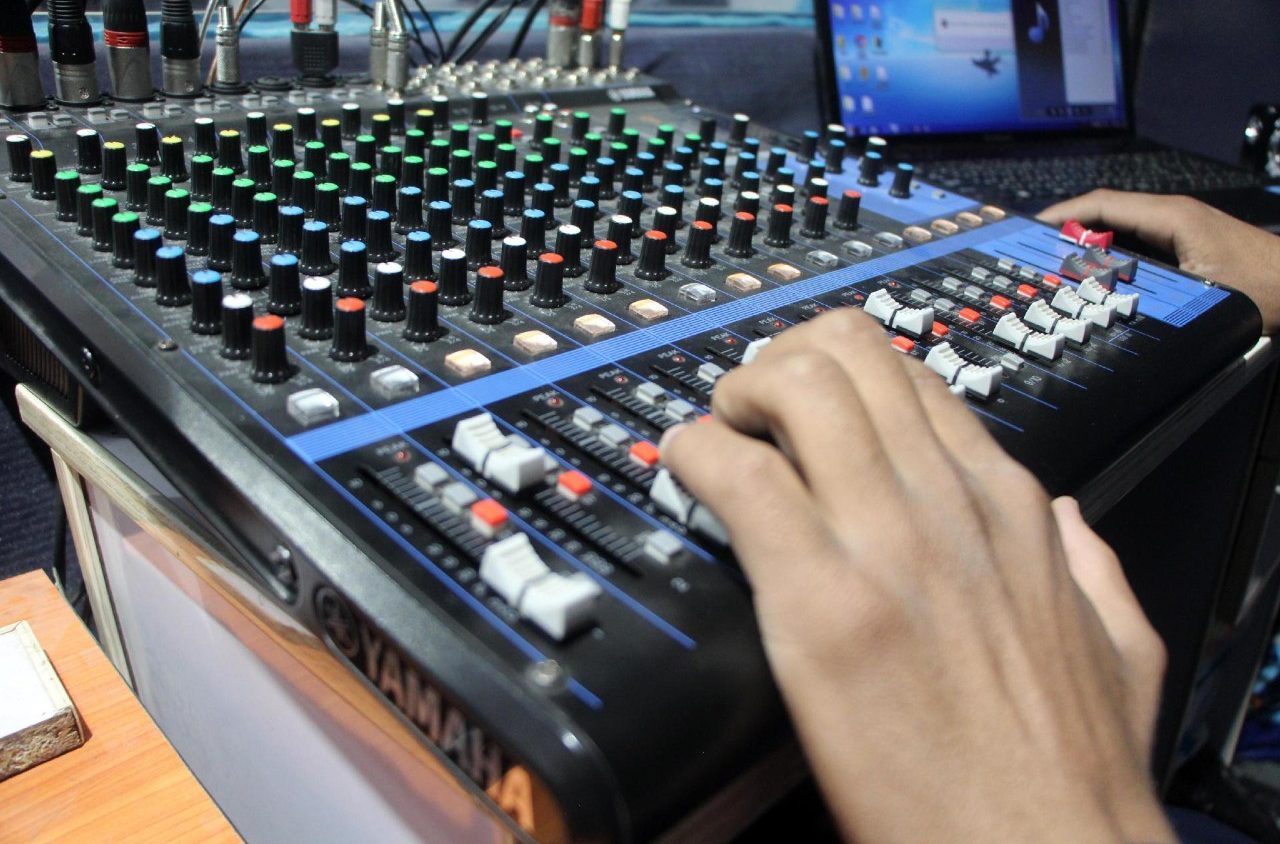
Promoted by UNESCO, World Radio Day this year focuses on voice and AI, exploring the connections between people and communities as part of the DNA of Guglielmo Marconi’s invention. According to Deputy Editorial Director Alessandro Gisotti, this is a value that no artificial intelligence can replace.
Alessandro Gisotti
“Radio is no longer just a radio.” Twenty years have passed since the birth of Fr. Federico Lombardi, then head of the Vatican’s radio station, made these remarks during a meeting with colleagues at the Holy See’s radio station.
Podcasts were effectively an experiment for the elite. Web radio still had no real importance in the media ecosystem. Social networks existed in their earliest form and were not used to distribute news content, much less in audio format.
However, Fr. Lombardi could already sense that radio, the most flexible, resilient and great medium, was once again changing its face. Twenty years later (a geological period, considering the rate at which communications technology has evolved during this short period of this century), we can certainly confirm the Jesuit prophecy that “radio is no longer just radio.”
But while today we habitually speak of “radio and audio” as inseparable, clear evidence of how deeply things have changed, the DNA of Guglielmo Marconi’s invention still seems to have retained its distinctive characteristics.
The voice remains centered. Emotional voices: voices evoked by songs, interviews, conversations with listeners, or speeches by famous people. Voice has the ability to reach people more directly when something important needs to be communicated. Radio somehow continues to be a “great friend” to all other media of information production (old and new). Maybe it’s because technology certainly plays an important role in radio shows (or podcasts), but it doesn’t play a dominant role. The real work is done by the person and their voice. But will this still be the case in the near future?
“Artificial intelligence is a tool, not a voice.” This is the theme chosen by UNESCO for World Radio Day 2026, precisely capturing and highlighting an increasingly obvious and urgent concern. Will AI replace the human voice in radio broadcasts?
Technically speaking, this is not only possible today, but is already widely practiced in many stations. A program hosted by an “AI presenter.” Voice dubbing by AI. Podcasts created with music and cloned voices using tools with minimal human contribution.
These applications raise many questions, including issues of transparency. First and foremost, listeners need to know whether the voice speaking to them is human or generated by AI. And they need to know whether the news content they’re hearing was selected by an algorithm rather than a journalist.
Importantly, Pope Leo
“Saving one’s face and voice ultimately means protecting oneself. Embracing with courage, determination and foresight the opportunities presented by digital technologies and artificial intelligence does not mean turning a blind eye to serious problems, complexities and risks,” the Pope wrote.
He directly addresses a point that even major public service media organizations such as the European Broadcasting Union consider inevitable today. “The power of simulations is such that AI can even deceive us by creating them in parallel,” warns Pope Leo realityusurp our faces and voices. We are immersed in a multidimensional world where it is becoming increasingly difficult to distinguish between reality and fiction. ”
Artificial intelligence cannot replace the emotions humans convey to listeners through our voices. That is why, in the words of UNESCO, we should use this revolutionary new technology as a tool. Nothing more.
From this perspective, AI can be very useful for radio. To better understand our audience’s preferences. To organize your sound archive more effectively. You’ll be able to find information faster. Build a clearer, more recognizable sonic identity. The potential developments are vast, some of which cannot yet be predicted.
But no amount of sophisticated technological progress can replace the human dimension at the heart of Marconi’s invention: the connections between people.
AI can perfectly replicate the timbre of a voice. Thus, the vocal cords can be “replaced”. But not of the mind. Because, as Marshall McLuhan famously said, “Radio has the magical power to touch far-flung, forgotten chords.”


