
The artificial intelligence revolution sweeping the entertainment sector was not at first glance obvious at this year’s Berlin Film Festival, but the potential for far-reaching change was still on people’s minds.
The festival has the feel of an arthouse bubble when it comes to the topic of AI, and the event’s leadership keeps the conflict in check.
“We do not intend to make any statements regarding the use of AI in the film industry at this time,” the festival said in a statement to AFP, adding: “We are monitoring developments with great interest.”
Nevertheless, some of the filmmakers in attendance addressed the question of how technology is changing the industry.
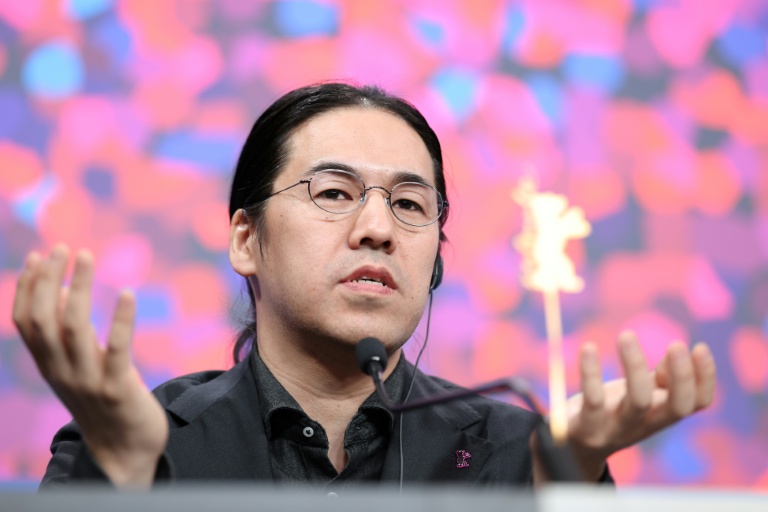
Yoshitoshi Shinomiya, director of “A New Dawn,” the only animated film in competition, told reporters that he had briefly considered using AI in his film.
“During production, we weren’t at all sure if we would be able to finish this movie. At one point, we wondered if we should use AI in the background,” he said.
But Shinomiya concluded that AI is not “sufficiently developed” to do such a job.
Juliette Prissard of Eurocinema, an organization representing French film and television producers, said it was only a matter of time before the tools improved.
“It’s natural to think that after one, two, three years you won’t be able to tell the difference anymore,” she told AFP.
AI can already “write a script,” replacing extras in crowd scenes or even producing a “digital replica” of someone.
– “We have no choice” –
In France, where foreign-language films are often dubbed, voice actors are already sounding the alarm about the impact AI will have on their profession.
But Prisard warned that other jobs in the film industry could be replaced in the “near future”, including “technicians, set designers” and even “producers themselves”.
Sevala Irgacheva, secretary general of the European Film Directors Association (EFAD), said that “all the jobs of young people, such as editorial assistants and script assistants, are disappearing.”
Despite this, the industry is “leaning towards embracing ‘AI’ because it doesn’t have a choice anyway.”
The tool has the potential to increase efficiency in the sector and help “save time at every stage of production,” especially in the more “bureaucratic” aspects of the process.
A survey conducted in early 2025 by France’s National Center for Cinema (CNC) found that 90% of film and audiovisual professionals surveyed are already using AI tools in their work.
In Berlin, Austrian director Georg Tiller screened a short film that combines filmed footage and AI-generated images, saying it was an attempt to encourage fellow filmmakers to fight for the status of a new “digital cinema.”
“If we don’t, I’m afraid we’re going to die a slow death because it’s just going to roll over us,” Tiller told AFP.
~The “temptation” of deregulation~
The issue was alleviated to some extent by a December agreement between OpenAI and Disney, which allowed the use of the entertainment giant’s characters on its AI-generated video platform, Sora.
In return, Disney is now given “privileged access” to OpenAI’s “highly sophisticated” tools, giving it a “technological advantage over other areas,” Prisard said.
But the use of AI in movies raises thorny legal questions around the very concept of intellectual property and authorship, at a time when the law is just beginning to address the issue.
Under EU rules, streaming platforms such as Netflix and Amazon Prime must feature at least 30 percent of European content in their catalogs.
Plissard questioned how code enforcers could “tell the difference” between original and “synthetic” works.
Given the “fear of falling behind” the United States and China in the development of AI technology, Europe may succumb to the “temptation to give free space to innovate”, Prisard said.
pyv/clp/bds/jsk/giv


