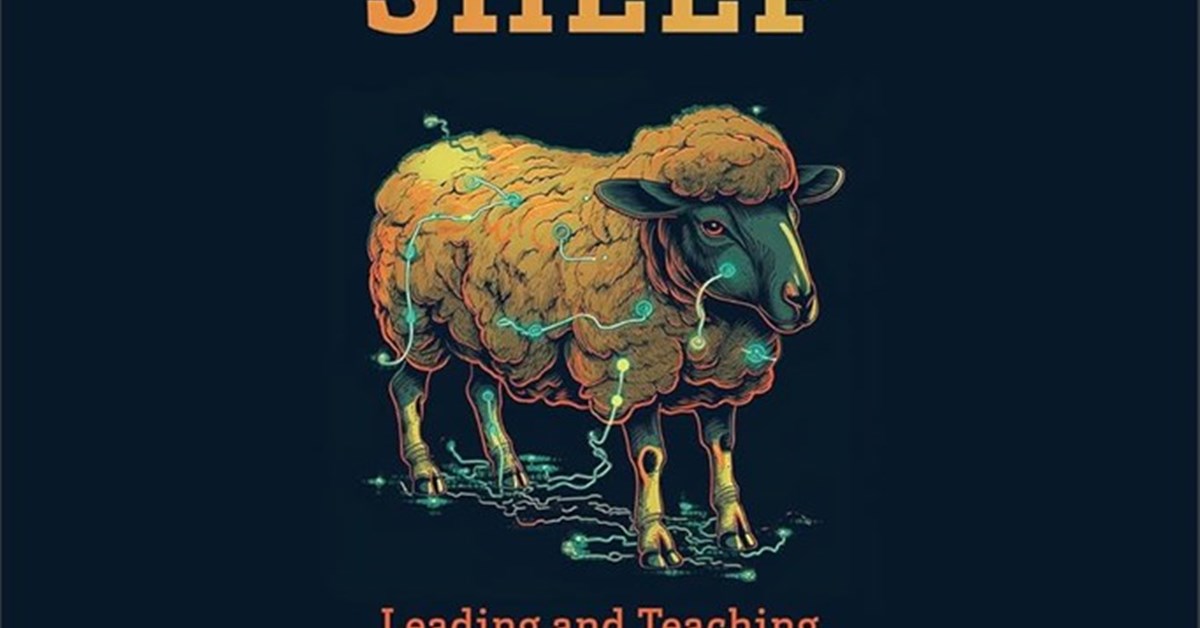
This book is one of the best theology books on artificial intelligence (AI) I’ve ever read, and one of the best theology books I’ve read for a general audience. This book is not without its weaknesses, and readers in the UK (or pastors considering publishing this book for study groups) will need to keep in mind that this book is clearly written for an American audience. But most importantly, this book is smart and practical, and the authors keep their feet firmly on the ground.
I focused on this because theological writing on AI is too fixated on “advanced superintelligence” and computer personhood. Of course, these topics should be given theological attention, but not too much attention. True intelligence and character may never arise. Meanwhile, AI applications are busy completely transforming human life. In most cases, it’s best to pay attention to science fiction “what if” speculation rather than investing the bulk of your theological thinking into it. Sean O’Callaghan and Paul A. Hoffman are rich with pastoral insight and help us step back and think about AI and life now.
If this book has a weakness, it is that it splices together too many quotations and summaries of other works. I wish the authors had shown the confidence to continue writing in their own voices and acknowledged the sources of their arguments more in the footnotes. That said, the authors they reference and consult are well chosen and provide many promising leads for further reading.
Reliance on other authors may suggest a lack of awareness about a piece of science. For example, “deep learning” is set up in contrast to “machine learning,” but the former is actually a subset of the latter. Alan Turing is discussed as the author of the famous “Turing Test” to determine genuine intelligence, but despite mentioning him, nothing is said about his broader role in establishing the foundations of computer science, making me wonder if the authors were aware of that contribution. These considerations do not detract from the content of this book, but you should look elsewhere for an introduction to the computer science of AI.
None of those issues spoil the book, and its theology is solid (presented as a “biblical perspective”, but no less doctrinal). The author’s sense of the extent to which AI will impact our daily lives is impressive. Their choice to focus on education, discipleship, and ministry has worked well, with chapters dedicated to each. To provide their perspective, the chapter on discipleship focuses on habit, embodiment, place, time, and sociality. The chapters on ministry are not prescriptive, but offer helpful, specific suggestions. They are grouped as “Don’t do this,” “Proceed with caution,” and “Consider proceeding” (i.e., consider hiring).
Mr. O’Callaghan and Mr. Hoffman should be congratulated for writing a book that will serve us well in 2026, rather than grappling with a future that may never come.
The Reverend Andrew Davison is Professor of Theology at the University of Oxford and Canon Resident at Christ Church.
AI Shepherds and Electric Sheep: Leading and Teaching in the Age of Artificial Intelligence
Sean O’Callaghan and Paul A. Hoffman
Baker Academic £19.99
(978-1-5409-6801-2)
Church Times Bookshop £17.99