.jpg)
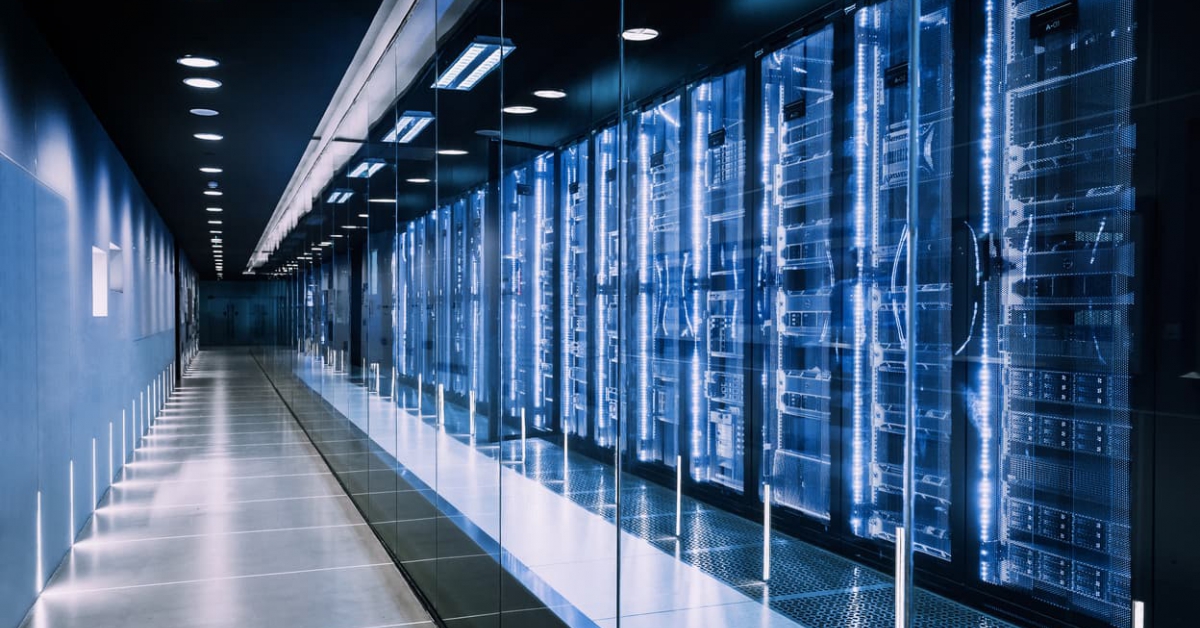
As AI drives gigawatt-scale power demand, Taiwan’s fuel cell, energy storage, and geothermal strengths position it to expand its zero-carbon energy base. (Photo: iStock)
“No electricity means no computing power, and without computing power, countries cannot compete,” Sabrina Yu, green technology analyst at DIGITIMES, said at the DIGITIMES Tech Forum 2026: Techtonic Shift on December 3.
As AI data centers move to gigawatt-level power demands, the world’s technology companies are increasingly leaning toward carbon-free energy. Although Taiwan’s share of renewable energy remains limited, its strong fuel cell and energy storage supply chain, as well as new geothermal resources, positions the island to build a more diverse zero-carbon power base.
Deloitte’s “Low Carbon Energy Shapes the Future of AI” seminar held on the same day also focused on the rapidly increasing demand for electricity from data centers and considered the energy challenges Taiwan must overcome.
Taiwan’s power grid feels pressure as AI demand accelerates
“AI supercomputing is like a Formula 1 race, where all subsystems need to work together to get the best performance,” said Han-chang Wu, general manager of Taiwan AI Cloud, at a Deloitte seminar. GPUs and high-speed switches are now the primary drivers of power demand, and any delays in networking, storage, or cooling can degrade overall performance and require more powerful energy and thermal management systems.
Wu believes that Taiwan is unlikely to pursue a gigantic campus on the scale of GW due to land constraints, industrial layout, and demand patterns. Instead, the move will be to build multiple medium-sized facilities of about 10 MW each. Therefore, energy planning must accommodate distributed yet highly efficient AI workload models, he said.

Han-chang Wu of Taiwan AI Cloud expects to have multiple 10 MW medium-sized sites and will need an energy plan to support a more distributed and efficient AI data center. (Photo: Wendy Lo)
Taiwan has long had a reputation for low electricity costs and reliable electricity supply. However, as the demand for AI increases rapidly, electricity is becoming a finite and competitive resource. Speaking at a Deloitte seminar, Hsu-chuan Yi, director of system planning at Taipower, pointed out that there is a global shortage of key grid equipment such as transformers and gas turbines. Gas turbine lead times have increased from 2-3 years to 7-8 years, and prices have doubled. “The speed at which we’re building the power grid just can’t keep up,” he says.
When the load is concentrated, pressure is applied. Data centers are concentrated in urban and industrial areas, where land for new substations is scarce and construction is complicated by the prospect of local undergrounding. Regional imbalances continue as demand in northern Taiwan has long exceeded supply. Taipower is encouraging large-scale users to relocate to the central and southern regions to relieve pressure.

Taipower’s Hsu-chuan Yi says utilities are moving towards a more decentralized and diversified power strategy. (Photo: Wendy Lo)
In response, operators are moving towards decentralized and diversified on-site power solutions, such as locating facilities closer to generation sources and deploying a combination of fuel cells, energy storage and gas-fired units to reduce grid connection pressure and improve supply flexibility.
Fuel cells and storage emerge as key to Taiwan’s decentralized clean power future
Because grid interconnections often take three to five years, Yu believes fuel cells and energy storage will be an essential part of Taiwan’s future energy mix, supporting data centers to become more power self-sufficient. The global technology company’s 24/7 carbon-free energy (CFE) goals require 24-hour, all-weather power, which cannot be achieved through renewable energy alone.
Taiwan has a strong presence in the solid oxide fuel cell (SOFC) supply chain. US SOFC manufacturer Bloom Energy partnered with a Taiwanese company as early as 2008, with Taiwanese suppliers expanding across the value chain from hydrogen production and storage to downstream applications.
Energy storage strengthens microgrids by stabilizing frequency and managing load fluctuations. Taiwan has begun manufacturing domestically produced battery cells and domestically producing power conversion systems (PCS). Delta and TECO are both in this space. At the same time, the government’s Technology Storage and Carbon Reduction Flagship Program will provide subsidies of up to US$159,000 (NT$5 million) per MWh for domestic storage systems. Yu expects 2026 to be the real starting point for behind-the-meter storage implementation.

DIGITIMES analyst Sabrina Yu says Taiwan’s fuel cell and storage supply chain will be at the heart of the future of zero-carbon electricity. (Photo: Wendy Lo)
Tech companies explore geothermal and advanced nuclear power for 24/7 clean power
Global technology companies require clean power that is stable, predictable, and weather-independent. Geothermal meets these requirements and is of increasing interest. Although Taiwan is located in a volcanic and tectonic belt, geothermal development has long been constrained by regulations, exploration costs, and technological complexity.
A major milestone in 2024 was when Google signed Taiwan’s first geothermal power purchase agreement with Baseload Power Taiwan, targeting an output of 10 MW by 2029. This is the first direct geothermal procurement by a Taiwanese technology company and represents a breakthrough in baseload zero-carbon power generation.
Internationally, even amid political debate over renewable energy, the United States continues to support geothermal power and advanced nuclear power. Fusion technology and small modular reactors (SMRs) are emerging as long-term energy options for data centers. Google signed a 200-megawatt long-term PPA with fusion startup Commonwealth Fusion Systems in 2023, aiming to begin receiving power around 2030.
Yu estimates that by 2030, more than 70% of the world’s data center electricity needs will be supplied by low-carbon energy. Taiwan is limited by a low share of renewable energy and an unresolved nuclear pathway, which could remain at around 50%. He pointed out that if Taiwan wants to remain competitive in the energy race in the AI era, it is essential to accelerate the development of geothermal, storage, and hydrogen.
read more: The race to green data centers