

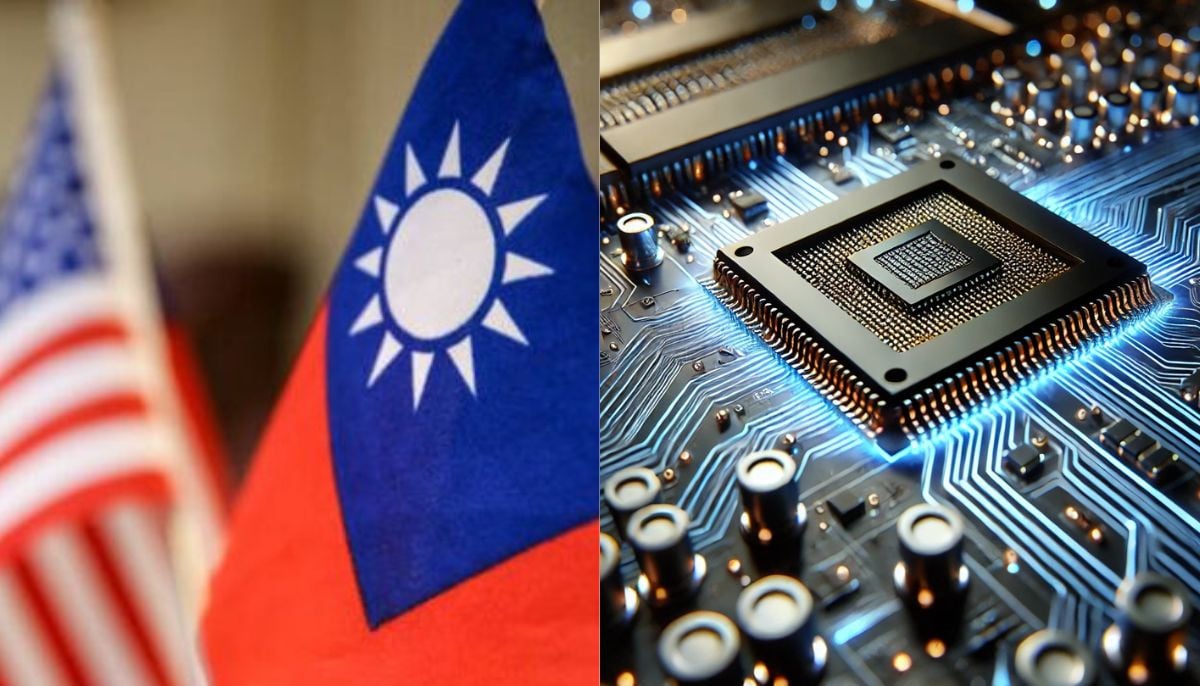
Taiwan has signed a major trade agreement with the United States, under which Taiwanese companies will invest $250 billion to expand production of chips, semiconductors, AI, and energy in the United States.
The trade deal, signed Thursday, will see the U.S. lower tariffs on many of Taiwan’s exports, and Taiwan will increase its chipmaking investments in the U.S. in return.
“In this negotiation, we hoped to promote two-way high-tech investment between Taiwan and the United States, and to become close AI strategic partners in the future,” Vice Premier Cheng Lichi-yun said.
In another development, Taiwan Semiconductor Manufacturing Company TSMC plans to expand its multibillion-dollar investment beyond the $165 billion already committed in Arizona.
Earlier, the world’s largest contract chipmaker pledged $165 billion aimed at boosting Washington’s ability to reshape domestic chip manufacturing to dominate the global and competitive AI race.
According to reports CNBC, TSMC Chief Financial Officer Wendell Huang announced plans to expand investment in Arizona to meet demand for AI chips.
“We believe strongly in the AI megatrend, which is why we are ramping up capital investment for expansion in Taiwan and the United States. We are not just expanding, but accelerating where we can satisfy or close the gap,” Huang said.
The remarks followed comments from TSMC CEO CC Wei, who announced plans to buy more land in Arizona to build a large chip manufacturing fleet.
However, details of future investments are still unclear.
US Secretary of Commerce Howard Lutnick said: CNBC “His objective was to bring Taiwan’s entire chip supply chain and 40% of its production to the United States. If it was not manufactured in the United States, the tariffs would likely be 100%,” he said in an interview Thursday.
Foundation of “close partnership”
Mr. Chen called the agreement a “win-win,” paving the way for closer cooperation with the United States and increased investment in Taiwan. However, the two countries do not have formal diplomatic relations.
“We believe that this supply chain cooperation is about “building,” not “moving.” We are expanding our footprint in the US and helping the US build a local supply chain, but it is also about expanding and expanding Taiwan’s technology industry,” Chen explained.
According to reports Reuters, Taiwan’s recent trade deals and increased investment in the United States could irritate China.
China regards Taiwan, which is under democratic rule, as its own territory, and strongly criticizes high-level exchanges between the United States and Taiwan. However, Taipei rejects China’s sovereignty claims.


