
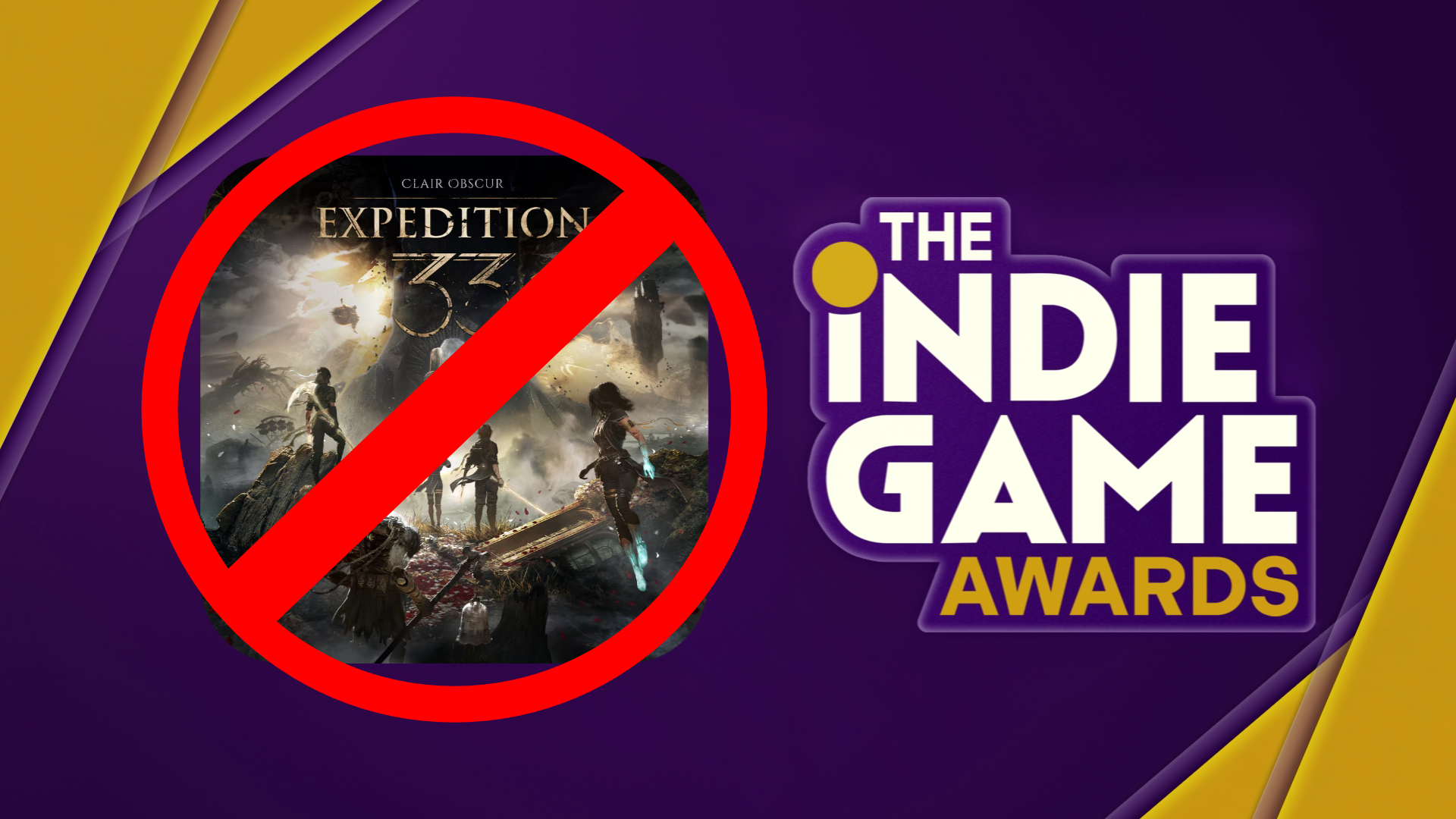
The Indie Game Awards recently concluded on YouTube, originally awarding Game of the Year to the excellent Clair Obscur: Expedition 33. This award didn't last long, and the award was later rescinded after the organization cited the game's use of generative AI during development.
It was later revealed that Sandfall Interactive, the studio behind Expedition 33, was using it. “There is AI, but not a lot.” According to the game's producers.
I think we all agree that when it comes to creative things, the answer is basically no. It kind of takes all the fun out of making games. We love making games and we love creating things. Creation is one of the most beautiful things humans can do. So when it comes to creation, our answer is a resounding “no.”
sandfall interactive
Despite that position, the Indie Game Awards still chose to strip the award from Clair Obscur: Expedition 33 (via Insider Gaming), reallocating the Debut Indie Game of the Year award to Sorry We're Closed and awarding it Blue Prince Indie Game of the Year instead.
Claire Obscur's disqualification highlights an impossible line to draw

in A statement released by Indie Game Awards said:
The Indie Game Awards has taken a tough stance against the use of Gen AI throughout the nomination process and the awards ceremony itself. When submitted for consideration, representatives from Sandfall Interactive agreed that gen AI was not used in the development of Clair Obscur: Expedition 33. Considering that Sandfall Interactive confirmed the use of gen AI art in the production on the day of the Indie Game Awards 2025 premiere, this disqualifies Clair Obscur: Expedition 33 from nominations.
indie game awards
Even though developers are only using generated AI for placeholder assets, it can become increasingly difficult to define what actually counts as the use of AI in games. As tools evolve, it becomes harder to draw the line between assistance, automation, and authorship in a meaningful way.
Such strict rules also risk fostering silence rather than transparency. If studios fear outright disqualification or online discussion, some may choose not to disclose limited or non-creative uses of AI at all.
The Indie Game Awards' simple rules are likely to result in few games being eligible for the next few years, especially as more studios adapt to AI-assisted tools as part of their daily development workflows.
Generative AI, or AI in general, did not emerge out of nowhere

As game development has advanced, so have the tools used in the process. Photoshop's content-aware fill, smart selection, upscaling, and other features all rely on AI-powered systems in some way, but they've been widely accepted for years.
That raises uncomfortable questions about consistency. If these tools are acceptable, where does that leave procedural generation, automated texturing, or AI-driven NPC logic? The point is not to equate them directly, but to highlight how quickly the line between acceptable automation and unacceptable AI can blur.
As these tools continue to integrate, drawing clear and legally enforceable boundaries may become increasingly impractical.
there are legitimate concerns

There are real concerns that the proliferation of AI will lead to job losses, especially for artists. Generative tools are increasingly able to mimic the work of concept artists, writers, designers, and other creative roles.
We’re already seeing changes across the industry, with studios becoming more open about how they use AI. Most recently, Larian Studios came under intense criticism after admitting to limited use of AI during development.
Those who publicly supported Larian were the developers of Kingdom Come Delivery 2, who said, “Larian caused a huge uproar, saying they were doing something that absolutely no one else was doing.”
This AI hysteria is the same as it was in the 19th century when people were destroying steam engines. @LarAtLarian got into a huge uproar by saying they were doing what everyone else was doing. I've even seen people criticize KCD2 for using AI. No… https://t.co/l7pNbTxeITDecember 17, 2025
Even Todd Howard has weighed in on this topic, suggesting that while AI can help speed up iterations and certain processes, it doesn't help fully produce creative work.
Concerns about AI go beyond job replacement. With the increasing demand to support AI data centers, the rise in component costs, especially RAM and storage, is already being felt, and that alone is enough to cause consumer discomfort, regardless of whether these tools are truly useful in the development process.
But whether we like it or not, it appears that most studios are using AI in some form, which poses a risk to zero-tolerance policies. Rather than encouraging openness, it can inhibit transparency and encourage developers to use these tools silently, without clarifying where and how they apply.
Economic pressures are shaping how studios make games

Game development has evolved significantly over the past decade and has become more demanding as a result. Modern games require far more assets than ever before, often at much higher resolutions, requiring more complex animations and larger, more detailed worlds.
This is not a cheap process. Early built games The Xbox 360 and PlayStation 3 eras were developed under completely different constraints, and that model is no longer realistic for most studios today.
Development cycles are also significantly extended in some cases, sometimes up to three times as long, with no guarantee that the finished game will be commercially successful.
It remains important to condemn bad or exploitative applications of AI.
While indie games often punch above their weight and can make some AAA releases seem unfocused by comparison, studios like Sandfall Interactive still allow themselves to use AI in limited practical ways. This reflects the restrained approach that Larian has publicly discussed, rather than a shift to completely replace creative work.
However, this does not mean that all applications can be used without problems. It remains important to condemn egregious or exploitative applications of AI, as scrutiny is essential to finding a sensible balance that protects creative works.
For many studios, limited use of AI is more about saving time than replacing staff. This can help you iterate faster, improve prototyping, or handle repetitive, non-creative tasks that slow down development.
This is also where strict award criteria begin to feel disconnected from reality. If eligibility rules fail to account for the economic pressures under which studios operate, they risk increasingly excluding games built using tools that are quickly becoming standard across the industry.

What do you think about the Indie Game Awards decision? And do you actually care whether limited AI tools are used during game development? Let us know your thoughts in the comments section. Also, please take part in the survey below.

to follow Windows Central featured in Google News Get the latest news, insights and features at the top of your feed.


