

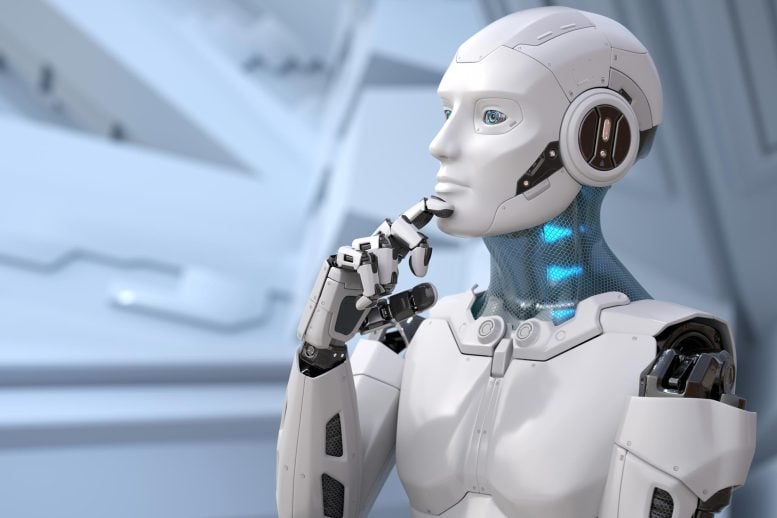
Inverse prediction tests suggest that supposedly brain-like AI models may rely on visual strategies that primate brains do not use.
Artificial intelligence can sometimes predict how people’s brains will react when they recognize objects. But the similarities may hide important weaknesses. The inner workings of today’s visual models do not necessarily match the processes used by primate brains.
Over the past decade, artificial neural networks (ANNs), computer models designed for visual tasks, have become some of the primary tools for explaining how the brain processes vision. Researchers at the University of York wanted to determine whether these systems really work like biological vision.
“Artificial intelligence systems are often said to be ‘brain-like’ because they can predict the activity of parts of the brain that help us recognize objects,” says York University assistant professor Kohitij Kar, lead author of the new study. “Until now, scientists have mostly tested this in one direction: They asked whether AI models could predict brain activity.”
Researchers have upended that familiar test. If AI truly reflected the brain, they reasoned, the recorded brain activity should also be able to predict the model’s internal reactions. To investigate this possibility, they developed an inverse prediction test.
“Ultimately, to truly understand the underlying neural mechanisms of how we perceive objects, we need computational models. How can we see the movement of objects? This is a very simple task that we do every day, but computationally it is a very difficult problem,” said Carr, who is Canada Research Chair in Visual Neuroscience and a member of York’s Vision Research Center and Center for Integrative and Applied Neuroscience.
Reverse testing to challenge brain-like AI
The researchers, including York postdoctoral fellow and Connected Minds trainee Sabine Muzellec, tested the model using 1,320 natural photographs and realistic composite images. The set featured a bear, elephant, face, apple, car, dog, chair, airplane, bird, and zebra in indoor, outdoor, and other natural backgrounds.
They also used 300 additional images depicting the same object in modified forms, including outlines, drawings, simplified representations, and artistic variations. This wide range helped us test whether the relationship between brain activity and AI functionality holds across different visual styles.
Brain activity reveals hidden discrepancies
“The results were surprising. Although the AI model can predict neurons recorded in the brain fairly accurately, the brain cannot equally predict many of the internal features of the model. Interestingly, this is not the case when comparing neurons in one brain with neurons in another brain,” Kar says.
This imbalance suggests that ANNs may arrive at visually correct answers through a different process than the one used by primate brains. Kar warns that unless researchers address this issue early, the discrepancies could grow as models become more complex. Even if an AI model predicts neurons, if its internal features cannot be predicted from neuron activity, it may not provide a reliable explanation of how the brain works.
“Our findings suggest that today’s AI systems solve visual tasks in part by using internal strategies that the brain may not use. Importantly, the parts of AI models that work with the brain are also better at predicting real-world human behavior,” Kar says.
why is this important
Researchers are increasingly using AI models to design studies of human behavior, including clinical studies. Much of that research assumes that the system processes the world in a way similar to the human brain.
“Our findings call into question how similar current AI systems actually are to primate brains. We showed that models previously thought to be brain-like rely on internal components that the brain does not seem to use. We bring a well-vetted diagnostic metric to the field,” says Muzellec.
Improved collaboration could enhance research
More accurate brain-like models could ultimately support research involving conditions ranging from post-traumatic stress disorder to autism. But for now, using poorly tuned systems to interpret human behavior is risky. Similar models have been applied to hearing, language, and movement, making reliable validation across multiple domains important.
“Our approach helps us identify which parts of the ANN truly match brain activity, allowing us to build more reliable models for understanding how people see and interpret the world,” Kar says. “This is especially important for our autism research program, which builds on models of the neurotypical brain as a baseline.”
References: “Inverse Predictability for Bidirectional Comparisons of Neural Networks and Biological Brains” by Sabine Muzellec and Kohitij Kar, March 25, 2026. nature machine intelligence.
DOI: 10.1038/s42256-026-01204-0
The authors have released a testing toolkit that AI developers can use to evaluate their models and improve how closely their internal features match brain activity.
Never miss a breakthrough: join the SciTechDaily newsletter.
Follow us on Google and Google News.


