

Generative AI’s roots go back to the 1960s when Joseph Weizenbaum created ELIZA, an early natural language program designed to mimic empathetic conversation. Generative AI refers to certain machine learning models that can create new content, such as text, images, audio, and code, by learning patterns from large amounts of data and using those patterns to generate original output in response to user prompts.
To understand the recent growth and potential impact of generative AI and how it works, it’s helpful to look at how models, called models, work. artificial neural network (ANN) evolved into the model currently in use. These models are inspired by the way the human brain works, where billions of connected neurons pass signals that enable us to think, move, and make decisions. ANNs use a simplified version of this idea, using small units (“neurons”) stacked in layers that pass information and learn patterns from the data.1 A major turning point came with the rise of deep neural networks, which use many layers and can learn much more complex patterns than previous models. As ANNs have evolved, they have increasingly been used to implement two long-standing data modeling approaches: discriminative models and generative models. Discriminative models primarily focus on predictive tasks, learning relationships between inputs and outputs to classify or separate results. In contrast, generative models aim to learn how the data itself is generated by capturing the underlying data distribution, allowing them to generate new examples that resemble the original data.2
The development of a series of important models, including variational autoencoders (VAEs), generative adversarial networks (GANs), diffusion models, and transformers, has greatly expanded the ability of AI systems to generate realistic data at scale. The breakthrough in generative models came with the advent of foundational models and, ultimately, today’s large-scale generative AI systems. Unlike previous task-specific models, the underlying model learns common patterns by solving millions or billions of “fill in the blank” tasks, such as predicting the next word in a sentence or the next part of an image. Through this process, the model learns compact and meaningful representations of concepts, patterns, and relationships in the data. These representations act like internal maps that show how different pieces of information relate to each other. Training such models is computationally and resource intensive. Once you learn powerful representations, you can use them to generate new content such as text, images, and code. These foundational models form the basis of what is now called generative AI.
The launch of ChatGPT in November 2022 accelerated mainstream adoption of generative AI. Since then, leading technology companies have rapidly integrated generative AI tools across widely used platforms, including Microsoft 365 Copilot, Meta AI, and Google Workspace and Google Search’s Google Gemini. Beyond productivity and search tools, generative AI is also increasingly used in healthcare and education. For example, ambient AI generates clinical documentation from clinician-patient conversations, and tools like Khan Academy’s Khanmigo support scoring and tutoring. As a result, generative AI is becoming increasingly integrated into everyday life, reflecting a kind of social change. Default AI It will always be used in a way that users cannot opt out, even if they don’t actively ask for it, transforming the way people interact with digital platforms. This growing integration is raising questions among the public, practitioners, and policymakers about how generative AI should be managed to ensure transparency, accountability, and public interest, while minimizing risk and maintaining trust.
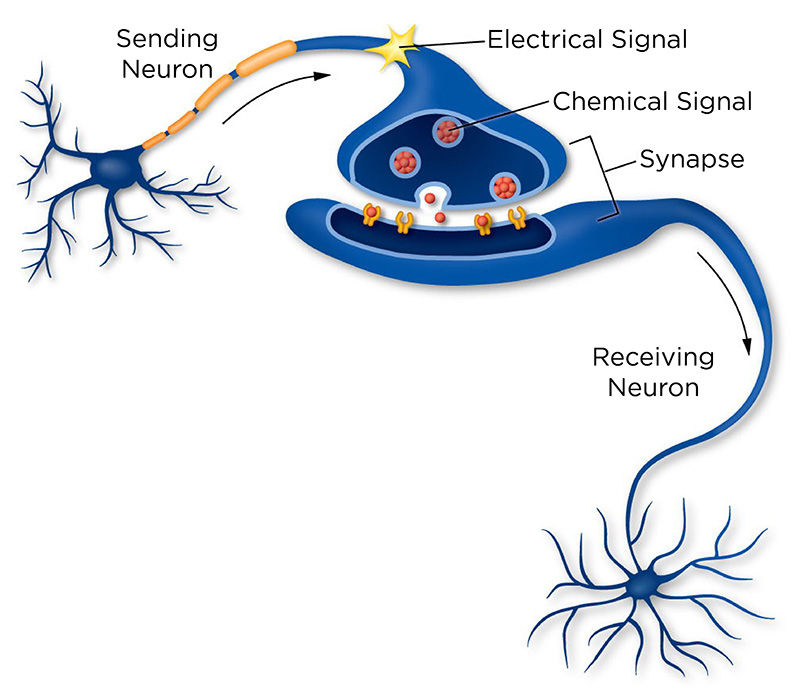
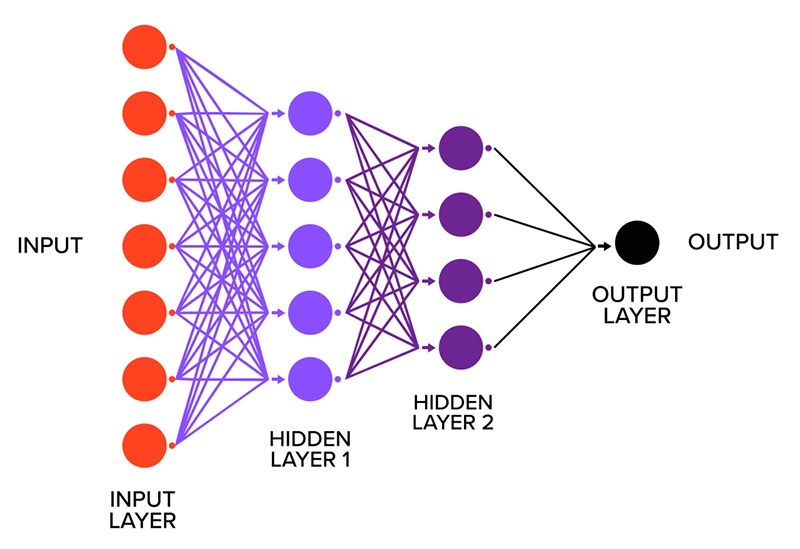
Source: “Neurons Send Messages in the Brain,” University of Utah, https://learn.genetics.utah.edu/content/neuroscience/neurons/ (above). “Deep Learning vs. Neural Networks: Whatsthe Difference?”, Smartboost, https://www.smartboost.com/blog/deep-learningvs-neural-network-whatsthe-difference/ (below).
Potential impacts or concerns
While the integration of generative AI assistance is useful, there are also notable impacts and consequences, intentional or not. Some of them are shown below.
- bias—Bias can come from training data or values embedded by the system creator. LLMs are trained on broad and diverse datasets, allowing them to reflect a wide range of social biases built into them. User-driven confirmation bias can also occur as prompts and phrases shape the model’s responses, and in long conversations, initial responses can reinforce assumptions over time.
- Owned-Data is essential to generative AI, so it’s important to consider ownership and creators. Because AI output lacks copyright protection, it can often appear to be non-proprietary content, without consent, credit, and compensation (known as the 3 Cs), even though it is derived from existing works. These raise questions about intellectual property, especially for creative workers.
- overdependence—Generative AI improves efficiency by answering complex questions quickly, but it also creates the risk of over-reliance. Users may adopt cognitive shortcuts in favor of convenience over scrutiny, which can hinder skills such as creativity, critical thinking, and problem-solving, and reinforce automation bias by habitually accepting AI recommendations. For younger generations, such as teenagers and high school students, the long-term effects of overdependence may be different than for older learners, with potential effects on cognitive development. Students in this age group may also rely on AI for digital therapeutic support, potentially delaying seeking care from qualified human professionals.
- Abuse-Like most technologies, generative AI is susceptible to abuse by users with malicious or immoral intentions, often exploiting existing capabilities with minimal technical expertise. One notable example is deepfakes. Deepfakes manipulate faces, audio, or text to produce images, videos, or audio that are inappropriate, sexual, or derogatory, posing risks to individuals, organizations, and public trust.
- Environmental health effects–As the use of AI expands, its environmental impact will also increase. Data centers, which house the computer servers, data storage systems, and networking equipment needed to train, deploy, and operate AI systems, consume large amounts of energy, contribute to carbon emissions, and require large amounts of water for cooling.
About the author
Sadia Rahman New York State Research Scientist at the Rockefeller Institute of Government.
Nikali Castillo I am a research assistant at the Rockefeller Institute of Government.

