
Artificial intelligence is not only a major driver of the U.S. economy, but also fuels scientific discoveries in fields such as medicine, protein design, materials science, and hurricane modeling.
The Texas Advanced Computing Center (TACC) at the University of Texas at Austin prepares students to take advantage of AI and other cutting-edge technologies in evolving computing environments through a series of academic courses.
For the past 20 years, TACC has hosted a diverse portfolio of National Science Foundation-funded academic research supercomputers to transform the way researchers compute, discover, and innovate, including:
- Horizon: NSF Leadership Class Facility System Starting in 2026
- Ranch: Also part of the NSF LCCF, Ranch is the nation’s largest academic data storage system.
- Frontera: America’s fastest academic supercomputer
- Vista: Optimized for AI workloads
- Lonestar6: Delivering UT systems via the University of Texas Research Cyberinfrastructure Portal (UTRC)
- Stampede3: A science workhorse supporting thousands of U.S. researchers
- Jetstream2: Flexible cloud-based computing resources
“We’re here not just to build big computers, but to help people use them properly,” said Dan Stanzione, UT Austin’s vice provost for research and TACC executive director. “One great way to accomplish this is to teach large-scale computational science methods to students on campus as part of their formal education.”
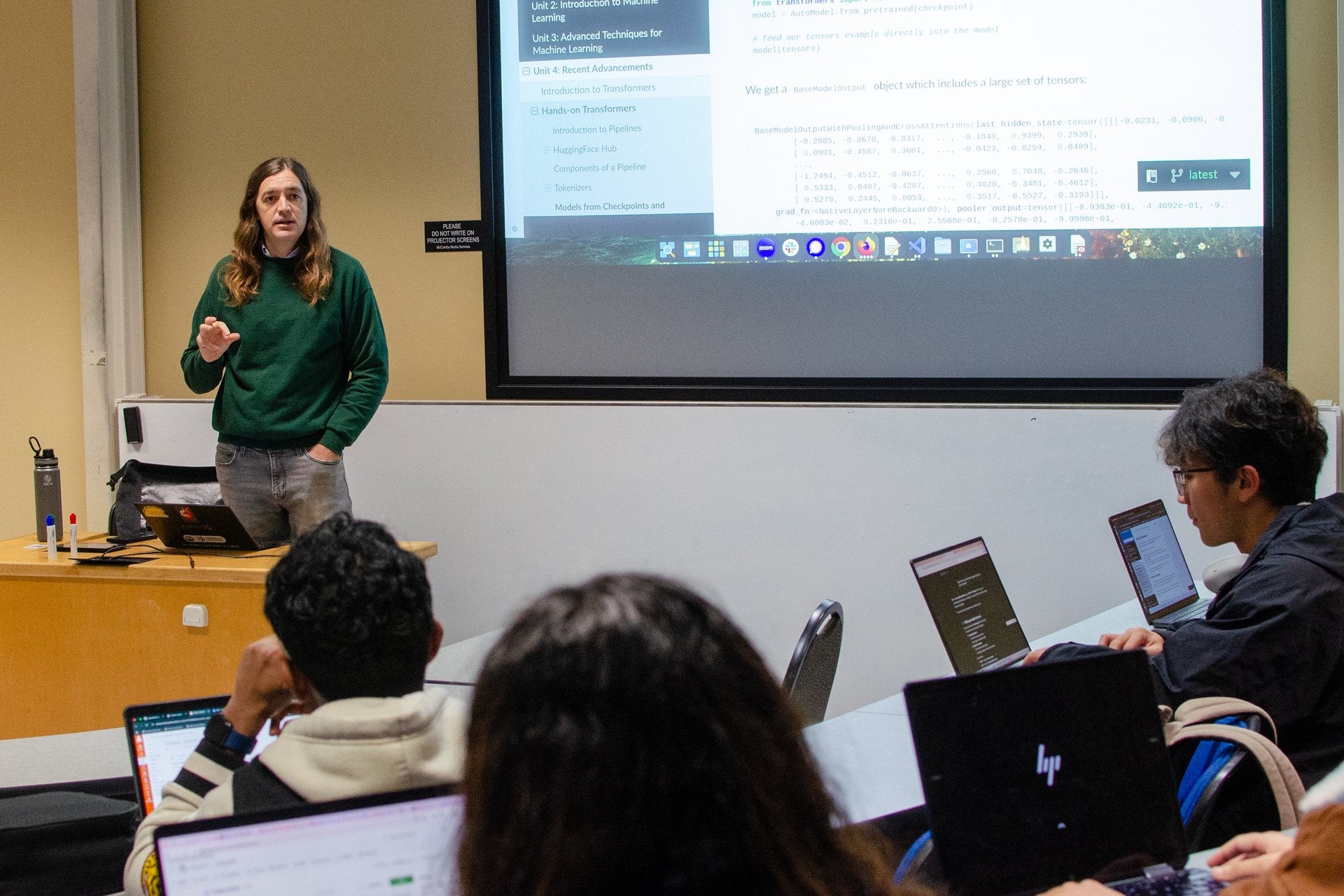
This includes offering academic courses for graduate students through the Auden Institute for Computational Engineering Sciences and academic courses for undergraduate students in the Computational Engineering program through the Cockrell School of Engineering. Examples of courses include: Computational science tools and methodsprovides the foundation of hardware principles, programming languages, and operating system environments to extract the highest performance from supercomputers. of Software design for responsible intelligent systems This course provides an in-depth look at designing, implementing, validating, and operating real-world intelligent systems using scalable data analytics and the latest machine learning techniques.
Read the full article on the TACC website to learn more about TACC’s academic courses, their instructors, and the future course topics they plan to explore.


