The company plans to expand Agentic AI across manufacturing and plans to unveil its industrial AI vision at MWC 2026
Samsung Electronics Co., Ltd. today announced a strategy to transition all manufacturing operations to “AI-driven factories” by 2030. This initiative aims to fully integrate AI across the entire manufacturing value chain. — From logistics and production of incoming materials to quality inspection and final shipment — Establish a next-generation autonomous production environment.
As part of the transition, Samsung will introduce digital twin-based simulation throughout the manufacturing process, as well as specialized AI agents specialized in quality control, production, and logistics. By powering data-driven analytics and proactive validation through these agents, the company aims to improve quality standards, operational efficiency, and productivity across its global manufacturing network.
Samsung also plans to expand AI integration into its environmental, health and safety operations. The company plans to further strengthen workplace safety standards across its production facilities around the world through proactive detection and automated hazard prevention systems.
At the heart of this transformation is Agentic AI, first introduced in the Galaxy S26 series, which can autonomously plan, execute, and optimize decisions to achieve defined goals. Building on the advanced AI capabilities developed in the mobile sector, Samsung is extending its expertise to the manufacturing sector to create a solid foundation for field autonomy.
Through dedicated AI agents, Samsung optimizes production workflows, predictive maintenance, repair operations, and logistics coordination to achieve standardized world-class excellence across all locations worldwide.
To accelerate the transition from automation to high autonomy, Samsung is gradually introducing humanoid robots and task-specific robotics across its production lines, including operating robots for line operation and equipment management, logistics robots for autonomous material handling and transportation, and assembly robots for precision manufacturing tasks. The company will further deploy digital twin-integrated environmental safety robots designed to systematically monitor conditions, identify potential risks, and proactively mitigate on-site hazards in infrastructure environments where human access is limited or hazardous.
“The next stage of manufacturing innovation lies in creating autonomous environments where AI truly understands operational conditions in real-time and independently makes optimal decisions,” said Yong-soo Lee, executive vice president and head of global technology research at Samsung Electronics. “We are committed to leading the transformation towards AI-powered global manufacturing innovation.”
global industry involvement
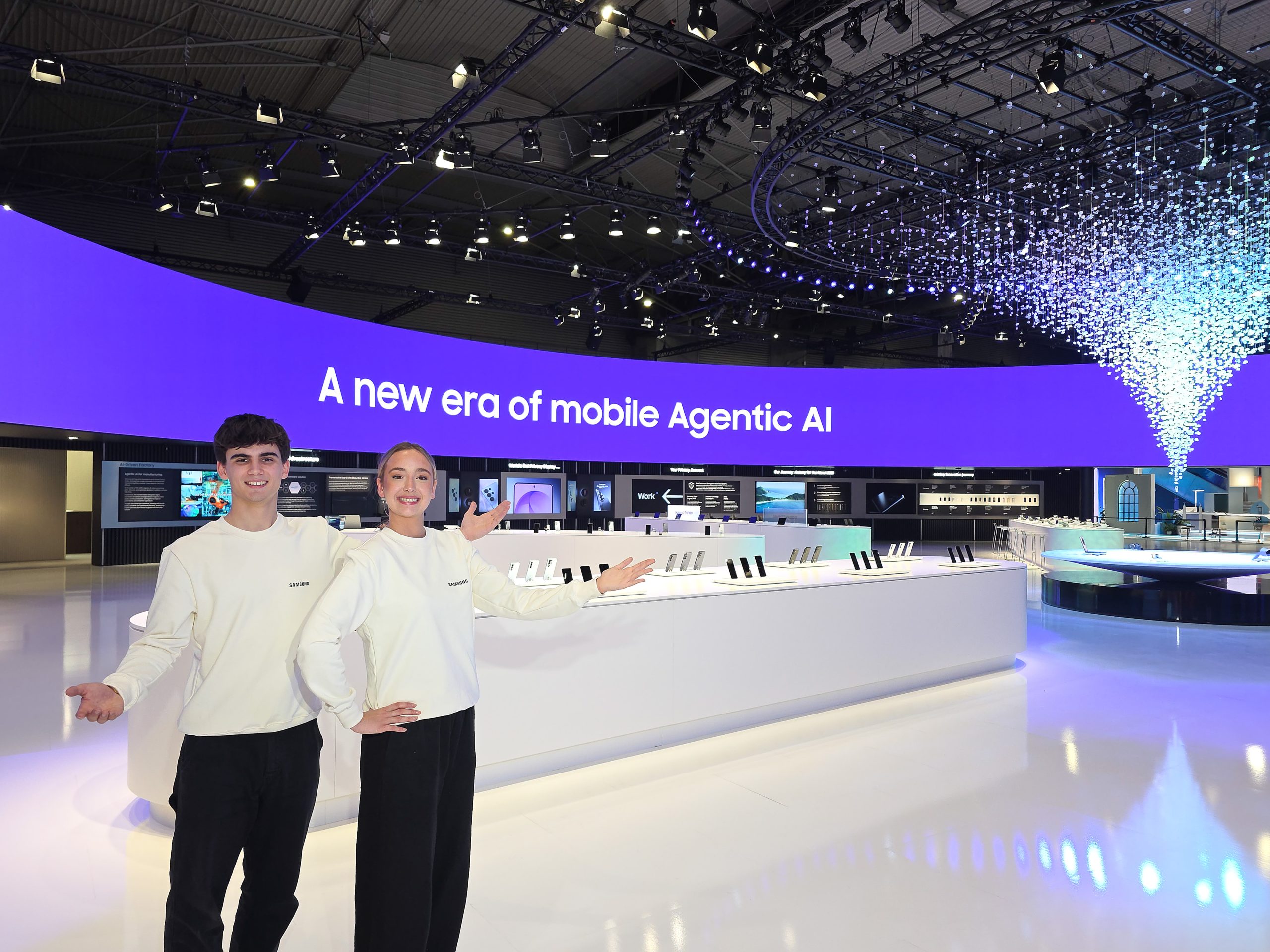
Samsung will unveil its industrial AI strategy and digital twin-based manufacturing innovation vision at MWC 2026 in Barcelona, demonstrating how industrial AI enhances both safety and efficiency in real-world environments.
Furthermore, at the Samsung Mobile Business Summit (SMBS), which celebrates its 10th anniversary this year, the company plans to introduce “Governance Strategies to Expand AI Autonomy.” This strategy consists of incorporating safety mechanisms from the early design stage to ensure responsible and reliable scaling of industrial AI for customers and partners around the world.
SMBS is a private, invitation-only event for key B2B customers and partners where Samsung shares its B2B strategy and latest technology direction, while also exploring opportunities for collaboration across industry sectors.