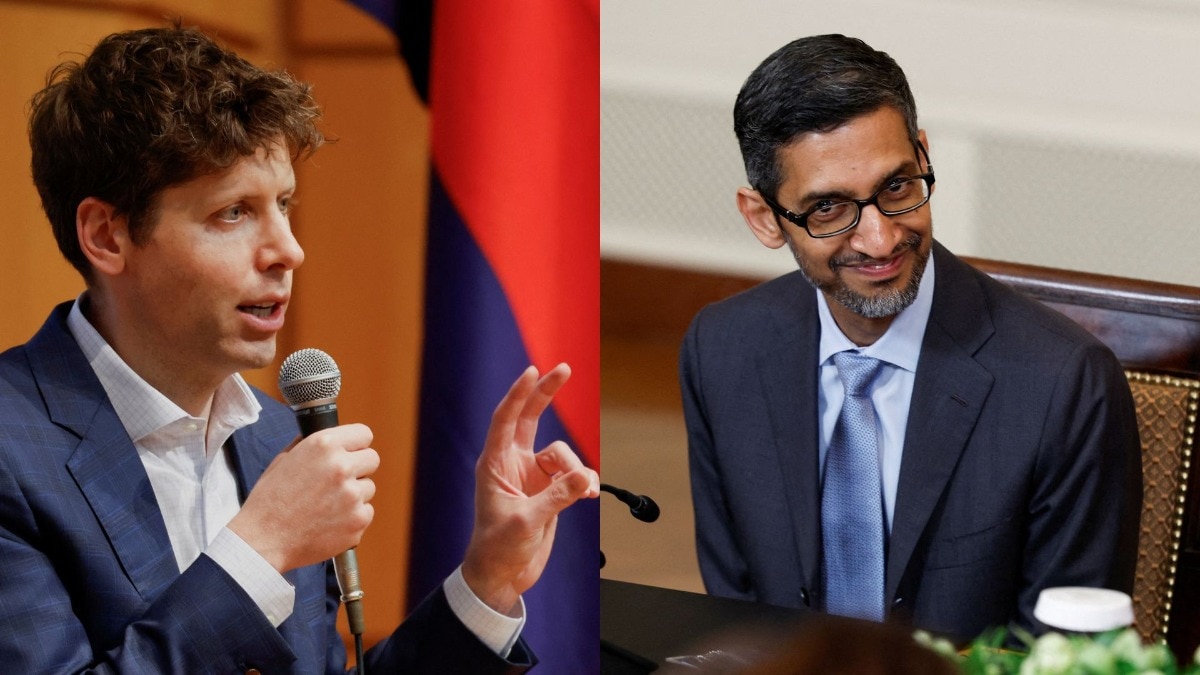
OpenAI CEO Sam Altman acknowledged that Google may be enjoying a temporary advantage in the artificial intelligence race. In an internal memo to staff, he reportedly acknowledged that progress on Google’s new Gemini 3 model “could cause some temporary financial headwinds for the company,” but quickly added that OpenAI was “rapidly catching up” and would soon regain the lead. Altman’s candid tone revealed by The Information marks a rare public concession from the man behind ChatGPT. The memo comes at a time when user engagement with viral chatbots has plateaued and Google’s Gemini 3 is drawing praise from developers for its coding and design capabilities.
Google takes the lead, but it won’t last long
Google’s latest Gemini 3 release has impressed engineers and creators alike. Developers say they’re seeing strong results in areas that were once dominated by OpenAI models, such as automating website design, prototyping products, and writing code. This new model builds on Google’s growing integration of AI into its search engines, productivity apps, and creative tools, and will significantly improve visibility.
Mr. Altman accepted this challenge head on. “We have built enough strength as a company to survive the competition to ship better models elsewhere,” he wrote. “[Therefore]it’s very important that most of our research teams focus on really achieving superintelligence.”
In short, he wants OpenAI to move beyond short-term AI model competition and focus on the larger mission of developing artificial superintelligence before anyone else.
But Google isn’t the only competitor strangling OpenAI. Altman also named Anthropic, a company that is making waves with its ability to generate and debug computer code through natural conversation. This is a direct threat to OpenAI’s own code-centric systems, including Codex, the model behind GitHub’s Copilot.
However, Google’s advantages go beyond technology. With a market value of $3.5 trillion and free cash flow of more than $70 billion in the past year, the company has both the infrastructure and financial strength to fuel its AI ambitions. Ironically, some of that money will come from renting cloud services to competitors like OpenAI and Anthropic.
OpenAI’s path to superintelligence
Altman’s memo reassured employees that OpenAI remains on solid footing despite what he called “temporary economic headwinds.” OpenAI is expected to generate $13 billion in revenue this year, according to internal statistics, but its cash burn rate, estimated at nearly $100 billion, highlights the enormous costs of expanding AI research and computing power.
“We have to do so many difficult things at the same time: the best lab, the best AI infrastructure company, the best AI platform/product company, but that is our destiny in life,” Altman told staff. “And I have no intention of exchanging positions with any other company.”
His message was aimed at boosting morale amid growing public interest in Google’s progress and concerns about OpenAI’s slowing momentum. Finance Director Sarah Friar acknowledged that although ChatGPT’s user engagement has cooled, the company’s financial position remains strong.
The memo is part encouragement, part reality check, and highlights how fierce the AI race has become. Google may be getting attention for Gemini 3’s features for now, but Altman seems unfazed. He’s betting that OpenAI, with its long-term focus on building the first true superintelligence, will eventually regain the throne.
And if history is any guide, he may not be bluffing. After all, OpenAI is the company that got the world hooked on AI in the first place.
– end