
Fully automated intelligent agent that can plan independently and run continuously 40 days here it is!
Sure enough, when eating lobster meat, sometimes you still have to look to foreigners (doges).
The newly released mission by Factory directly surpasses OpenClaw and brings a plate of shucked meat to your table –
Let’s stop talking nonsense! Achieve full-fledged closed-loop automated engineering by simply instructing a single task.

In other words, give it a mission, whether it’s a complex architecture or a cross-module task, and the intelligent agent will be able to plan, create, and test it on its own.
Focus only on the results, not the process. Users no longer need to constantly stare at a screen for interactive instructions.
Honestly, it’s really amazing!

Can operate continuously for up to 40 days
According to the official description, Missions is installed on an intelligent agent developed in-house by Factory. droid Designed to autonomously manage complex tasks that span multiple days.
Users can simply tell the intelligent agent what they want to do, such as “help me build a CRM system” or “migrate this PHP codebase to TypeScript.” Intelligent agents can automatically divide tasks into subtasks and perform them in a chronological and logical order.
Each subtask generates a corresponding dialog and coordinates and takes over via Git, validating and fixing errors in a timely manner at each step, and finally directly producing the complete result.
On the other hand, at the terminal, See the progress of intelligent agents’ tasks in real timeThis includes what features are being built, which intelligent agents are running, and what tools are being used.
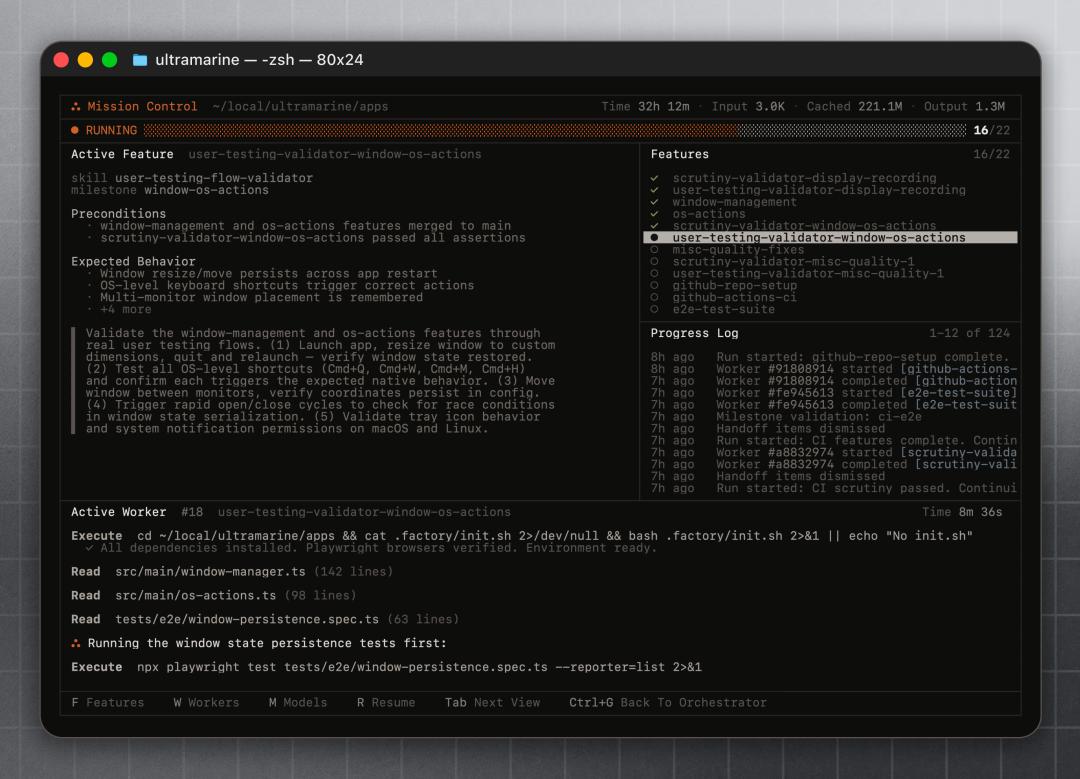
Specifically, to enable multiple intelligent agents to run in parallel, Mission includes a built-in scheduler.
Schedulers divide large, complex projects into multiple milestones. At each milestone, the work is further broken down into multiple features.
Each function starts an entirely new context dialog window to avoid losing context or generating errors in a single long-running dialog. At the same time, under the right circumstances, missions perform parallelism within functions to improve efficiency.
A prerequisite for proceeding to the next milestone is that the previous milestone must be completed. Validation phase.
The system reviews completed work, runs tests, and verifies that all functionality is integrated. If an issue is found during the validation process, the scheduler automatically generates remediation tasks until standards are met, and then moves on to the next stage.
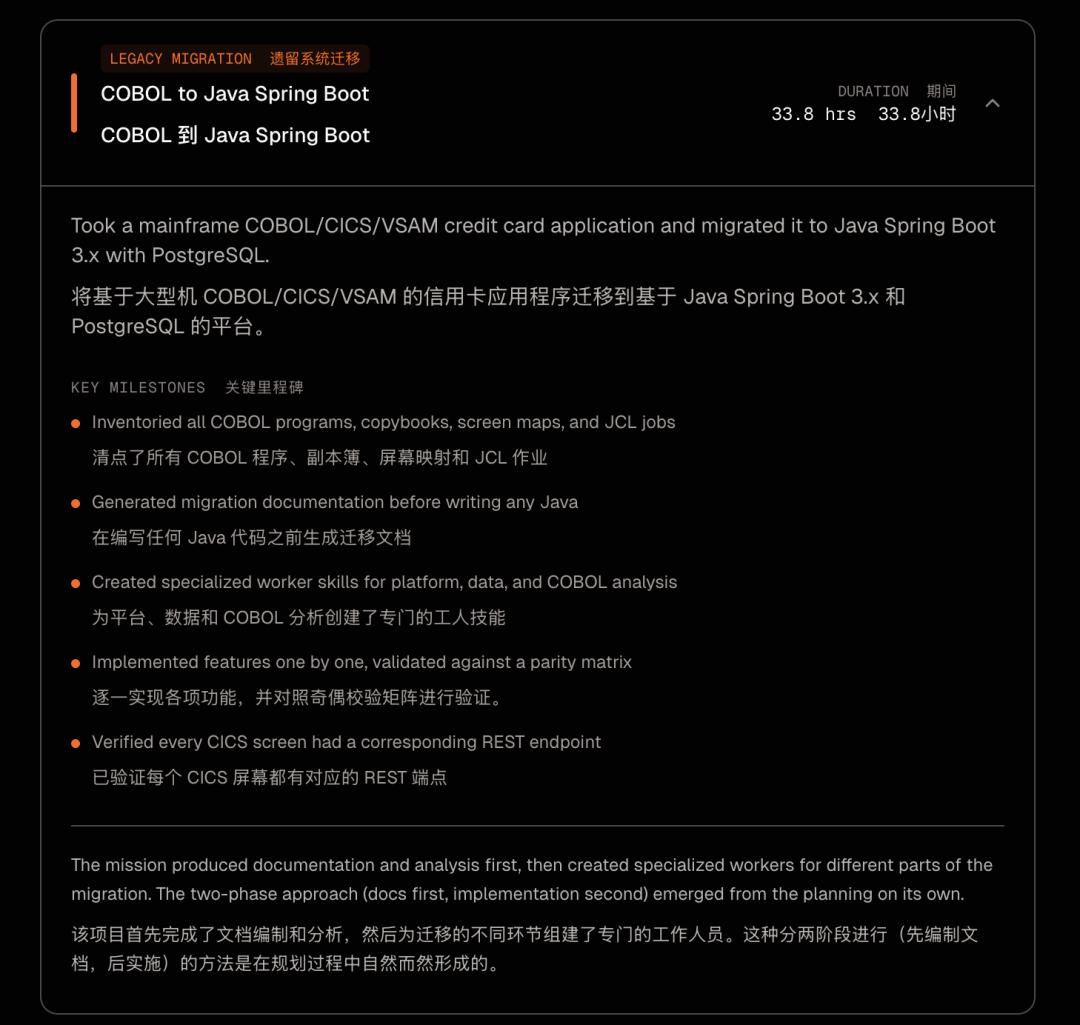
Missions incorporates native computer functionality and is specifically optimized for task workloads. The verification process matches human verification.
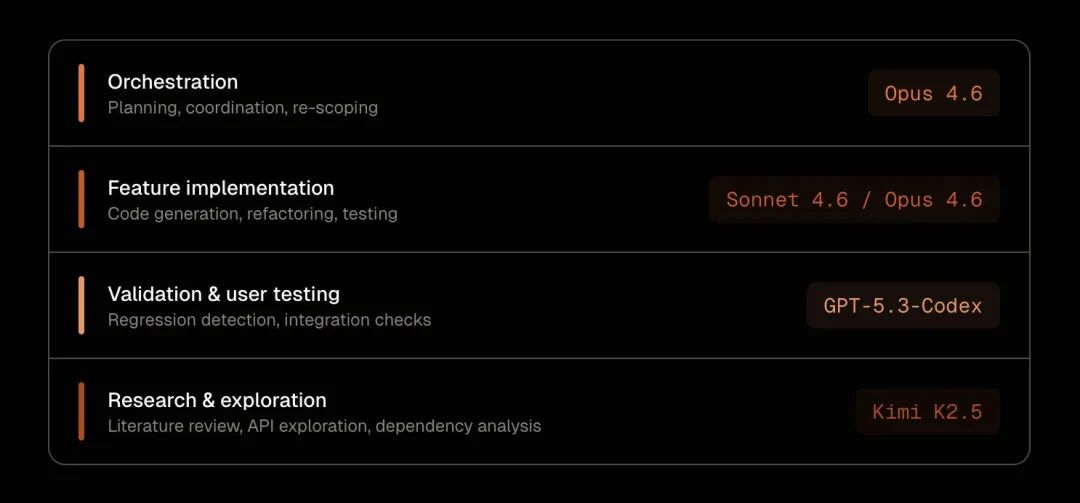
Also, the mission itself Supports multiple models It can also call upon different manufacturers and different types of AI models to act as execution intelligent agents. Scheduler Droid automatically selects the best model according to the task.
In addition to software development, Mission has strong generalization capabilities and can be used for tasks such as training machine learning models and writing research papers.
This is mainly accomplished by: skill – Based learning system. When a new task is performed, reusable operations are extracted into a skill. The running intelligent agent then continually improves and expands this skill library as it works.
The more users use it, the better the system performs in the user’s field.
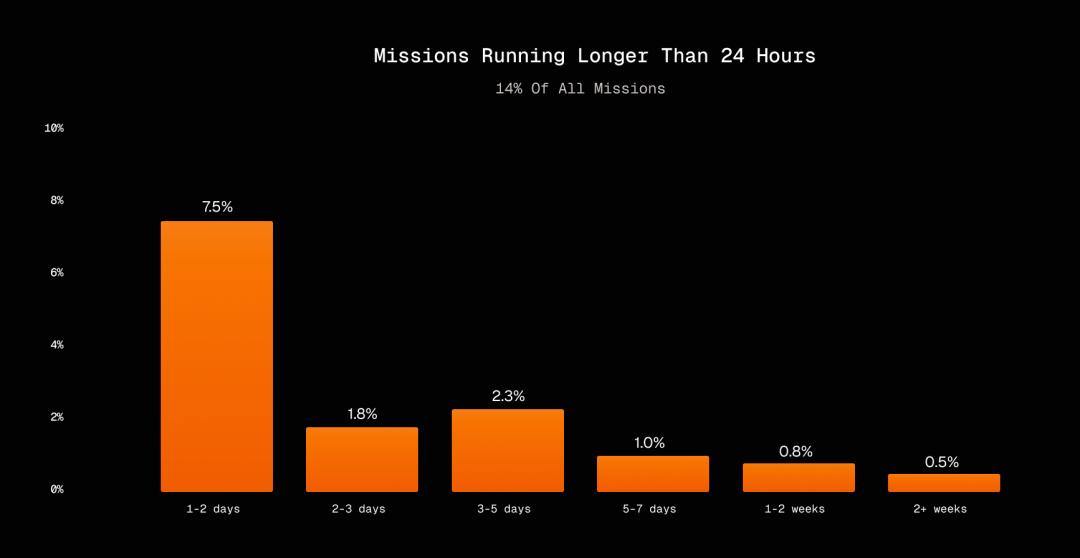
With the addition of missions, Intelligent agent interaction time has increased significantly.
Previously, the average droid interaction time was approximately 8 minutes, and 60% of interactions were completed within 15 minutes. However, missions + droid interactions typically last around 2 hours, with 37% of tasks lasting more than 4 hours.
Some tasks last several days, with the longest tasks reaching 40 days.
This means that with the introduction of Mission, intelligent agents will be able to handle more complex tasks, significantly increasing the upper bounds of AI autonomy and putting it right at the top of the industry.
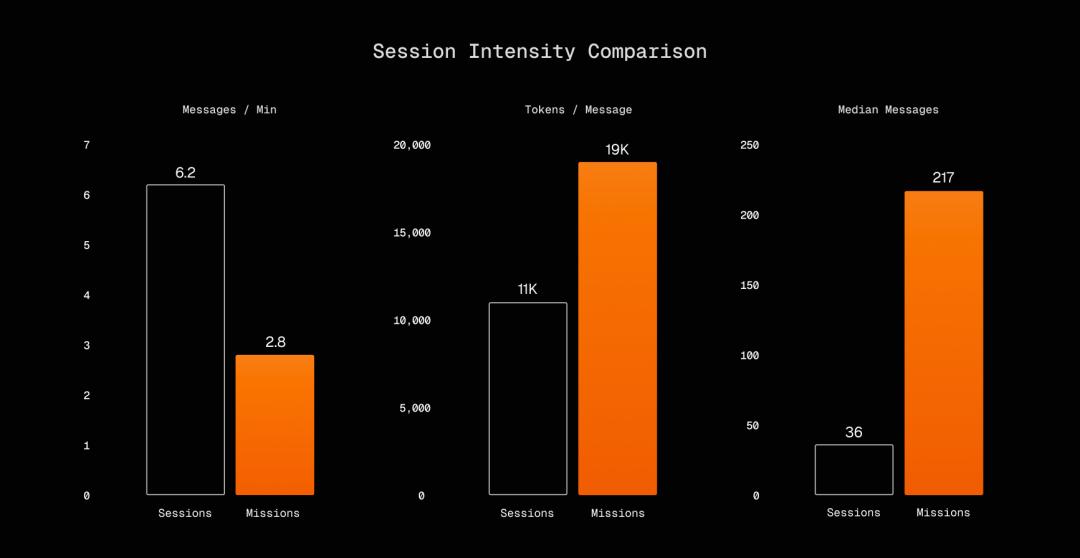
On the other hand, it not only increases the task execution time; Number of inferences per round will also increase.
For one mission, the message sending rate is reduced to 3 messages per minute, but the token weight of each message is doubled. This is because Missions spends most of its time performing engineering tasks rather than continually generating text tokens.
On average, a mission consumes 12 times more tokens than a normal interaction, but in reality the consumption rate before and after is about the same, around 45,000 tokens per minute.
Missions is currently available in the official CLI and IDE extensions. It will be available to Enterprise and Max users starting today.
A powerful combination of theoretical physics and AI
factory eye is a Silicon Valley startup. Unlike traditional AI code assistants (such as GitHub Copilot), we focus on building autonomous AI engineers.
Its flagship product is Droids, autonomous agents designed specifically for the software development lifecycle.
It can independently perform complex tasks, understand user needs, read documentation, write and submit code, and covers all aspects of software development.

While there are similar products, such as the previously popular AI programmer Devin, Droids focuses on deeper integration into enterprise workflows.
This mission is a system-level encapsulation and scheduling upgrade for the droid, establishing a complete multi-agent coordination framework.
The team’s founders are two Princeton University alumni, Matan Greenberg and Eno Reyes.

matan greenberg is a classic example of transitioning from a background in theoretical physics to AI entrepreneurship. During my undergraduate studies, I studied under Juan Maldacena, the world’s top string theory expert. While pursuing my PhD at the University of California, Berkeley, I studied the intersection of physics and AI.
In 2023, he caught the attention of Shaun Maguire, a partner at Sequoia Capital, with an email full of deep thoughts on string theory and AI. So he dropped out of school and founded the factory, receiving a multi-million dollar investment led by Sequoia.

Eno Reyes Has a strong background in machine learning. Prior to founding Factory, he worked as a machine learning engineer at Hugging Face, working on models, and also worked in software development at Microsoft.
He majored in cognitive science at Princeton University and is responsible for leading the research and development of autonomous cycling and context compression mechanisms for droids.
The two met again at a hackathon and decided to start their own business. They signed a letter of intent and registered the company in one day, and the first demo took just a week.
Forbes magazine once evaluated this combination as follows: Golden partnership in the AI eraSean Maguire also praised them:
They not only have top-notch physical and AI capabilities, but also business intuition and execution efficiency.
With the rapid development of AI, the concept is to further stimulate creativity not only in engineers but also in the software development field.
Reference links:
[1]https://x.com/FactoryAI/status/2027104794289263104?s=20
[2]https://factory.ai/news/missions
[3]https://sequoiacap.com/article/partnering-with-factory-autonomous-ai-for-all/
This article is from WeChat official account “QbitAI”, author: Luyu. Republished by 36Kr with permission.


