
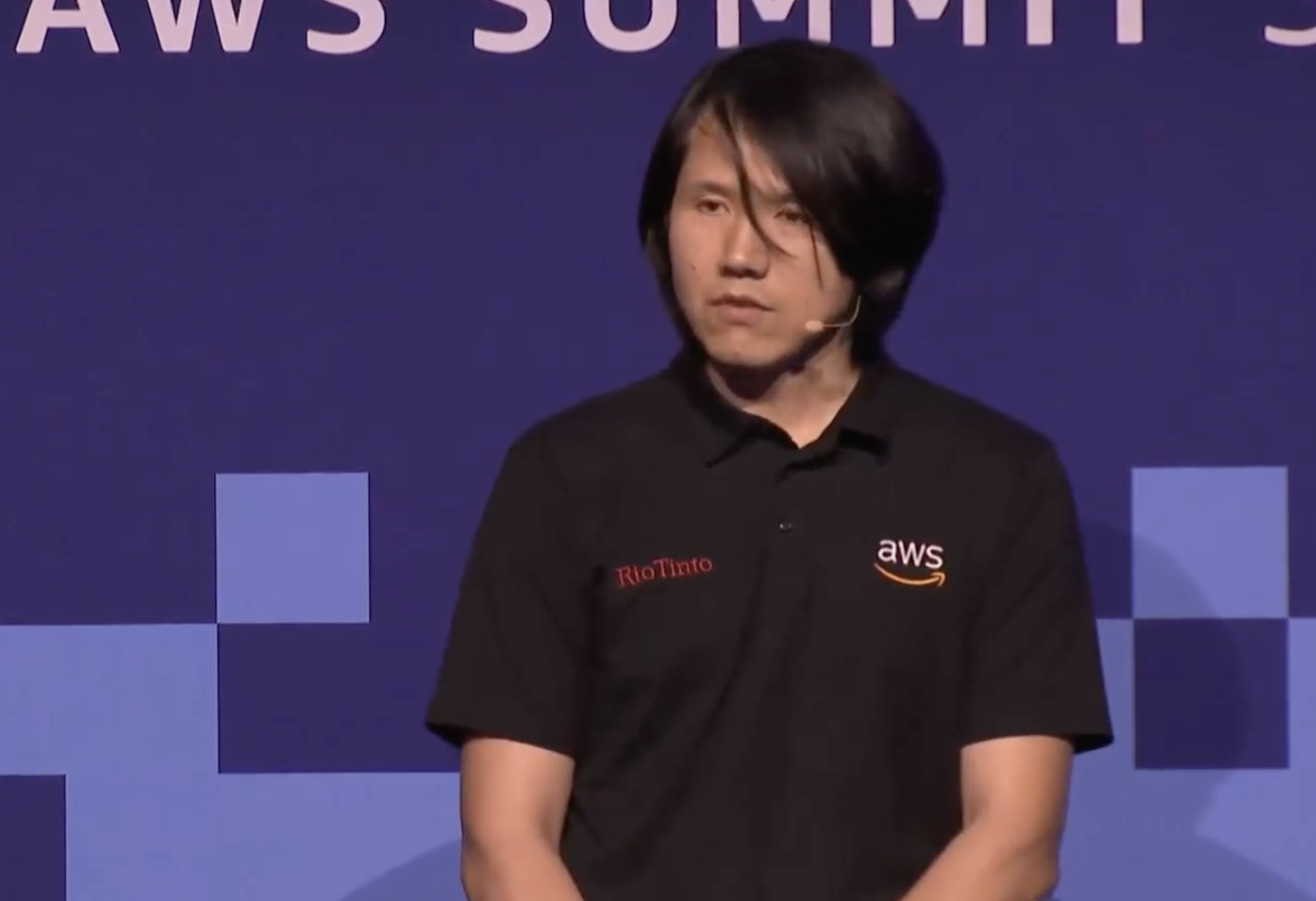
Rio Tinto has built an AI domain assistant to document the knowledge, dependencies and decision logic used in key manufacturing systems in its aluminum business.
Rio Tinto’s Ke Xi.
Ke Shi, senior advisor for data science, said at the AWS Summit in Sydney that the assistant is unlocking the “stored knowledge and complexity” built into one of the company’s most important systems, a 30-year-old manufacturing execution system (MES) called Metpro.
He said Metpro will manage the lifecycle of aluminum products “end-to-end from mining to shipment, acting as a central hub connecting process control systems, data capture platforms and operational infrastructure.”
Mr. Shi said that over time, MetPro’s technical documentation became fragmented and spread into “thousands” of documents.
Furthermore, due to the highly coupled nature of the system, dependencies were not always documented or well understood.
“This means that even small changes like UI configuration can have unexpected downstream effects,” Shi says.
“[Altogether] For engineers, this means onboarding delays, difficulty finding the right expertise, and increased risk when making changes. ”
Given how embedded Metpro is in the day-to-day operations of Rio Tinto Aluminum Pacific, Shi said that rather than rewriting or replacing Metpro, the company is instead looking for ways to “retain and operationalize decades of embedded knowledge.”
“We needed a way to store how the system actually works, including dependencies and decision-making logic that may be incomplete or outdated over time, and make it accessible to engineers without changing the underlying platform,” said Shi.
“Our goal was to bring together fragmented technical documentation into something more coherent, rich, and easy to use.”
Miner started by building a “domain-aligned training dataset” and connecting the Metpro codebase and “business and operational context” to Amazon Bedrock Knowledge Bases and Amazon Bedrock AgentCore.
The company then used Amazon SageMaker AI Jumpstart, a service used to access, evaluate, and compare underlying models, and adopted Llama 3.1 8B as the initial inference model.
“Using a carefully selected dataset and Amazon SageMaker AI Jumpstart, we trained a model to internalize how the system actually behaves and, more interestingly, how we expect the system to respond,” said Shi.
“Fine-tuning has given models a powerful understanding of the domain, but the real world is not static: knowledge changes, processes evolve, and new information emerges every day.
“Agents can help fill that gap by collaborating with trusted knowledge to get the latest information when needed, without having to retrain the model every time.
“Agent layer maintains understanding [of the Metpro system] Refreshing, reliable, and connected to reality. ”
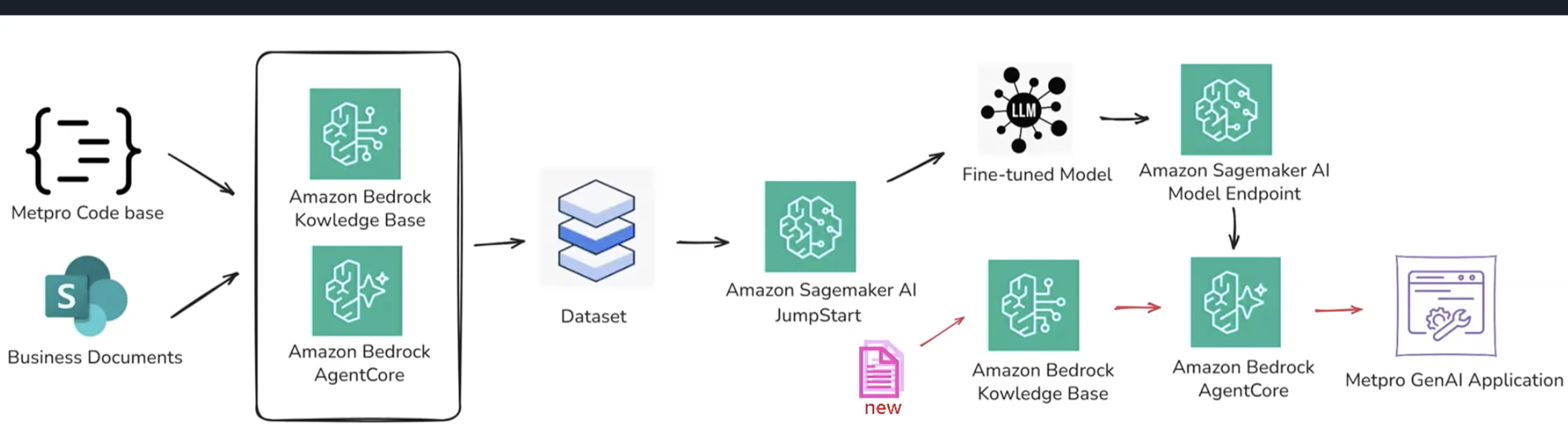
Shi said Domain Assistant allows engineers to understand dependencies that can impact proposed changes in a system “in minutes instead of days.”
Engineers also “spend less time reverse engineering complex logic; [which] means more time [can be] We focus on innovation and improvement. ”
“Most importantly, this has established a future-ready foundation. Knowledge can now be captured, understood, and applied in a way that supports gradual, low-risk modernization without disrupting critical systems,” he said.
Ry Crozier traveled to AWS Summit Sydney as a guest of AWS.


