

In the rapidly evolving landscape of artificial intelligence, Descart AI announced Lucy 2.0, a breakthrough real-time video model that promises to transform the way we interact with visual content.
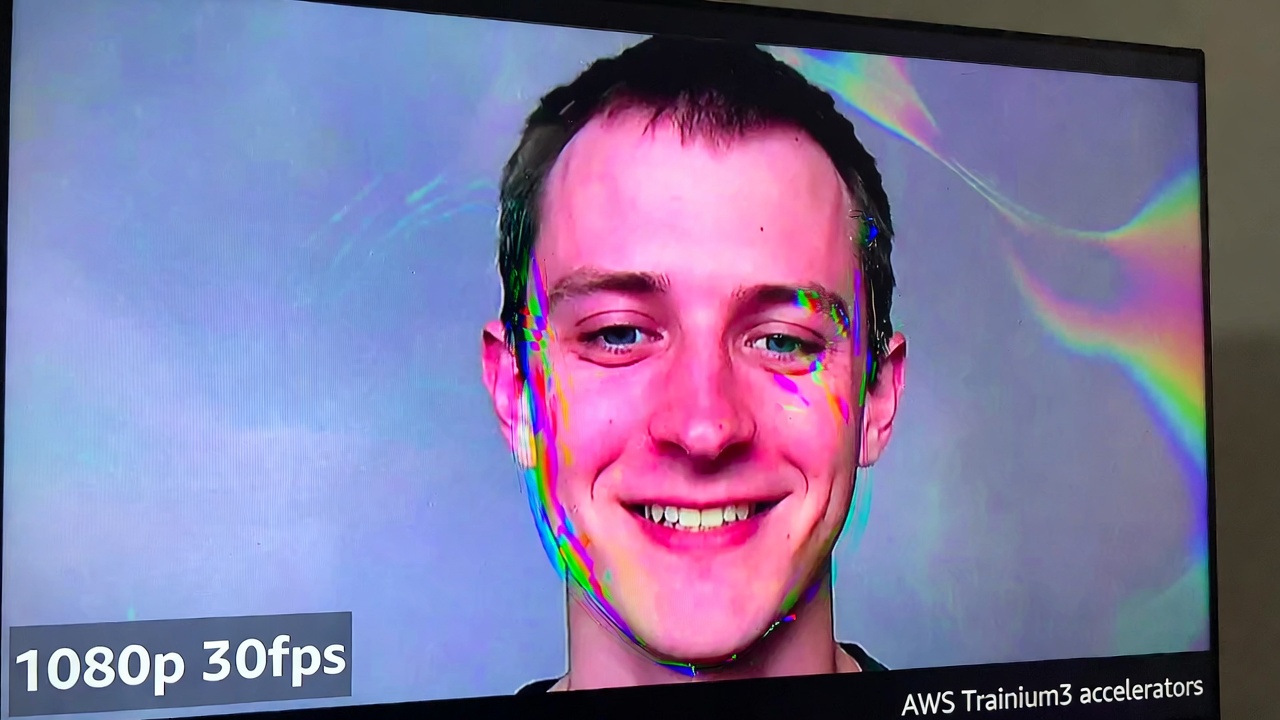 Released in early 2026, the technology allows users to replace themselves or others in webcam videos with entirely new characters, while maintaining high-quality output at 1080p resolution and 30 frames per second (fps) with near-zero latency.
This innovation represents a major advance in video generation, bringing capabilities typically reserved for offline processing into the realm of live streaming and interactive applications.
Core technology: real-time character swapping
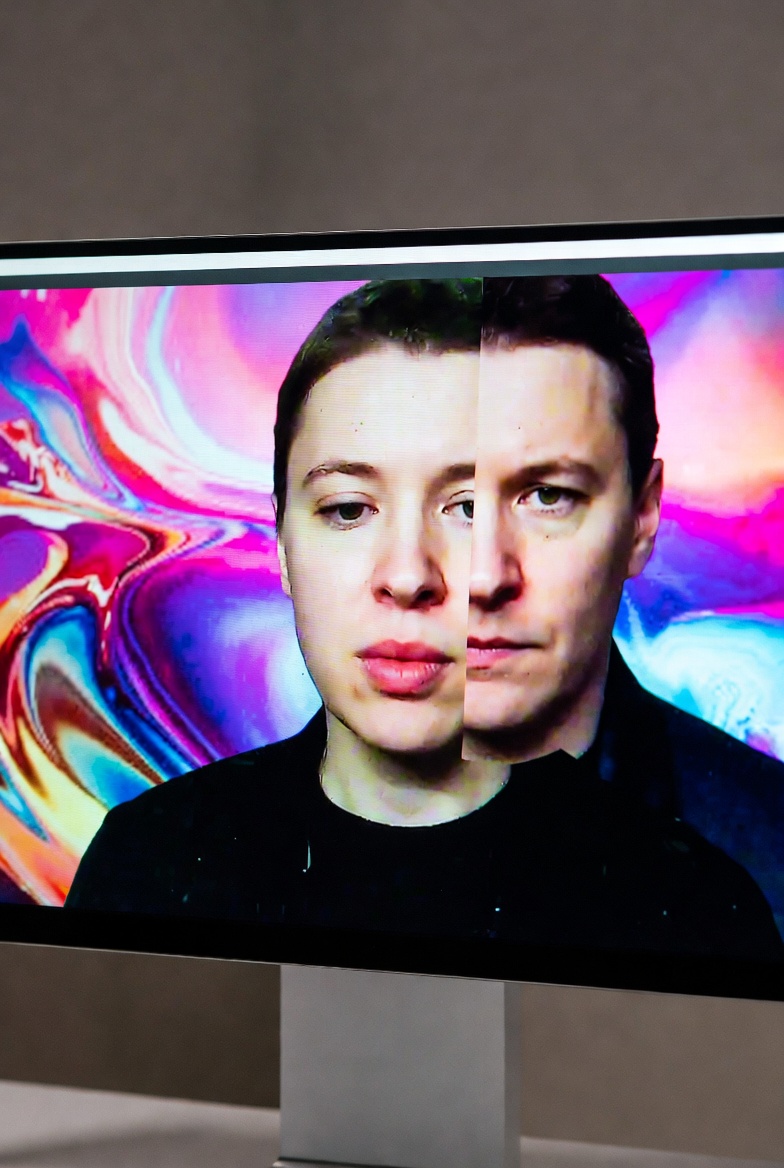 At its core, Lucy 2.0 functions as a “world editing model”, allowing seamless changes to live video feeds. Users can enter text prompts or images to guide the transformation, resulting in instant changes like swapping characters, editing clothing, or completely overhauling the environment.
For example, you can transform a mundane office environment into a vibrant animated world, or transform streamers into their favorite fictional characters on-air.
This real-time capability is compared to tools such as Runway’s Act-2 and Kling’s Motion Control. These tools are great for motion-guided video generation, but often require significant processing time. Unlike these, Lucy 2.0 works autoregressively, generating pixels on the fly without relying on 3D models or pre-rendered assets.
Stability is achieved through innovative technologies such as smart history expansion. In this technique, a model trains and self-corrects its own imperfect output, preventing it from degrading over time.
This addresses the common “drift” problem in video generation. This problem occurs in traditional models where the image gradually becomes distorted or inconsistent after a short duration, typically less than 30 seconds.
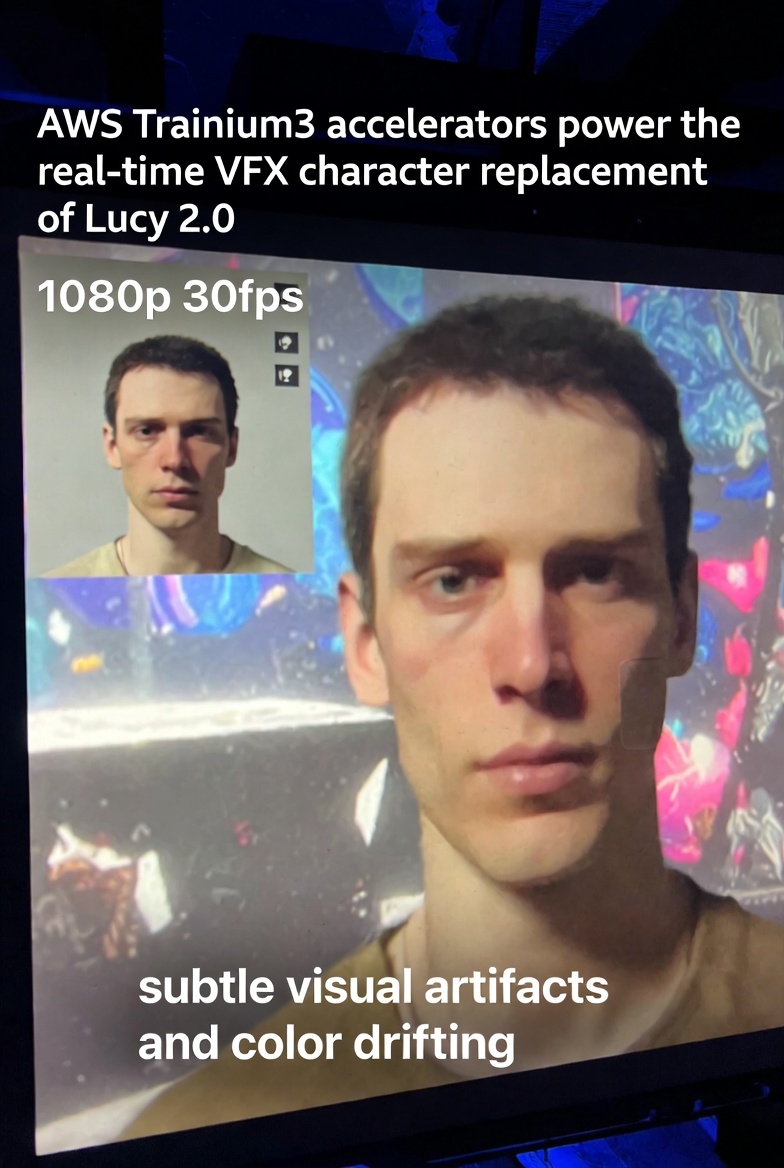
However, challenges still remain. Lucy 2.0 minimizes drift with additional tuning stages, but visual quality still lags compared to offline competitors. Users may notice subtle artifacts such as character drift and visible facial updates, especially during long sessions. Despite these imperfections, the model’s ability to handle streams over several hours without completely collapsing identity represents a major advance.
Beyond entertainment: practical applications
 Lucy 2.0’s appeal goes far beyond novelty. In the field of video editing, it provides powerful tools for styling entire frames and selectively replacing elements. Text prompts enable physically-aware transformations such as changing lighting, materials, and even product placement in real time. This makes it ideal for content creators, allowing for live restyling of streams and interactive experiences on platforms like Twitch.
Notably, this model currently has no built-in censorship capabilities, which has led to increased interest and perhaps concern among certain communities, such as streamers who explore creative or edgy content. Although Decart emphasizes ethical use, the lack of filters opens the door to unrestricted experimentation.
Looking more closely, the developers are positioning Lucy 2.0 as an engine for simulation and data augmentation, especially in robotics and AI training.
Expand your visual language behavior (VLA) models and datasets for imitation learning by taking one demonstration video and adjusting the environment, lighting, and materials to generate thousands of variations.
This capability is invaluable in areas such as autonomous systems, where diverse, high-fidelity training data is important.
Under the hood, the magic runs on advanced hardware, including AWS Trainium3 accelerators, ensuring efficient performance even at scale. The API is already live and accessible to developers and enterprises at a cost as low as $0.05 per second.
Also read:
Will 2026 be the year of real-time video generation?
With Lucy 2.0, Descart AI doesn’t just push the boundaries, it redefines them. Backed by $100 million in funding at a $3.1 billion valuation, the company is poised to lead the way in real-time generative AI. As such tools become more sophisticated, they could be widely adopted in gaming, virtual reality, e-commerce (think real-time try-on), and more.
However, the question remains: Will the improved quality and stability close the gap with offline models? And how will society deal with the ethical implications of such a powerful, uncensored tool?For now, enthusiasts can experience the dawn of a new era in VFX first-hand through a live demo on lucy.decart.ai. If this trajectory continues in 2026, real-time video generation may indeed become the norm, forever blurring the line between reality and digital creation.


