
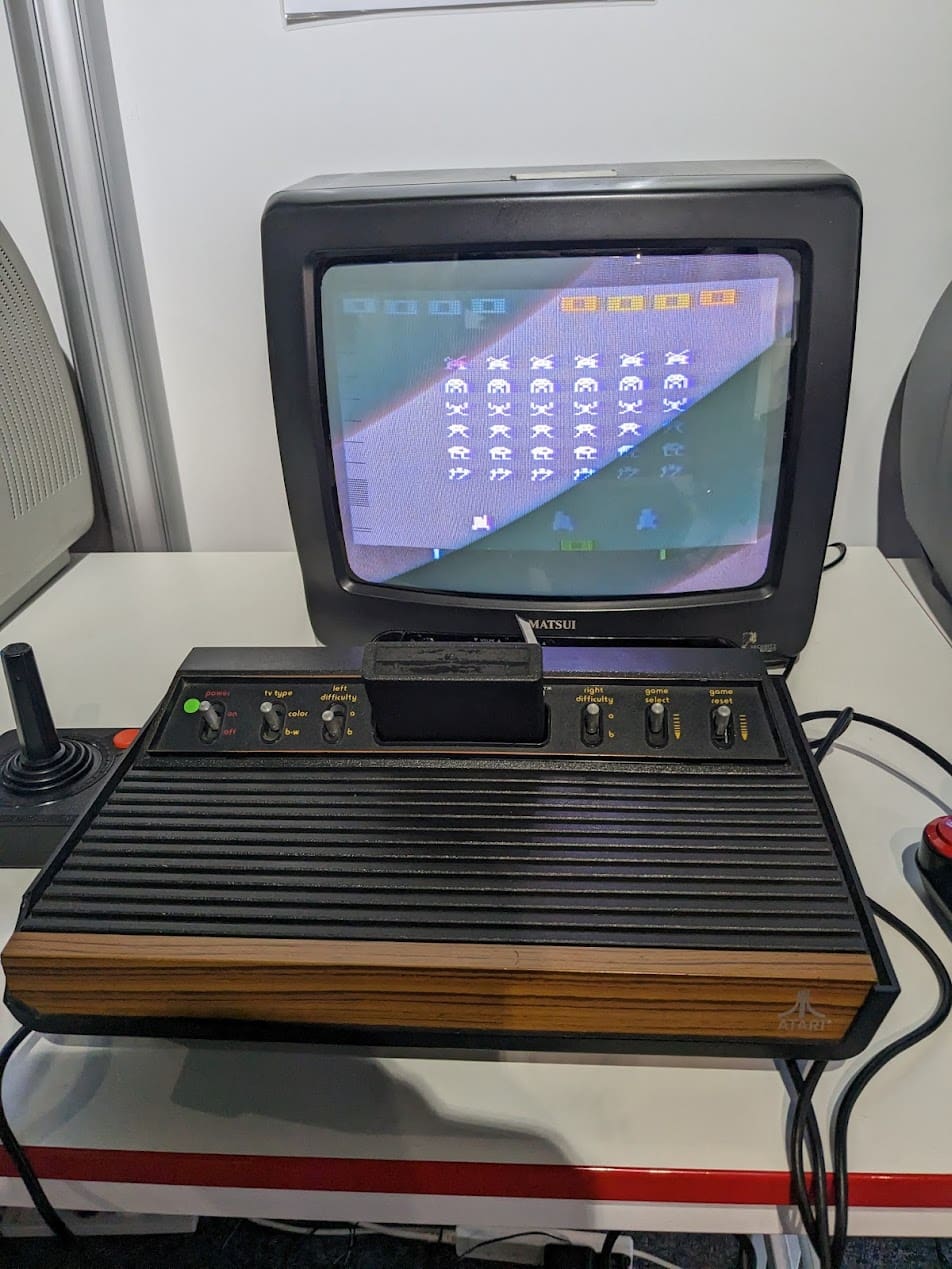
Reinforcement learning (RL), a branch of artificial intelligence inspired by behavioral psychology, has achieved remarkable feats in controlled environments. From mastering the Atari game to beating the world champion at Go, algorithms have demonstrated the ability to learn complex strategies through trial and error. However, translating these successes to real-world applications, robotics, autonomous driving, and personalized medicine remains a major challenge.
Limits to success with simulation: Closing the gap in reinforcement learning
The core issue is not a lack of algorithmic innovation, but a fundamental scaling problem. That is, the gap between the simplistic, simulated world in which RL agents operate and the messy, unpredictable reality they must ultimately navigate. This discrepancy stems from limitations in data efficiency, generalizability, and ability to handle partial observability, hindering the deployment of RL beyond carefully curated benchmarks.
The early promise of RL was fueled by algorithms like Q-learning, developed in 1989 by researchers at the University of Cambridge. Q-learning allows agents to learn optimal policies by estimating the “quality” of performing a particular action in a given state. Although this approach is sound in theory, it suffers from the “curse of dimensionality”. As the state and action spaces expand, as is inevitable in real-world scenarios, the computational resources required for exploration and learning increase exponentially. This requires the use of function approximation, usually via deep neural networks, and the field of deep reinforcement learning (DRL) is born. However, even with the power of deep learning, DRL agents often require millions of interactions to achieve acceptable performance, making data collection prohibitive for many real-world applications where data collection is expensive, time-consuming, and even dangerous.
Data hunger in deep reinforcement learning
The huge amount of data required for DRL algorithms is a major bottleneck. Consider the task of training a robot to grasp an object. Simulations can perform millions of virtual grasps in hours. However, transferring this learned policy to a physical robot often fails. The robot encounters changes in lighting, surface texture, object weight, and unexpected disturbances that were not present in the simulation. This phenomenon, known as the “simulation-reality gap,” highlights the limitations of learning only from simulated data. Jeffrey Hinton, a deep learning pioneer at the University of Toronto, has long emphasized the importance of unsupervised learning and self-monitoring as a way to reduce reliance on labeled data. Researchers are applying these principles to RL, exploring techniques such as domain randomization, which randomly changes simulation parameters during training to force the agent to learn more robust policies.
However, domain randomization is not a panacea. Generalization can be improved, but the extent of randomization must be carefully adjusted. Too little change leaves the agent vulnerable. Too many will destabilize the learning process. Moreover, it does not address the fundamental problem of sample inefficiency. Even with randomization, the agent needs to go through a huge number of trials to learn a reliable policy. This has led to the development of more sophisticated techniques such as meta-learning, where agents learn. how Learning allows you to quickly adapt to new environments with limited data. Richard Sutton, a leading reinforcement learning expert at the University of Alberta, advocates for a shift in focus from model-free RL (learning directly from experience) to model-based RL (learning models of the environment), which can significantly improve data efficiency.
Partial observability and real-world complexity challenges
It is rarely possible to completely observe a real-world environment. For example, self-driving cars do not have access to the complete state of the world and rely on imperfect sensors such as cameras and LIDAR that provide only a partial view of their surroundings. This partial observability poses significant challenges to RL agents. Traditional RL algorithms assume that the agent has access to the complete state, allowing the agent to accurately predict the outcome of its actions. In a partially observable environment, the agent must infer the underlying state from its observations, adding further complexity to the learning process.
This is where recurrent neural networks (RNNs) come into play. Developed by researchers at the Swiss Federal Institute of Technology and Jurgen Schmidhuber, RNNs are designed to process continuous data and maintain an internal “memory” of past observations. Incorporating RNNs into DRL agents allows researchers to handle partial observability and learn policies that are robust to noisy or incomplete information. However, training RNNs can be computationally expensive and requires careful regularization to prevent overfitting. Furthermore, even with RNNs, RL agents often struggle to deal with the stochasticity and unpredictability inherent in real-world environments. Unexpected events, such as a pedestrian suddenly stepping onto the road, can disrupt the agent’s learned policies and lead to catastrophic failures.
Beyond Markov decision-making processes: dealing with non-stationarity
The standard framework for reinforcement learning, the Markov Decision Process (MDP), assumes that the environment is stationary, meaning that the transition probabilities and reward functions are constant over time. This assumption rarely applies to real-world scenarios. The actions of other agents, changing weather conditions, and even wear on the robot’s actuators can all cause unsteadiness. This poses a significant challenge for RL algorithms that are designed to converge to an optimal policy given a stationary environment.
DeepMind Principal Researcher David Silver emphasized the importance of addressing non-stationarity in RL. One approach is to use online learning algorithms that continuously adapt to changes in the environment. Another is to incorporate transfer learning techniques, which transfer knowledge gained from one task or environment to another. However, transfer learning can be difficult to implement effectively because it requires careful consideration of similarities and differences between source and target domains. Moreover, the act of learning itself can change the environment, creating feedback loops that further complicate the learning process. This is especially true in multi-agent systems where the behavior of one agent can influence the behavior of other agents and the environment is constantly evolving.
The promise of offline reinforcement learning and model-based approaches
A promising means to address the scaling problem is offline reinforcement learning, also known as batch reinforcement learning. This approach allows the agent to learn from a fixed dataset of past experiences without requiring further interaction with the environment. This is especially useful in applications where online data collection is expensive or dangerous, such as medicine or robotics. However, offline RL algorithms must be carefully designed to avoid extrapolation errors that make predictions about states or actions that are not well represented in the dataset. Researchers are investigating techniques such as conservative Q-learning and behavioral cloning to mitigate these errors.
Another promising direction is model-based reinforcement learning. Rather than learning policies directly from experience, model-based RL algorithms learn a model of the environment, a representation of how the environment responds to an agent’s actions. This model can be used to plan and optimize agent behavior. Learning an accurate model can be difficult, but it can significantly improve data efficiency and generalization. Yoshua Bengio, a deep learning pioneer at the University of Montreal, advocates a hybrid approach that combines the strengths of model-based and model-free RL. By learning both a model of the environment and policies for acting within it, agents can become more robust and adaptable.
Ultimately, extending reinforcement learning to the real world requires a multifaceted approach. Innovations are needed in data efficiency, generalization, and the ability to handle partial observability and non-stationarity. By employing techniques such as offline RL, model-based RL, and meta-learning, and drawing inspiration from other areas of artificial intelligence, researchers are steadily solving scaling problems and bringing the possibility of truly intelligent agents closer to reality. The journey from mastering the Atari to navigating the complexities of the real world is far from over, but recent advances suggest that the future is bright for reinforcement learning.


